
20:26, 08-Nov-2017
Peking Opera: Cultural treasure of China
 []
[]
Share







Copied
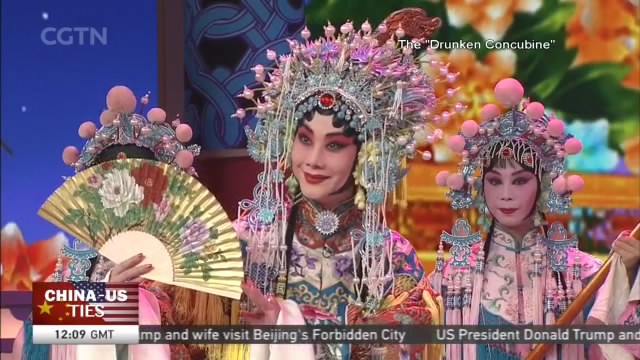
Peking opera originated in the late 18th century. It developed from several ancient Chinese operas styles like Kunqu, Anhui and Han opera.
It is regarded as one of the top five opera styles in China and became fully developed and recognized by the mid-19th century in the country.
One of its representative works is the "Monkey King" opera series which features beautiful stage sets and costumes.
Many types of roles in Peking Opera can be found in the series, including laosheng - the old male, wusheng - the male warrior and hualian - the clownish role.
The series tells about the birth and adventures of a rebellious Monkey King, the main character in the Chinese literary classic "Journey to the West," as he escorts Buddhist Monk Xuanzang on a sutra seeking pilgrimage to India.
Another Peking opera masterpiece is the "Drunken Concubine" by Mei Lanfang, who was one of the most famous Peking opera artists in modern Chinese theater.
The story takes place in the Tang Dynasty over one thousand years ago. Yang Yu-Huan was Emperor Ming-Huang's favorite concubine.
One evening the two had arranged to meet in a pavilion in the imperial gardens. Yang prepared a banquet and waited for the emperor. But the emperor failed to keep his promise and went to see one of his other beautiful concubines which made Yang really disappointed.
Through a vivid performance, the play shows the concubine's disappointment, her drunken charm, and her internal beauty.
For hundreds of years, Peking Opera has flourished in China and has also spread to many other places. It can be found in Hong Kong, Taiwan, and overseas Chinese communities elsewhere.