BUSINESS


The historic trade hub set for revival with the China-Pakistan Corridor
2017-04-30 11:47 GMT+8






Editor
Wang Xinxin
Gwadar lies about 75 kilometers east of the Pakistan-Iran border and 380 kilometers northeast of Oman across the Arabian Sea. For this historic coastal city, the operation of the China-Pakistan Economic Corridor represents a chance to resume its place as a transcontinental trade hub after a turbulent 200 years.
"When you look at the old city of Gwadar, you will see old structures dating back 200 to 250 years. Even the [warehouses] and shops were very large, and we can easily conclude that there was large-scale business activity in the area,” said Abdul Ghaffar, a historian.
It takes a detailed look at the ebbs and flows of Gwadar's fortunes to understand just how it declined from that position and why it faces a bright future now that the China-Pakistan Economic Corridor has created fast, efficient overland links between China and Pakistan's coast.
Before 1784, Gwadar was under the control of the princely state of Kalat, which had remained under various empires at different periods of its history.
In 1784, the Khan of Kalat granted control of the Gwadar peninsula to the Sultan of Muscat who had escaped to Gwadar after an internal power struggle with his brother. And even after returning to Muscat in 1792, the Sultan maintained his possession of Gwadar. During that time, Gwadar remained a busy port receiving goods from across the world.
After the independence of Pakistan in 1947 and the accession of all Baloch states, the residents of Gwadar began demanding to join Pakistan. In 1954, Pakistan engaged the United States Geological Survey to conduct a survey of its coastline, which identified Gwadar as a natural site for a deep-sea port. And consequently Pakistan made a formal request to the Sultan of Muscat and Oman for the transfer of Gwadar to Pakistan.
In 1958, after four years of negotiations, Pakistan purchased Gwadar back from Oman for three million US dollars after 174 years of Omani rule. At the time, Gwadar was a small and underdeveloped fishing village with a population of a few thousand. But soon after its accession to Pakistan, Gwadar was declared one of the districts of Balochistan.
In 2014, the initiation of the China Pakistan Economic Corridor was officially announced. Gwadar locals welcomed the project wholeheartedly, hoping to finally be brought out of a state of deprivation.
“The fishing community of Gwadar accepted the development activities and supported the construction of the port with a hope that the next generation will work at the port,” Ghaffar said.
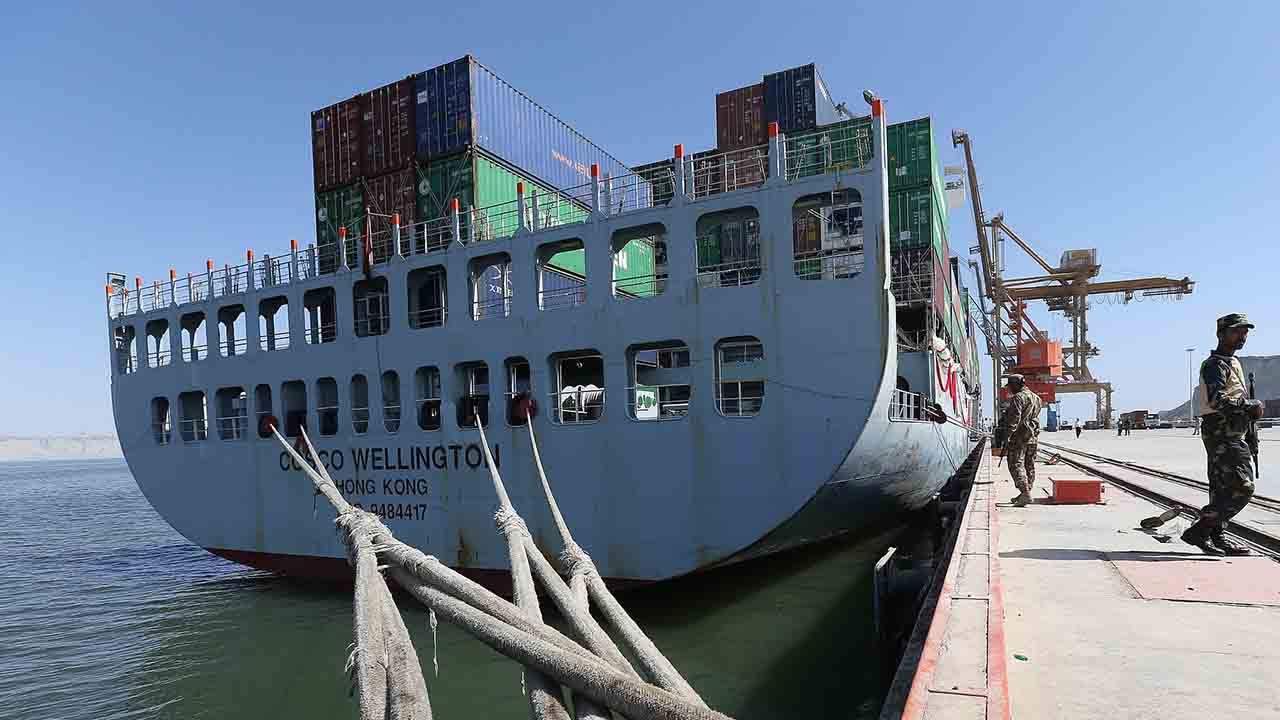
Located at one of the most strategic places in the world, Gwadar is now known as the heart of the multi-billion-dollar China-Pakistan Economic Corridor. At the end of 2016, the corridor became partly operational when Chinese cargo was transported overland to Gwadar Port for onward maritime shipment to Africa and West Asia.
But observers say that the project will only really flourish when the local population is taken on board.
From a position of great prominence, Gwadar was lost in time and now it lies in a state of neglect. The China-Pakistan Economic Corridor can see it revived again.
Copyright © 2017
SHARE
- EXPLORE
- MORE
FOLLOW US