TECH & SCI


Giant bird-like dinosaur species found in China
2017-05-10 12:10 GMT+8
856km to Beijing






Editor
Xie Zhenqi
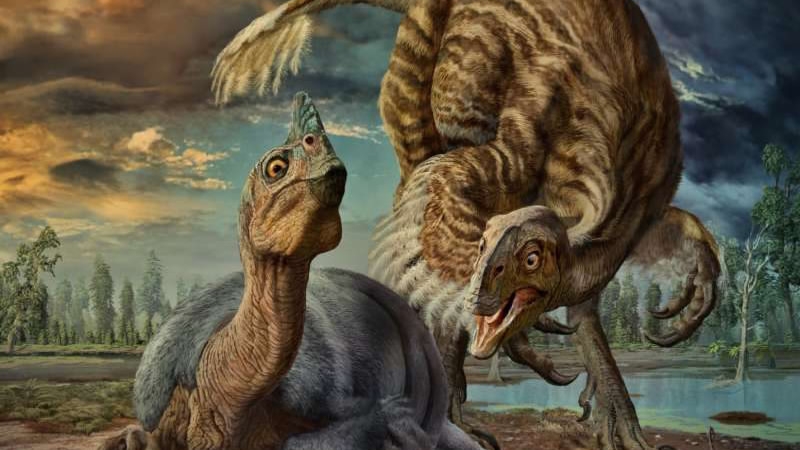
Researchers have discovered a new species of giant, bird-like dinosaur that made nests larger than monster truck tires in what is now central China, a study said.
Measuring about eight meters long and weighing up to 3,000 kilograms, the Beibeilong sinensis (中华贝贝龙) – "baby dragon from China"– lived about 90 million years ago and is only the second known species of the giant oviraptorosaurs in the world.
Darla Zelenitsky, a Canadian paleontologist who co-authored the study, told AFP that the Beibeilong would have looked like an "overgrown cassowary," a flightless bird resembling an emu.
Likely covered in feathers, oviraptorosaurs had robust, toothless beaks and often sported a crest on the top of their heads.
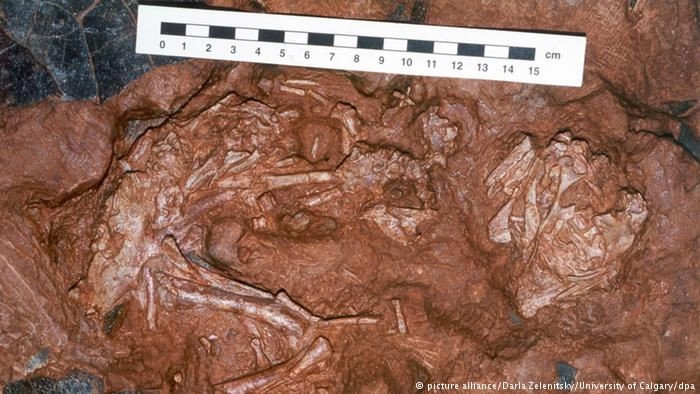
A curled embryo of Beibeilong on top of the eggs (eggshell is dark grey in color). /University of Calgary Photo
"It has been a big mystery for many years as to which species laid the largest-known dinosaur eggs," Zelenitsky said.
"The identification of the baby skeleton in this study revealed that these eggs were laid by giant oviraptorosaurs, a group of dinosaurs that are very poorly known from fossil bones."
The discovery, detailed in Nature Communications journal on Tuesday, was made using a dinosaur skeleton and egg fossil known as "Baby Louie."
Baby Louie was among the thousands of dinosaur eggs excavated and collected from Cretaceous rocks by local farmers in central Henan Province in the late 1980s and early 1990s.
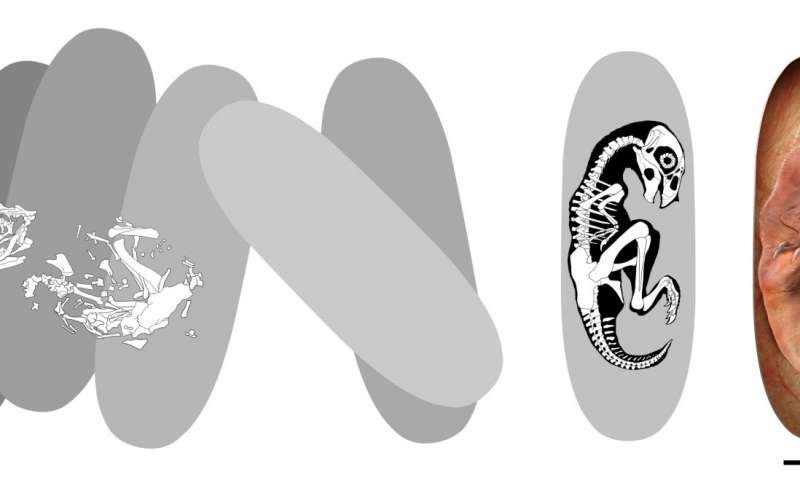
Illustration of Beibeilong embryo and egg fossil, with reconstruction of skeleton and fleshed-out models to the right. /University of Calgary Photo
The specimen was then illegally sold and smuggled into the United States, where it was featured in National Geographic magazine and publicly exhibited at the Indianapolis Children's Museum.
Though the museum always intended to repatriate the Chinese fossil, the study noted, an agreement for its return was not reached until 2013, when Baby Louie found its final resting place at the Henan Geological Museum.
Because of legal concerns, only after Baby Louie had returned home was a team of Chinese and Canadian scientists able to start researching the specimen, which consisted of the bones of an embryo that died while hatching and 45 centimeter-long eggs found in a ring-shaped clutch.
(Source: AFP)
856km
Related stories:
Copyright © 2017
SHARE
- EXPLORE
- MORE
FOLLOW US