
22:58, 20-Dec-2017
Indonesia Animal Rights: Activists call for an end of dog meat trade
 []
[]
Share







Copied
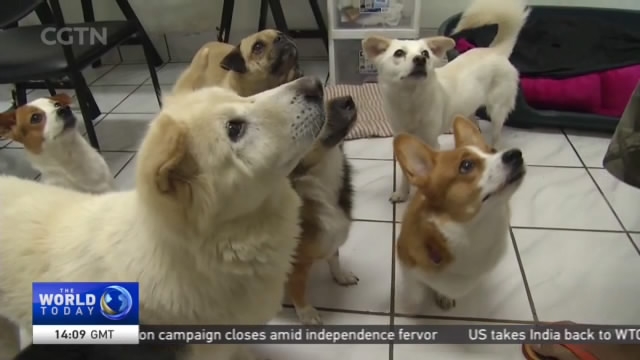
Animal rights' activists are urging Indonesia to do more to stop the growing dog-meat trade. It's led to the slaughter of millions of canines every year. CGTN's Silkina Ahluwalia has more from Jakarta.
It's almost lunch hour at this restaurant. Saragih is preparing to serve her speciality. A traditional Indonesian dish called Saksang. Its main ingredient dogs. Saragih grew up in Mandailing, a province in the North Sumatra region where many of its people have been eating dog meat for centuries.
SARAGIH OWNER, LAPO NI TONDONGTA "Eating dog meat has been part of the Batak culture for so long. The meat has a lot of benefits. It's especially good at curing illnesses, such as dengue fever."
Animal activists, however, have launched a global campaign to end the trade in dog meat. Karin Franken is one of the coordinators of the Dog Meat Free Indonesia campaign. The initiative aims to shed a light on the killings of millions of dogs every year in Indonesia. The dog meat trade is especially rampant in places like Manado in North Sulawesi, Java and Sumatra, regions where dog meat consumption is rooted in their cultures.
KARIN FRANKEN CO-FOUNDER, JAKARTA ANIMAL AID NETWORK "I do think there are some hesitation. I do think the government agrees that it should be illegal but for the government there is the sensitivity issue that makes them a little bit hesitant. But we continue to encourage them and prove to them that it really is for the best interest."
In a country of 250 million people, less than 7 percent of Indonesians eat dog meat. According to animal activists, those people are at risk of transmitting rabies and other diseases due to unsanitary slaughterhouse conditions.
SILKINA AHLUWALIA JAKARTA "Right now, there are no laws prohibiting people from eating and selling dog meat in Indonesia and it won't be an easy process to consider the dog meat trade illegal. Activists are urging the government to regulate the trade including the process of slaughter, distribution and consumption. Silkina Ahluwalia, CGTN, Jakarta."