
13:37, 12-Nov-2017
From Vision to Action: Saysettha joint project helps unlock potential of Laos' growth
 []
[]
Share







Copied
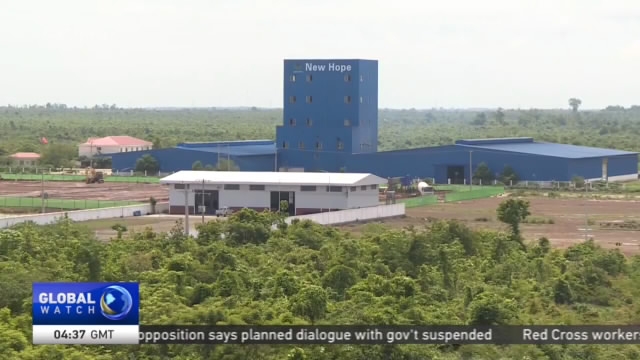
After the APEC economic leaders' meeting in Vietnam, Chinese President Xi Jinping will embark on a trip to Laos. As the Belt and Road Initiative advances, China and Laos have forged closer economic and trade relations. According to the Lao government, in 2016, China invested in more than 760 projects in the country, covering various fields including mining, agriculture, and energy. In the third part of CGTN's special series From Vision to Action, reporter Meng Qingsheng takes us to a joint development project in Vientiane, capital of Laos, and explains its benefits to the country's overall growth.
A joint program unlocking economic potentials of Laos, Saysettha Development Zone covers an area of eleven square kilometers. It's designed to be a model of industrial zones in the country.
The project is jointly developed by China's Yunnan Provincial Overseas Investment and the Vientiane Municipal Government. And Lao-China Joint Venture Investment is undertaking the construction work.
LIU HU, GENERAL MANAGER LAO-CHINA JOINT VENTURE INVESTMENT CO. LTD. Laos is a landlocked country, with low levels of economic growth and industrialization. Its development requires exterior investment and technological support. We have brought here from China industries fitted to Laos' growth pattern, like food processing, power supply as well as oil refining.
MENG QINGSHENG VIENTIANE, LAOS Construction work here at this development zone started back in 2013, with the joint support of both China and Laos. The program has attracted nearly 40 companies so far from around Asia. Set to be completed in 2030, more than 200 companies are expected to be in operation here. And as part of the Belt and Road Initiative, the program is set to inject new momentum into the Lao economy.
The project includes three phases: constructing basic facilities such as roads, water and power supports are now in position for the first stage. This new road connects downtown Vientiane to the industrial park. It's designed by Chinese engineers and constructed using Chinese standards.
LIU HU, GENERAL MANAGER LAO-CHINA JOINT VENTURE INVESTMENT CO. LTD. The construction of basic facilities will provide much convenience for companies in this development zone. We have also made efforts to improve the landscaping here, which are welcome by the Lao people and government. We all respect their laws, customs and religious beliefs.
Industries in the zone are expected to complement Lao economic growth. And this food processing company from Hong Kong has been the first of its kind in the country.
WANG BIN, GENERAL MANAGER WAN YUEN FOODS We did lots of inspections and research before we decided to move here. We enjoy the convenience of services, especially the reduction of taxation and the removal of tariffs. It took us only three months to prepare, and now we are ready for production.
Lao officials have welcomed cooperation from companies to further job growth in the zone.
OUDONE NHENGVANNAVONG HEAD OF SAYSETTHA DEVELOPMENT ZONE We will benefit a lot from fiscal revenues, and the job opportunities created here. We hope to get more support from the Chinese government, and more and more Chinese companies enter this development zone, and make it an exemplary model for bilateral cooperation.
The development zone will be built into an industrial park plus new city area upon its final completion in 2030. Lao government says the project will not only promote its socio-economic development, but also help facilitate the realization of Laos' target to graduate from the Least Developed Country status by 2020. Meng Qingsheng, CGTN, Vientiane, Laos.