Canada beats US to become North America's top pork supplier to China






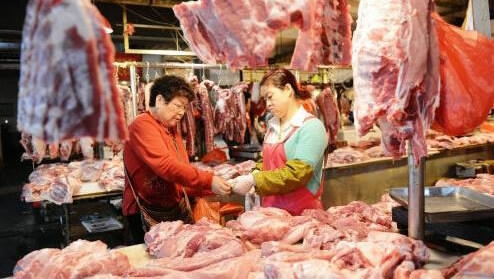
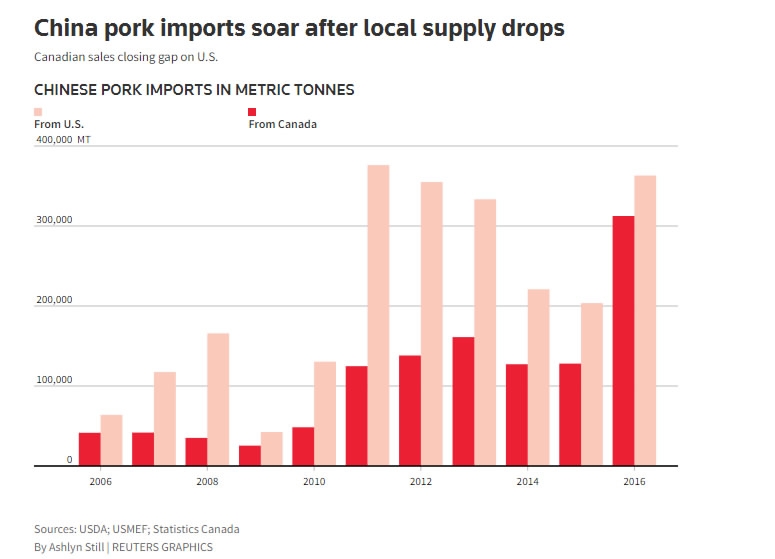
Canada has taken over the US’s crown of the top North American supplier of pork to China, due to farmers and meat packers in a US-Canada battle for lucrative shares of the biggest global market.
In the first quarter of 2017, Canada shipped nearly 93,000 tons of pork to China, on pace to hit 372,000 tons annually. That eclipsed the 87,500 tonnes that the United States shipped, according to data from both governments.
After the sharp increase in Q1, Canada’s pork sales to China exceeded the United States in the first quarter of 2017. That's only happened a handful of times in two decades, according to the government data of both US and Canada two countries.
US exports to China, to another hand, are limited as only about half of the nation's herd has been weaned off the growth drug ractopamine, which is banned in China.
Reuters Photo
The European Union, which has long banned ractopamine, is China's top foreign pork supplier, sending 393,365 tons there in the first quarter.
Chinese authorities banned the use of ractopamine in livestock in 2002, saying that meat raised with the drug can cause nausea and diarrhea in people and be life-threatening to sufferers of heart disease.
Although major US-based firms are now moving to produce more ractopamine-free hogs, such as the Smithfield Foods, Seaboard Foods, and Triumph Foods, the US Food and Drug Administration still says that ractopamine would "not have a significant impact on the human environment."
The China market is so lucrative that Canada's HyLife started selling pork online directly to Chinese consumers last year.
The small Manitoba processor hawks pig feet and elbows on e-commerce site JD.com Inc, a competitor of Alibaba.
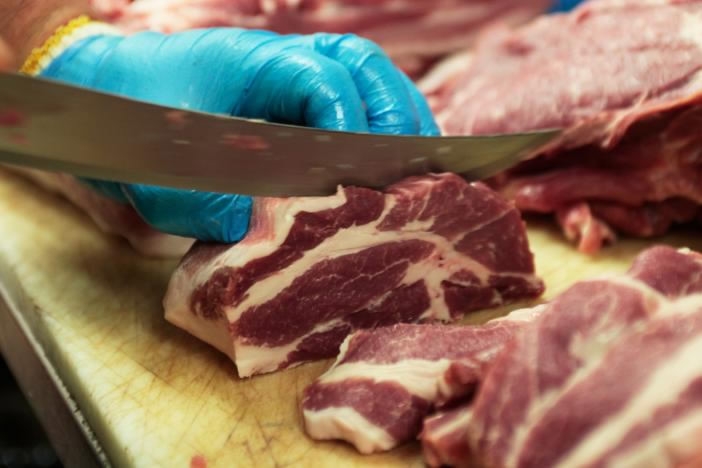
Canadian pork shoulders are being prepped on a butcher's counter at North Hill Meats in Toronto, Ontario, Canada on May 10, 2017. Picture taken on May 10, 2017. /Reuters Photo
"They're big online buyers," said Claude Vielfaure, HyLife's chief operating officer. "You try to move your pork all kinds of ways."
In all, China consumed 55 million tons of pork last year. Although that is the lowest total in four years, imports are rising fast because millions of China’s small-scale farmers have left the pork business in recent years because of falling prices and rising environmental standards.
The government forced thousands of farms to close because of severe water pollution.
China became Quebec-based Olymel's biggest export market last year, vaulting over the United States and Japan.
Source: Reuters
- EXPLORE
- MORE