
15:43, 29-Sep-2017
Big Picture Figures: German Dortmund Technology Park grows out of coal industry
 []
[]
Share







Copied
GUY HENDERSON RUHR REGION, GERMANY "In Germany — back in 1968 -- the entire coal industry — one of the backbones of the economy — came under control of a single company as the sector sought to consolidate to survive. There's not much left of RAG now. And yet it is part of what's seen in many ways as a regional success story — a pioneering process of transition that's given way to a thriving new era.
Out of the rustbelt of the Ruhr — has emerged a high-tech services hub. This is the Dortmund Technology Park — attached to one of 50 universities and training colleges. In coal's heyday — there were none around here.
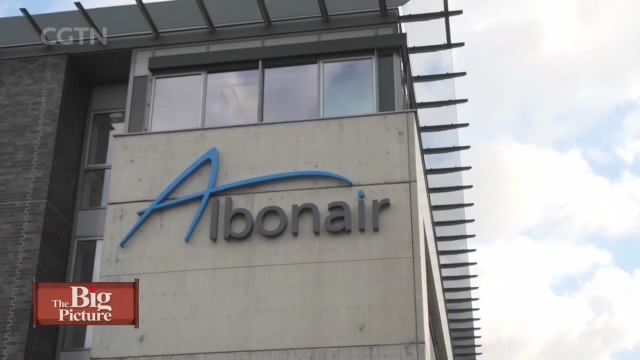
Albonair epitomizes the renewed momentum. It makes exhaust filters for the auto industry — in an area once blighted by pollution. One of many globally-competitive companies which have turned regional weaknesses into strengths.
GEORG HÜTHWOHL MANAGING DIRECTOR, ALBONAIR "We started in 2007 with just 2 people — we now have 200 people — and a marketshare in Europe of about 25%."
While nearly a million jobs have been lost in coal and steel — just as many have been created in their place. A unique and co-ordinated process — with a national framework, but locally led — and with a dying industry on-board.
When Christof Beike joined RAG in 1986 — it had some 200 thousand employees. Since then, it's set itself annual targets — to shrink, while helping staff re-train or find new work.
"In this tower, we pump the water out of the ground". This former industrial giant's main task now is to stop old mines safely.
CHRISTOF BEIKE HEAD OF PUBLIC AFFAIRS, RAG AG "If you look at other countries where the mining industry declined — like the UK, France, the United States — it happened without consideration for the wider region. That caused a lot of economic problems and deprivation. That's what we wanted to avoid here — we wanted to create a process that could bring the region forward".
There has been no significant social unrest here. Though some experts believe years of government subsidies kept the industry alive too long.
ROLAND DÖHRN HEAD OF MACROECONOMICS AND FINANCE LEIBNIZ INSTITUTE FOR ECONOMIC RESEARCH "If you would have closed these mines in the 1960s — at that time, a lot of new industries were formed. So it might have been much easier to have got new jobs here that replaced jobs in the coal mining. At that time, that opportunity was missed."
Others have been found though. Importantly: wages are comparatively lower than before.