
21:09, 23-Nov-2017
Return of the Students: Overseas Chinese students come home for better opportunities
 []
[]
Share







Copied
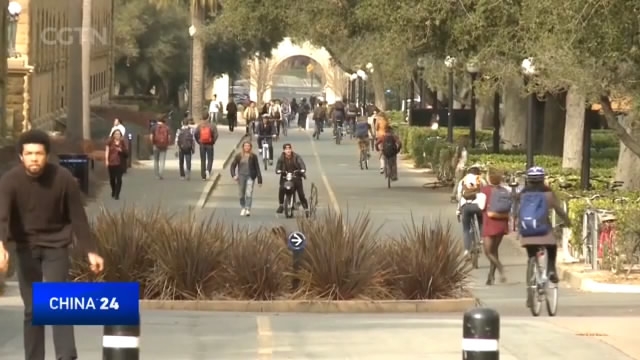
Data from the Ministry of Education show a rise in the number of Chinese students heading overseas to study. At the same time, the number of Chinese students who decided to return home after their stint also went up. CGTN's Mark Niu takes a look at the reasons why.
At one of the most prestigious and vibrant campuses in the United States - the University of California Berkeley - Chinese students take on a very American activity. Members of the Chinese Student Association are working to promote Chinese culture on campus. Sophomore Julia Cao says she feels comfortable in the US and plans to stay here for some time, possibly earning a Master's degree and gaining more work experience. But for most of her friends, it's a different story.
JULIA CAO BEIJING NATIVE "Most of my Chinese friends are. They are eventually going back to China. A lot of especially Chinese students, they are still more culturally involved with Chinese stuff. And they are not really used to the things here."
MARK NIU BERKELEY, CALIFORNIA "Another factor weighing heavily on the minds of Chinese students is how they see themselves fitting into the U.S. workplace. Even though job opportunities may be good, that's no guarantee of advancement or the chance to lead."
Economics major Robert Zhang says in many U-S companies including in Silicon Valley, Asians hit a ceiling.
ROBERT ZHANG BEIJING NATIVE "Asians, despite being a large percentage of the workforce are represented disproportionately in leadership roles of those companies. On the prospect of returning to China, I would say those of us who have received higher education in the US hold an advantage. We are considered to be free thinkers, to be able to bring advanced expertise to the Chinese workforce and going to be more treasured."
KEVIN WANG GUANGZHOU NATIVE "This is an emerging opportunity for a lot of international students or Chinese Americans who are seeking to use their bi-cultural background to their advantage to kind of travel between the two countries and see what kind of connections they can come up with."
An hour's drive away at world-renowned Stanford University, electrical engineering student Ying Hao wants to continue his studies for about five more years here, before returning to China.
YING HAO SHENYANG NATIVE "I share the same culture with people there. And I find I can truly release my potential working China, but also China is a huge market, a lot of opportunities there."
Education graduate student Xue Ting plans to work in the US for several years, and then look for places, possibly in China, where she can make the most impact.
XUE TING BEIJING NATIVE "That's why I study education policy, because I was a volunteer in China for years as a volunteer teacher. So I saw the situation and it really needs help."
Guo Jing, a post-doctoral student in Immunology, says she'll eventually go back to China because of the research opportunities.
GUO JING BAODING NATIVE "The research in China is changing better and better. And now the China government have a large financial support on research and have seen many people when they go back to China, their career is very good."
Guo also says China's huge population provides a greater sample size to more readily study and make an impact on human disease. Mark Niu CGTN Stanford, California.