POLITICS


Opinion: Asia Pacific is still the US foreign policy focus
2017-04-16 15:37 GMT+8






Editor
Tong Xinxin
Guest commentary by Yu Xiang
The US withdrawal from the Trans Pacific Partnership (TPP), as well as air strikes in Syria, have left some wondering if Washington’s foreign policy focus has shifted away from Asia. It may be too early to say the Pivot to Asia is over.
The TPP trade deal was seen as a tool for America’s Asia Pacific strategy. Some observers claimed President Donald Trump’s decision to leave the TPP was a death knell to the Pivot to Asia started by his predecessor, former President Barack Obama. The pivot may still be completed.
First of all, America’s withdrawal does not mean the end of the TPP. The US was the trade deal’s most important backer. Absent US support, the TPP has lost steam, but it’s still alive. Conditions still exist for the US to make a TPP comeback. TPP’s strategic significance has not dissipated.
Second, Trump’s decision on the TPP and demands that US allies in Asia pull their own weight should be viewed as the US president trying to drive a hard bargain.
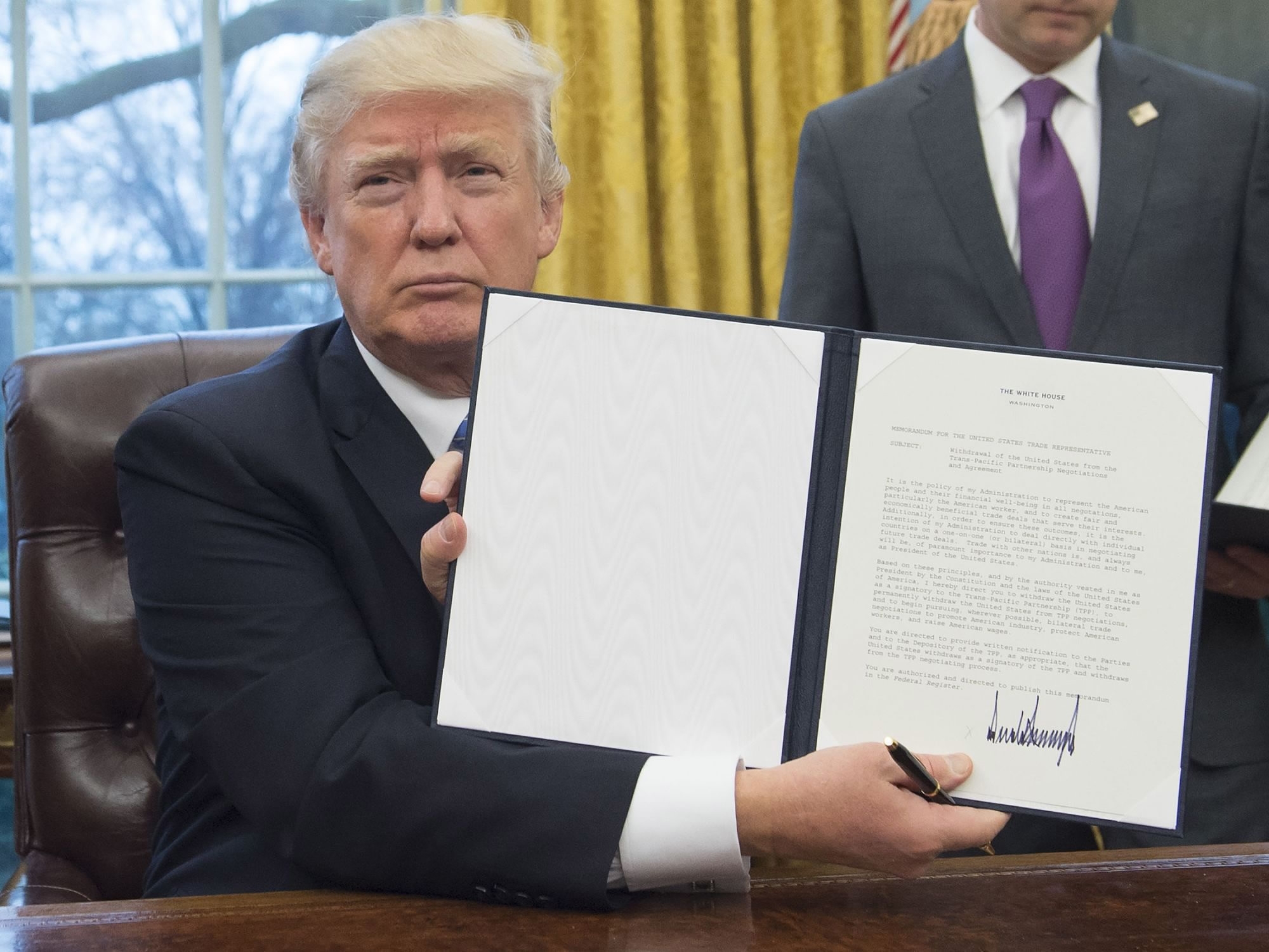
US President Donald Trump holds up an executive order withdrawing the US from the Trans-Pacific Partnership after signing it in the Oval Office of the White House in Washington, DC, January 23, 2017. /CFP Photo
What others see as irrational may be part of a strategy to convince allies to commit to take more responsibility or make concessions.
Trump’s personality shows he is after results, with little regard for norms and traditions. The new US administration may not be talking about the Pivot to Asia. But it will be reckless to start celebrating America’s move away from the Asia Pacific region.
Third, the Asia Pacific is a region Trump cannot ignore. The US has a significant trade imbalance with the region, and the DPRK refuses to stop making and testing nuclear weapons. In trade, more than 80 percent of America’s trade deficit happens with Asia Pacific countries. In the area of security, a US navy strike group is currently sailing toward waters near the Korean Peninsula.
More than 60 percent of US naval forces are deployed in the Asia Pacific. By 2020, 60 percent of the US air force will be in the region. There has been no hint from the Trump administration on what he plans to do with America’s military presence in Asian countries.
On top of all this, the Trump White House’s proposed budget calls for a 50-billion-US-dollar increase in defense spending. Military input will increase correspondingly.
West of the Korean Peninsula is China, the Asia Pacific region’s heavyweight. Chinese President Xi Jinping and Trump met at the latter’s Mar-a-Lago estate in Florida earlier this month. During the meeting, Trump said the US and China had the world’s most important bilateral relationship. Trump clearly sees China as the most important country in the Asia Pacific. It is reasonable to expect Trump will pay close attention.
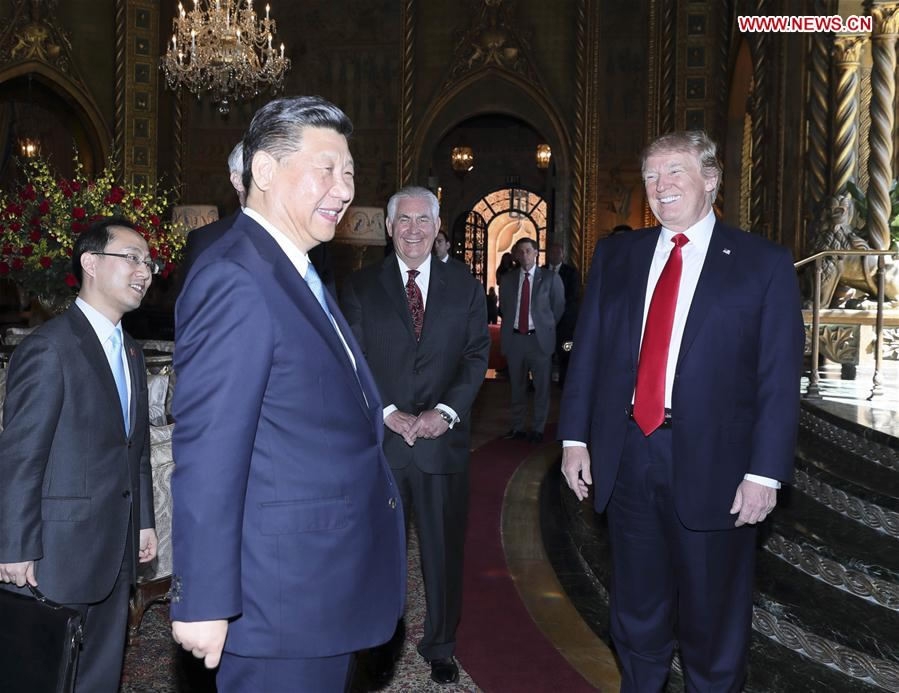
Chinese President Xi Jinping (2nd L) and his US counterpart Donald Trump (1st R) hold the second round of talks in the Mar-a-Lago resort in Florida, the United States, April 7, 2017. /Xinhua Photo
The Asia Pacific region will remain on Trump’s foreign policy radar. Considering Asia Pacific’s rapid economic development, the importance of the region for the US will only grow.
According to Deloitte’s latest Asia Pacific Economic Outlook report, retail sales in 11 key Asian economies, excluding Japan, stood at about one trillion US dollars or just 41.9 percent of that in America.
Fast-forward to 2016, the numbers tell a much different story. Retail sales in those same 11 nations jumped to an estimated 6.6 trillion US dollars, much higher than in the US (3.9 trillion US dollars).
The surge is even more apparent when the figures are adjusted for inflation and purchasing power parity (PPP)—combined retail sales for the Asian economies valued at 2012 US dollars PPP was 3.3 times the corresponding US value in 2016.
It’s safe to say Trump will pour more of America’s foreign policy resources into the Asia Pacific region as his political agenda unfolds.
(Yu Xiang is a Research Fellow and director of the Division of American Economic Studies at the Institute of American Studies, China Institutes of Contemporary International Relations (CICIR), Harvard University visiting scholar, and winner of the 2014 National Outstanding Young Scholar. The article reflects the author’s opinion, not necessarily the view of CGTN.)
Copyright © 2017
SHARE
- EXPLORE
- MORE
FOLLOW US