
20:50, 17-Sep-2017
China's Navigation Satellite System: Four Beidou-3 satellites to be launched in 2017
 []
[]
Share







Copied
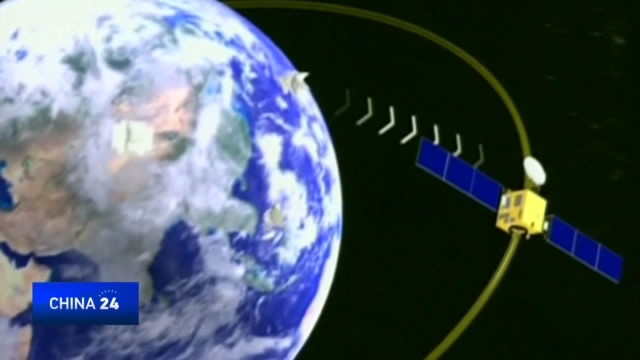
China has begun building its Beidou-3 Navigation Satellite System. Four of the system's satellites will be launched by the end of 2017, and the system will be completed by 2020. Wu Haojun has more.
A navigation system that was named after the seven bright guiding stars.
China's home grown navigation satellite system, Beidou, is expanding its reach.
As a space infrastructure of national significance, Beidou provides real-time positioning, navigation and timing services to global users with high-accuracy.
So far, the construction of the Beidou-1 and Beidou-2 systems have been completed.
RAN CHENGQI, VICE CHIEF DESIGNER BEIDOU NAVIGATION SATELLITE SYSTEM "We are now building the Beidou-3 system. In addition to its global coverage, its capacity and reliability have been greatly improved. And its positioning accuracy will be doubled or tripled compared with that of the current system."
With four of Beidou-3's satellites being launched by the end of this year, the system will cover countries and regions along the Belt and Road by 2018.
And a complete network of global coverage will be in place around 2020.
It will not only provide services to global users, but also play a crucial role in China's information security.
SUN JIADONG, CHIEF DESIGNER BEIDOU NAVIGATION SATELLITE SYSTEM "As an independent country and a major power in the world, China should possess its independent navigation technology. So it developed its own Beidou system to ensure its information security."
With nearly 300 transponders, China now has 17 communication satellites in orbit and the country's satellite communication services cover over 30 countries and regions.
Satellite navigation and location-based services in China are witnessing rapid development.
YU XIANCHENG DIRECTOR, GLAC "The industry value exceeded 200 billion yuan (about 30 billion US dollars) in 2016, up 22.06 percent from 2015. BDS's contribution to the core output accounted for over 70 percent."
Expert says the scale of the BDS industry will reach 240 billion yuan (nearly 37 billion US dollars) in 2020, when the system reaches its global coverage. Wu Haojun, CGTN.