
15:44, 11-Oct-2017
Brain Drain & Gain: China offers incentives to bring back overseas graduates
 []
[]
Share







Copied
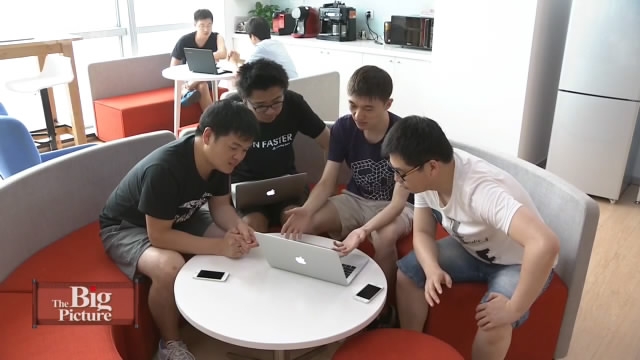
We now continue our special series The Big Picture. As China moves to transition into a consumption and innovation-based economy, it faces the daunting task of attracting and keeping talent. The large numbers of Chinese going overseas for education, career, and lifestyle have caused concerns over a fast-draining talent pool. But policies designed to lure back those research and business talents have shown some success. CGTN's Zhong Shi examines both directions of the talent flow to see whether China is losing its brightest minds to other nations.
Meet Jiang Qingkui, he's just graduated from college in Beijing and has been accepted in a Fashion Studies program at the Parsons School of Design in New York. He spent his summer interning as a photo shoot director and hopes to have a career in the fashion business. To do that, Jiang says he needs a higher degree from one of the discipline's most respected schools and experience in the world's fashion capital. Neither can be accomplished by staying in China.
JIANG QINGKUI, STUDENT PARSONS SCHOOL OF DESIGN "Going to New York for grad school, I'll be exposed to first-hand information in the business, interact with brands and participate in New York Fashion Week."
Jiang is representative of a sizeable group of talent that leaves China every year for better educational or professional opportunities. Statistics show that in 2016 alone, over half a million Chinese left the country for education, a 36% increase from just four years ago. Some are alarmed by the numbers, warning that China is losing its brightest minds to other countries.
Professor Tian Fangmeng studies talent migration. He's optimistic about the situation, pointing out that only a fraction of the population has left. And there are perks that come with talent migration.
PROFESSOR TIAN FANGMENG BEIJING NORMAL UNIVERSITY "Only about 2 to 3 percent of all college graduates over the years in China are 'lost talent'. That's low compared with other countries. Plus, those who left have in fact enhanced research cooperation between China and other countries."
ZHONG SHI BEIJING "For some 30 years, this has been the primary pattern of talent flow in China. Young people leaving for higher education, which often leads to a long-term stay, draining China's talent pool. But in recent years, a reverse trend has been on the rise. Those who once left because prospects looked brighter overseas, are now returning, to a China in transition."
The trend, which some experts call a reversed brain drain, comes as China actively courts high-level talent. Since reform and opening-up began in 1978, China's economy has been propped up by a cheap, labor-intensive workforce. But as the new reality of slower growth and the need for economic transition sets in, new human resources are needed. The high-profile Thousand Talents Program was launched in 2008. It offers monetary and other incentives to attract top-tier scientists overseas to return to China. Some have returned to take advantage of such policies. Others, for the potential of an emerging market. Li Zhifei was a Google research scientist based in California, before returning in 2012 to start his own business.
WALK AND TALK Reporter: Take me back to five years ago, why did you decide to leave Silicon Valley and start your own company in China? Li Zhifei: "In 2012, I saw in the US that the age of the mobile phone was coming. My judgment was that it was coming too for China."
So he packed up his bags, along with his expertise in natural language processing. His artificial intelligence tech firm Mobvoi develops AI-powered smart products that enhance daily life scenarios. The firm has grown fast, attracting multiple rounds of financing from big names including carmaker Volkswagen and his old employer Google. Li credits the progress to what he calls the best time in China for those with ideas and ambition.
LI ZHIFEI, FOUNDER & CEO MOBVOI "The Chinese government has encouraged innovation and entrepreneurship, providing policy and paperwork support and attracting capital. It has made things easier for overseas talents to make a decision to return and get a business started."
His ambition to take his company further rests with a team of employees much like himself, educated overseas but now coming home to launch their careers.
LI ZHIFEI, FOUNDER & CEO MOBVOI "The talents I've recruited who have come back from the US are very self-driven and motivated. That is extremely important for a tech start-up like Mobvoi. "
PROFESSOR TIAN FANGMENG BEIJING NORMAL UNIVERSITY "I think China has entered the time of talent circulation. They get educated abroad, build their networks, and when it's time for business, they come back."
Li Zhifei has his eyes set on the future. But when he DOES reflect on that decision five years ago.
LI ZHIFEI, FOUNDER & CEO MOBVOI "It did seem a bit risky at the time, with lots of uncertainties. But I made the right choice."
ZHONG SHI BEIJING The number of scientists, researchers and entrepreneurs who have returned to China in the past decade shows that the country's incentive-based strategy is working. But the debate continues on whether preferential policies alone will KEEP them. What IS certain is that the two-way flow will continue. Because an open China means that if you find yourself at a crossroads, you're free to choose the best direction for your career.