
China
14:24, 21-Apr-2017
Changing Chongqing: The last 'bang bang' men
 []
[]
Share







Copied
By CGTN's Tao Yuan
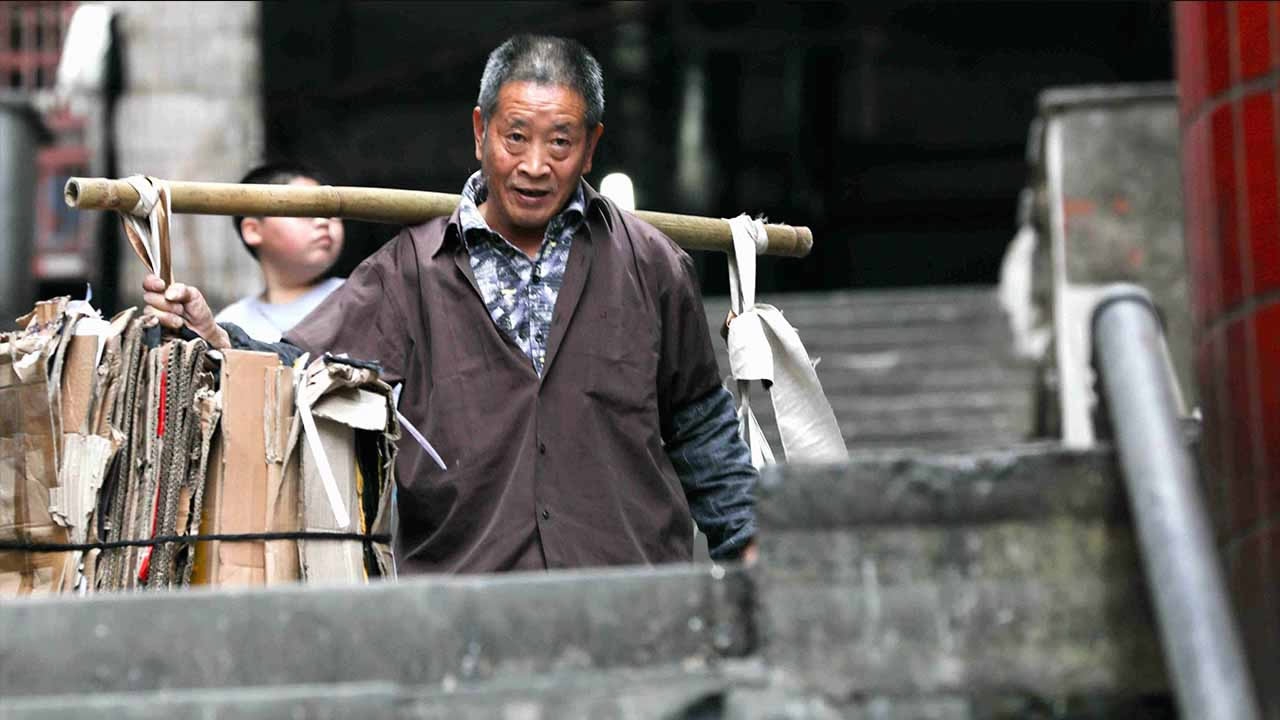
The tour bus pulls in. 61-year-old Zhou Changshun rushes behind, clutching a bamboo pole in one hand, eagerly awaiting the arriving visitors at the bus doors. “Do you need me to carry your luggage?” he asks, as tourists begin to descend from the bus.
If anyone answers with a yes, Zhou is quick to snatch up their luggage, and ties it to one end of his bamboo pole with intertwining strands of rope. In a matter of minutes, he could have well over several pieces of luggage hanging from both ends of his pole. Next he slings his only work tool across his shoulder, and making his way through a maze of steep staircases, finally reaches a rickety dock where tourists are boarding ship set to depart for a cruise down the Yangtze River. Zhou on the other hand, would earn about one US dollar for this tough work.
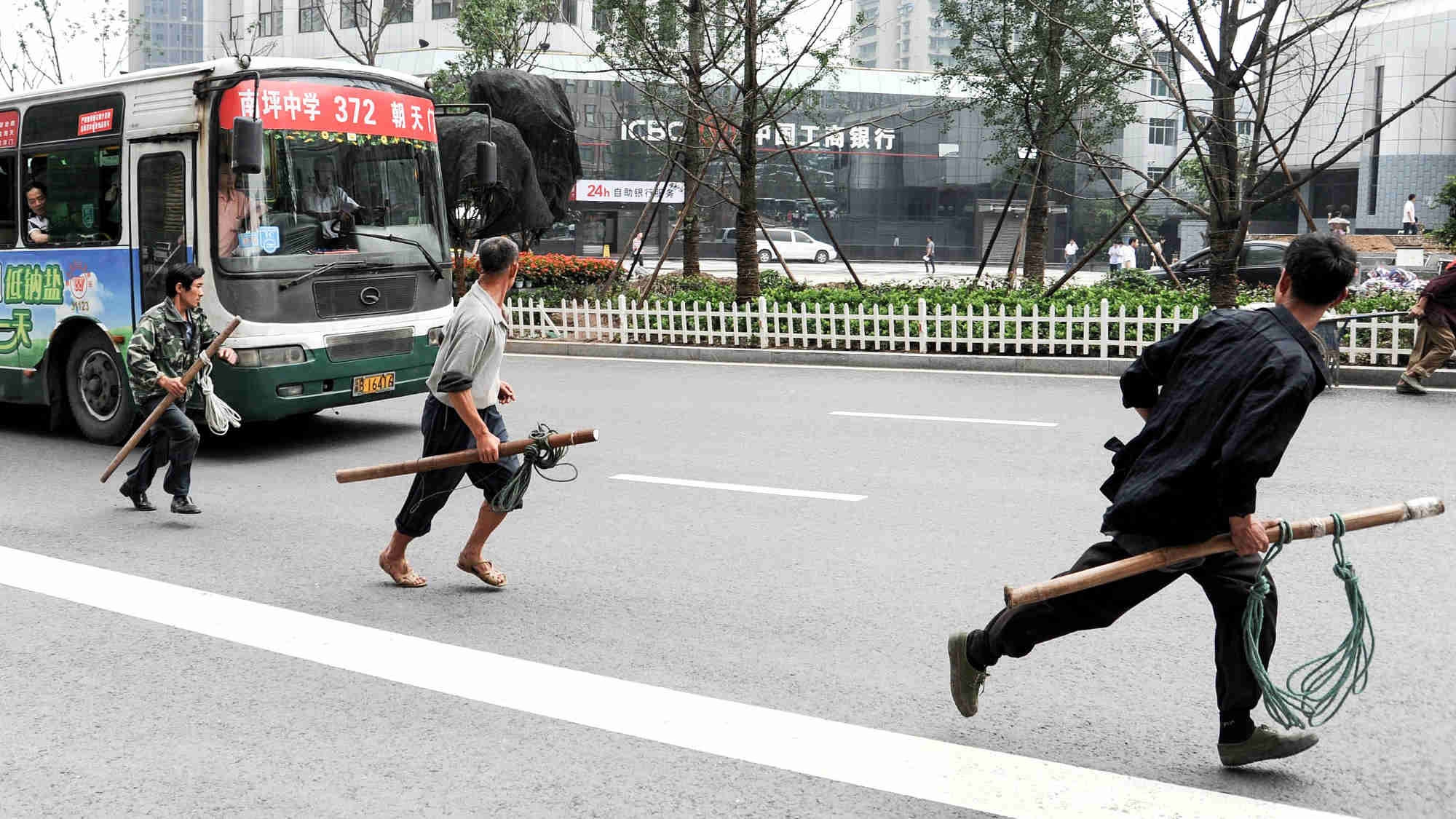
The bang bang men rush to the bus to ask the passengers if they need to carry luggage. /CFP Photo
The bang bang men rush to the bus to ask the passengers if they need to carry luggage. /CFP Photo
But today, he has no such luck. He returns to the pavement, defeated. “I can carry 100 kilograms in each load,” he says in a boastful moment. “But there’s nothing for me to carry nowadays.”
Zhou may belong to the last generation of cargo porters known as “bang bang,” who, for a couple of yuan, shoulder suitcases, food and clothes, and everything else. For decades, the army of bang bang men has been a symbol of Chongqing, a modern metropolis in southwest China built on towering hills, with a labyrinth of steep slopes and staircases connecting street to street.
"When we retire, this trade is going to die,” he says, stroking his shoulder pole, known as a "bang" in Mandarin Chinese, which the porters are also nicknamed after.
Zhou represents a wave of rural farmers migrating to the cities who make a living using brute force and strength. Demand for their trade rose in the 1970s, when China’s market reforms gave people more spending power. Now as the country’s economy slows and the demand for hard labor dwindles, simply put - there’s just no use for them anymore.
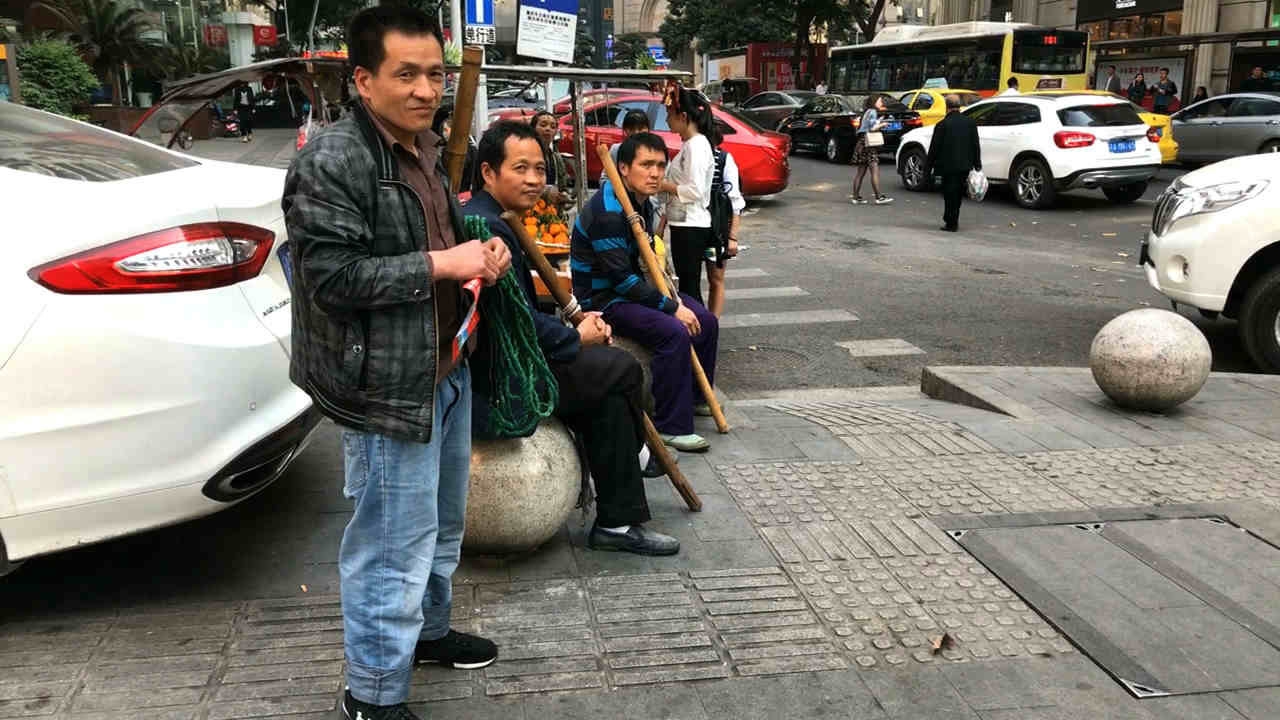
The bang bang men with their bamboo poles waiting for business. /CGTN Photo
The bang bang men with their bamboo poles waiting for business. /CGTN Photo
"Shop owners can’t even keep their businesses going. Even big businesses are closing down. That means we have nothing to load,” says Zhou.
On the street in front of him, couriers zip by on their scooters and motorcycles, on their way to deliver packages. They're a new generation of migrants - younger, and better educated.
But the bang bangs have had their heyday.
"You can only find a bang bang in Chongqing,” says Zhou, with a slight sense of pride. “It’s called the ‘Mountain City'. People need manpower to carry goods where vehicles can’t reach.”
Chongqing was once filled with them. The city's growth was founded on the bustling trade that was coming up and down the Yangzte River. And, there was hardly a commodity which hasn't, at one point or another, dangled at either end of a bang bang pole.
It was never an easy job - “each penny is earned with sweat” - words from Premier Li Keqiang during his visit to Chongqing in 2014. He hailed the bang bang men as the epitome of the hard-working spirit of the Chinese people.
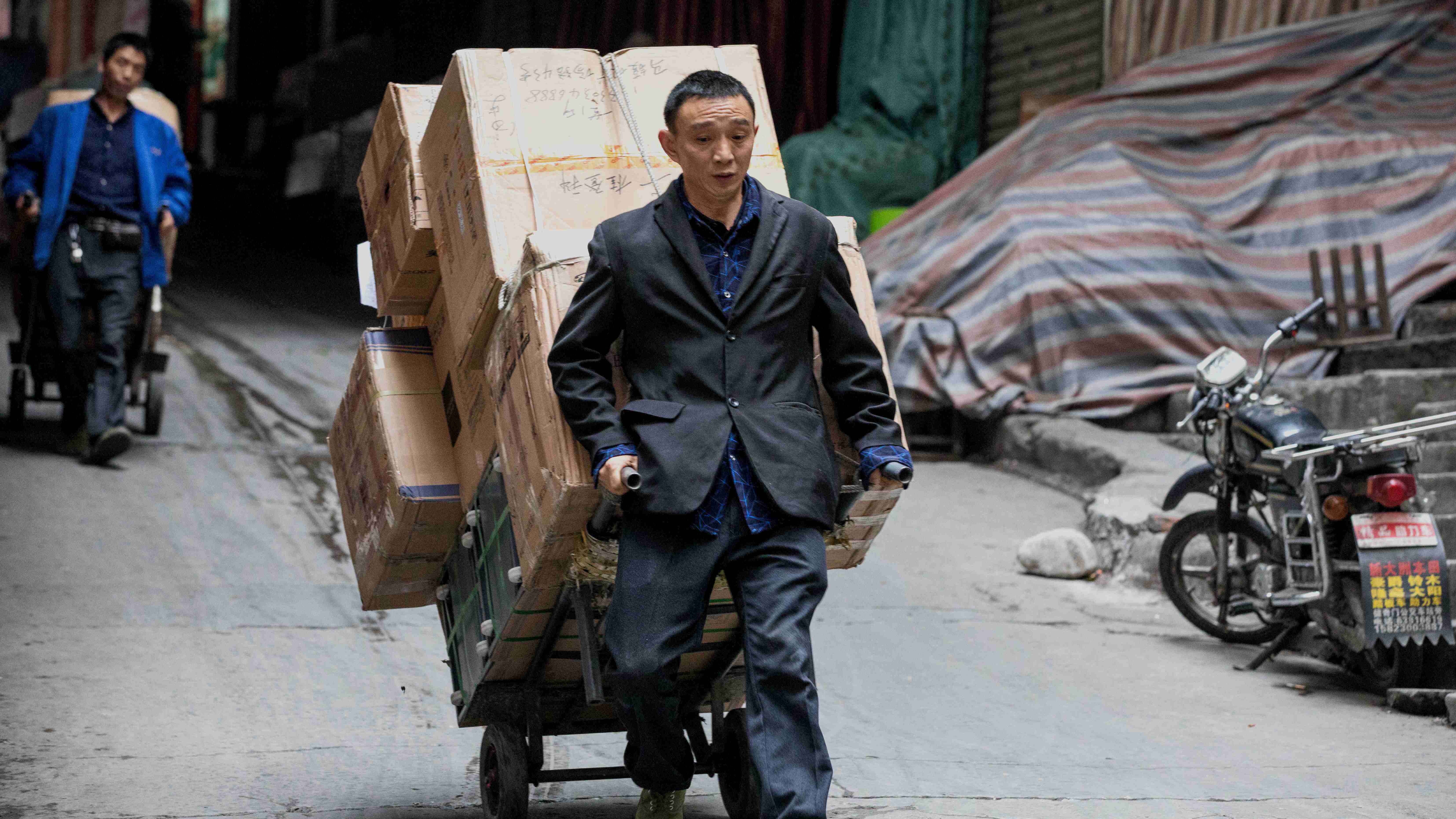
The bang bang man with loads of heavy cargo. /CGTN Photo
The bang bang man with loads of heavy cargo. /CGTN Photo
It’s been said that the transformation of Chongqing from a sleepy port city to a modern economic hub, took place on the shoulders of these porters.
And a modern, urban sprawl it has been. The nearby iconic Liberation Monument Plaza is crowded with high-end shopping malls displaying foreign luxury brands.
Occasionally, a bang bang passes by, seemingly out of place. “I no longer belong to this city,” says Zhou.
1467km