
Can you believe that this uninhabitable 10-square-meter passageway in a Beijing slum was selling for 150 million yuan (20 million US dollars) just a few months ago?
Since it was posted in June, a real estate agent’s advertisement for the Xicheng District address has gone viral on China’s internet as a stunning example of Beijing’s wacky property market.
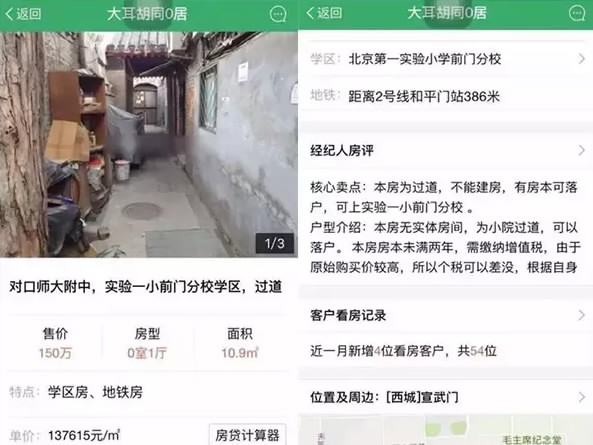
A real estate advert for an uninhabitable alley in a Beijing slum has gone viral since being posted in June, 2016. /Lianjia.com
The only reason that someone may consider buying the passageway: getting their kids into a good school. Beijing’s top schools – those with the best records in college entrance exams, and hence high demand for enrollment – are clustered in several areas of the Chinese capital, including Xicheng. To qualify to send their children to schools in these districts, families must be resident here. And under a loophole finally closed on Saturday by the Beijing Municipal Commission of Education, eligible addresses for this registration scheme included uninhabitable properties.
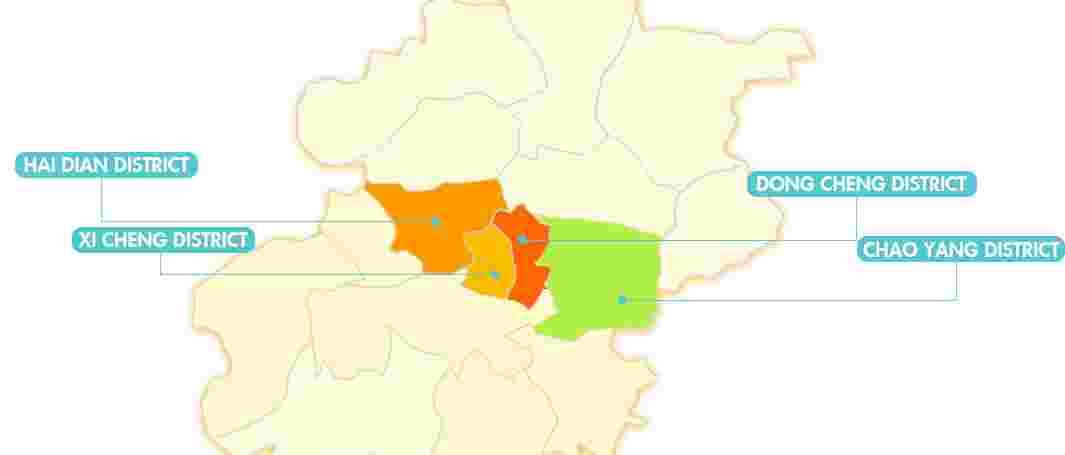
Beijing downtown area. / CGTN Picture
Chinese parents with school-aged children are willing to pay dramatically high prices to live in a good school neighborhood and put up with poor living condition for more than six years.
In the past 10 years, properties with access to preeminent schools have always led the seemingly inexorable rise in Beijing’s home prices, with those in the dozen most desirable districts selling for an average of 140,000-170,000 yuan per square meter, 30 percent higher on average than those in bad school districts nearby, according to a report this month by eeo.com.cn citing statistics from an online real estate transaction platform. These are very high prices to pay in a city where the average annual income last year was 53,000 yuan.
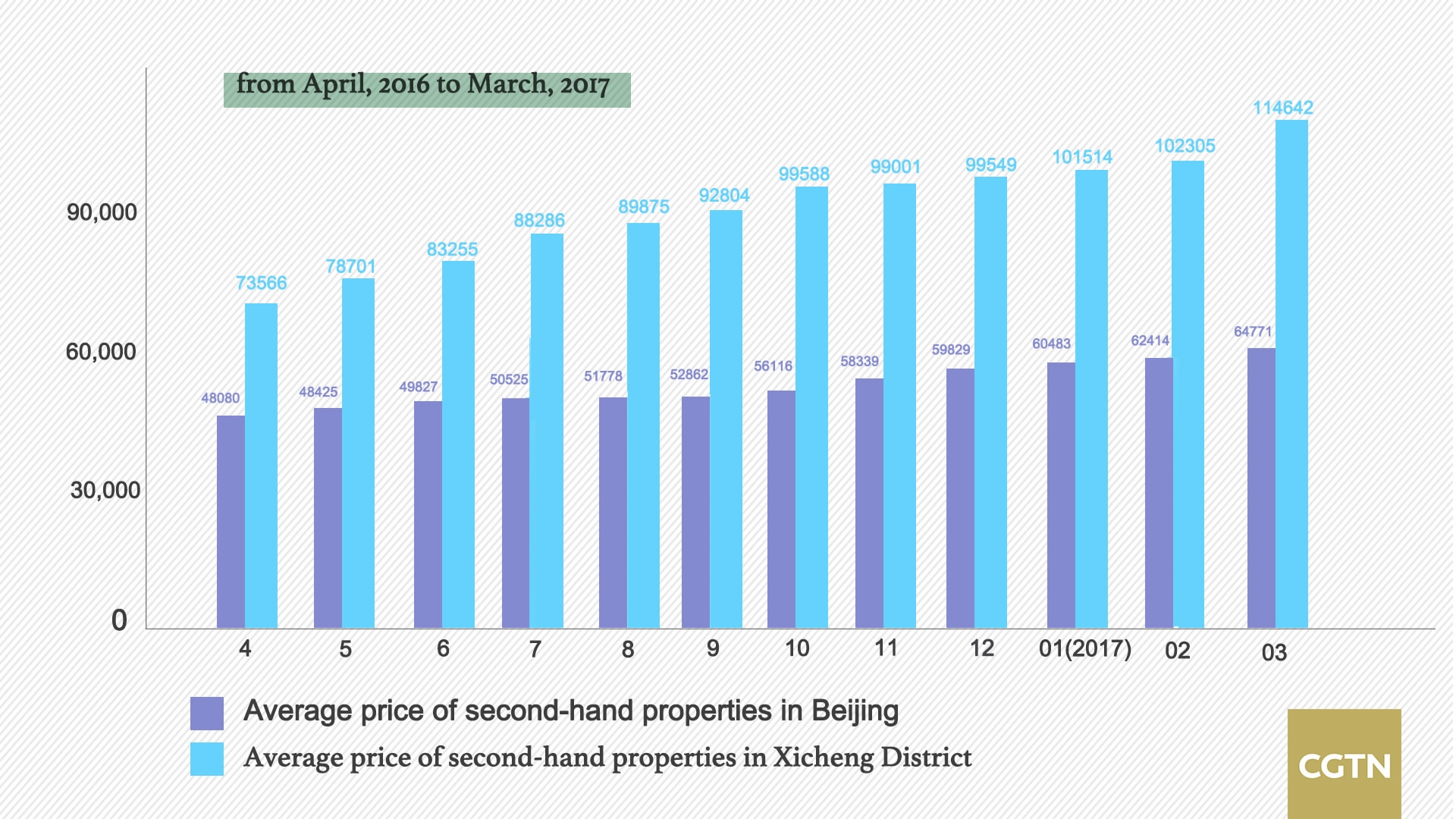
Properties in Xicheng District saw a 60% price bump y-on-y while the average price in Beijing increased by 40%. /Data Source: Fang.com
The Saturday announcement by the Beijing Municipal Commission of Education came amid a resurgence of parents’ complaints after another major bump in property prices since August.
On the Quora-like zhihu.com, a doctor graduated from the prestigious Peking University explained why he left Beijing for a second-tier city despite of devotion to his job as a researcher at the Chinese Academy of Sciences (CAS). The anonymous author said that many good primary schools in Haidian District used to be affiliated to the CAS and vacancies were always reserved for the offspring of academy researchers in compensation for their low salaries.
"Students from those families get good grades and earn the schools a good reputation so that the government would invest more and better teachers would be hired... That is why the schools in Haidian could be as competitive as those in Xicheng and Dongcheng districts to which the central and municipal governments are usually partial with their support,” he wrote.
However, the surging price of properties surrounding those schools changed everything: compelled by the potential profits, those quotas were taken away from the academy so that they could be sold lucratively on the real estate market, according to the author.
His account, liked by more than 25,000 zhihu.com users, was echoed by other answers listed under the same question “Do you think that property prices are harming the creative initiative and quality of life of young people living in Beijing?,” to which most of the answers are positive.
“I worked 70 hours a week, stayed away from all entertainment and saved every penny for the down payment, which plus my parents’ life savings could have afforded an 80-square-meter apartment outside the 4th Ring Road. After the recent price bump, it now only gets me 60 square meters outside the 5th Ring Road,” said a Tsinghua University graduate who has worked five years as doctor in a top hospital in Beijing.