
21:36, 22-Sep-2017
Urban Development Challenges: Indonesia faces relocation dilemma
 []
[]
Share







Copied
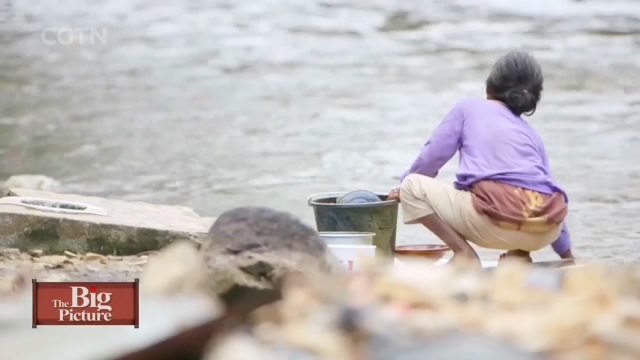
In Jakarta, the urban development boom has transformed the lives of millions of people living in slum areas. But as CGTN's Silkina Ahluwalia found out, adapting to vertical living isn't so simple. And then Han Bin takes us to a Shaolin temple, to see how it is faring in the modern day.
Two years ago, Sri led an entirely different life. On the brink of poverty, her family of four lived in a makeshift home by the river. A place she called home for decades. Today, that home has turned into rubble and all that's left are memories.
SRI FORMER SLUM RESIDENT "It was hard for me to move in here. I was worried about leaving my job and my community. I cried every single day because I thought how am I going to provide for my family now? I am a traditional greengrocer, that is all I know how to do but the market is far from here. For a few months, I went around from block to block selling vegetables to make a living."
Sri is one out of thousands of urban poor who were relocated to this low-cost housing as part of the Jakarta government's program to eradicate slums across the city.
SILKINA AHLUWALIA JAKARTA, INDONESIA 10 million people across Indonesia live in slum areas. Along these banks, they have made a home for themselves but these rivers are filled with pollution and waste, exposing the residents to unsanitary living conditions and high health hazards.
Garbage and wastewater from factories and households are dumped into these waters blocking the river's canal, making the area heavily prone to flooding. That's one of the reasons the government conducted the forced evictions. Sri tells me she still remembers the men who arrived at her home by the river two years ago. They gathered her belongings and immediately drove her to this flat.
SRI FORMER SLUM RESIDENT "I am quite settled in now but my youngest son, he is 15 years old, he still cannot adapt to this new life. He is never home. He throws tantrums. Every week, the principal calls me in to his school saying he is causing troubles."
Eni has worked with thousands of families like Sri's families that are finding it difficult to adjust to their new life. She's a program leader at the NGO, Urban Poor Consortium.
ENI ROCHYATI PROGRAM COORDINATOR, URBAN POOR CONSORTIUM "We help families to understand their rights. They have the right to live on the land where they have built a home. Our team gives them the moral support they need and prepares them to face reality if and when the government finally decides to move them away."
Understanding is key. Residents in these flats are now required to pay rent and maintenance costs, many for the first time. Sri works as a traditional green grocer. Her monthly income of 200 US dollars is not enough to cover her family's expenses.
SRI FORMER SLUM RESIDENT "I cannot afford to pay for electricity now. In my old home, it was different. I only paid 20 US dollars for electricity. Now, I pay for water, electricity and rent. It all adds up to more than 60 US dollars a month."
Moving forward comes at a price. Jakarta is developing at a fast pace. This can be seen in almost every corner of the city. The Public Housing agency is currently constructing low-cost apartments in 23 locations across the capital. North Jakarta alone is slated to have more than 150 apartments by the end of 2018.
AGUSTINO DARMAWAN HEAD, PUBLIC HOUSING AGENCY "Slum areas are mostly located in government land so we are obligated to control those areas. However, we give a lot of support to the residents relocated to the low-cost housings. We provide 85 percent subsidy, in terms of investment. Along with that, we give them affordable healthcare cards, transportation, and other necessary facilities."
The agency is working to accommodate nearly 20,000 people, but Eni says neither the housing nor forced evictions provide a true solution.
ENI ROCHYATI PROGRAM COORDINATOR, URBAN POOR CONSORTIUM "The government says that relocating these people has everything to do with human rights. But we speak to these families directly and they don't feel protected at all. Relocation is just another form of poverty. At least before, they could say that the house they lived in belonged to them. But in these flats, they own nothing. They will be renting for the rest of their lives."
Urbanization has destroyed as much as it has built. The solution lies in developing sustainable methods when dealing with river dwellers, preserving their tradition of the village and the communities that have lived there for generations.
SILKINA AHLUWALIA JAKARTA, INDONESIA The clean-up of Jakarta's rivers has led to the resettlement of thousands that are now forced to adapt to a new life. Urbanization isn't just transforming people's lives in Jakarta. The trend is also changing China. Shaolin temples are struggling to keep its tradition against rapid marketization in the country.
URBAN DEVELOPMENT CHALLENGES
The morning call to prayer, at 4 o'clock every day. It’s part of life at Shaolin Temple. For thousands of years, the ritual has never changed. About 800 kilometers south of Beijing, is the spiritual and physical home for the warrior monks who practice kung fu.
CHANG TIANCI SHAOLIN TEMPLE MONK "To me, kung fu is a state of achieving the pinnacle of skills. Learning kung fu is just like releasing a captive young wolf into a big forest. I've found myself through practice."
The monks seek peace through a practice of strength. 17-year-old Chang Tianyci has been seeking since he was 6. He's been following Master Shi Yanzhuang, the head of the warriors at Shaolin. Kung fu is the integration of body and mind. The true goal is not to defeat others but to maintain strength through self-cultivation and control. And this unique way of life is under challenge from urbanization.
SHI YANZHUANG, HEAD OF WARRIOR MONKS SHAOLIN TEMPLE "This is the Thousand Buddha Hall, the farthest hall of Shaolin Temple. The murals tell the stories of 500 ancient warrior monks. You can see the floor, sunken from all those years of hard practice. Only the senior warriors could practice here. I don't see anything wrong with its opening up to tourism. Precious gifts should be shared by all. Shaolin kung fu helps people understand themselves and others. It's a noble merit to enable more people to accept such physical and spiritual cultivation achieved by the ancestors."
Shaolin Temple is letting the outside world in. Today, it's a tourist spot with kung fu as the big show. Gone are the days when the monks practiced in isolated mountains. In modern China, growth is the concept everywhere. Ancient temples can be a big business. And self-cultivation requires more concentration than ever.
HAN BIN SHAOLIN TEMPLE, HENAN "urbanization is transforming China. The centuries old Shaolin Temple is also at the cross roads for drastic change. How to remain true to its spirit and traditions in the face of growing urbanization is a challenge facing all masters and monks."
Henan, the home province of Shaolin Temple, is determined to become the regional logistics hub of central China. It used to be known for exporting labor, and not much else in terms of development. But now it's reaching new heights in China's urbanization boom.
CHANG TIANCI SHAOLIN TEMPLE MONK "Without urbanization, Shaolin Temple would still be unknown to the outside world. I think there's nothing wrong with the so-called commercialization, as it helps promote the temple."
SHI YANZHUANG, HEAD OF WARRIOR MONKS SHAOLIN TEMPLE "We can't refuse urbanization. We have to accept the reality of what's happened and what's to come. The only thing that doesn't change is Change itself."
Shaolin Temple is standing at a crossroads. Will kung fu follow the changing times or fade into history? Will urbanization sweep away the heritage or help promote it? Master Shi Yangzhuang doesn't worry. He knows change is inevitable. The important thing is to go with the flow, to find a way to ensure Shaolin Kung fu is passed on from one generation to another. Han Bin, CGTN, from Shaolin Temple.