
By CGTN's Tian Wei and Yang Yani
AlphaGo has defeated the world's number one weiqi (Go) player Ke Jie, winning all games in a three-part match last week at the Future of Go summit in the town of Wuzhen, east China's Zhejiang Province.
This is the second time AlphaGo has bested the best. Last year, the AI program defeated 18-time world champion, South Korea's Lee Se-dol.
And the winning streak doesn’t just cover the game of weiqi, AI has also won over human contenders in other games like chess and poker.
CGTN Photo
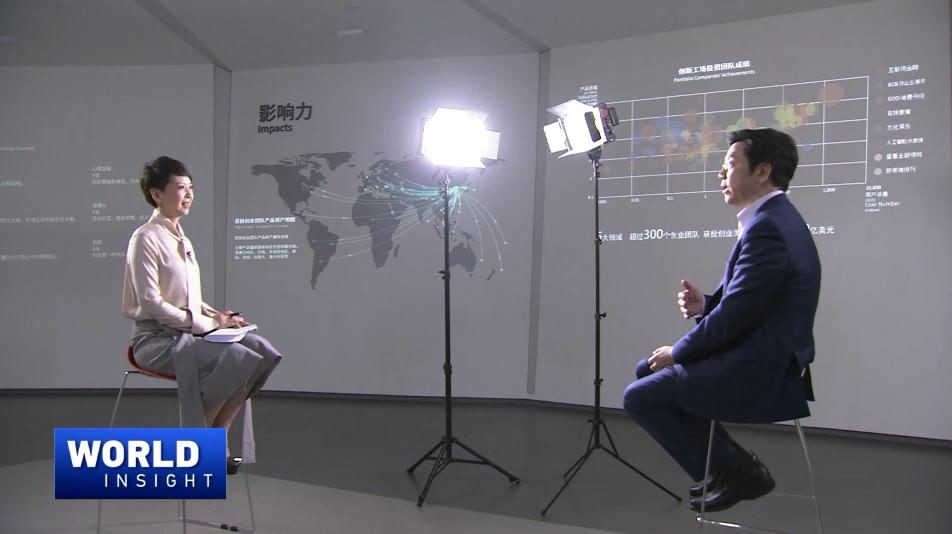
In an exclusive interview with CGTN, Kaifu Lee, venture capitalist, computer scientist and one of the most influential figures on China's tech scene, said the world’s best do not stand a chance against AI in games.
He added that “it is time to move on to the real business applications (of the AI), where there is direct business value that has been created,” noting that AI could be applied to the financial, robotic, and medical fields.
Although AI is already embedded in a lot of applications, it’s evolution within these systems will require time, Lee noted.
Three reasons have shaped the AI expert’s opinion. Firstly, AI still requires a huge amount of data, which is not yet within reach. Secondly, AI algorithms were only invented about seven years ago, and it was "over the last five or six years that they have been perfected in recognized speeches, faces or how to play weiqi." And finally, AI experts are in short supply at the moment.
Lee, however, thinks the AI evolution will be tangible sooner than later.
“Over the next five years, all of that will change,” he said, adding that “more data will be gathered, more experts will emerge, and the barriers to enter the field will be lower. Maybe, a smart engineer with limited experience can program AI, and people will have more examples about how AI creates value.”
Lee noted that AI “should easily replace half of the human jobs in the next 10 to 15 years,” but people should be optimistic about it, he said, because each such AI replacing a human is creating a huge economic value and technological progress.