
11:01, 13-Sep-2017
Rakhine Unrest: Around 370,000 Rohingya Muslims have fled to Bangladesh
 []
[]
Share







Copied
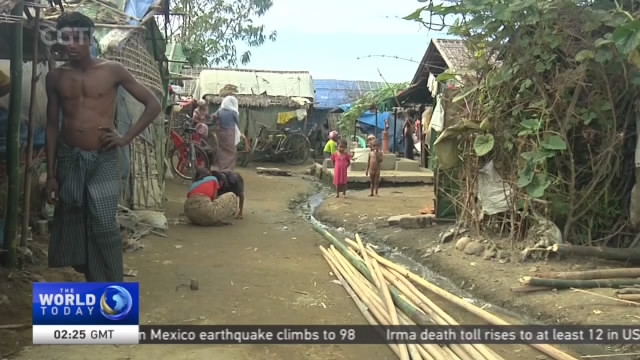
In the past few weeks, nearly 370-thousand Rohingya Muslim refugees have fled Myanmar. Even hundreds of miles from the violence, concerns are mounting. Dave Grunebaum is in Rakhine State with the story.
Rohingya refugees spend days, sometimes weeks on foot to get to Bangladesh.They're the lucky ones as thousands more still seem to be trying to make the journey over mountains and through the jungle. (video reuters video from northern Myanmar showing torched villages and police on patrol) They're running because in many cases they're villages have been torched.It all started after Rohingya insurgent attacked security posts late last month. The military has since launched a counterinsurgency crackdown that's displaced massive numbers of civilians.
PIERRRE PERON UNITED NATIONS OFFICE FOR COORDINATION OF HUMANITARIAN AFFAIRS “We've very concerned about reports about thousands perhaps tens of thousands of people who are still on the move. Men, women and children, elderly people who are walking through the forest, walking through the mountains to try to get to safety”
In central Rakhine, which is far from the violence, more than 100-thousand Rohingyas live in IDP camps after losing their homes in riots five years ago. These Rohingyas depend on food that's provided by the UN and health care from NGOs whose staff includes foreigners and locals.
DAVE GRUNEBAUM SITTWE But since the August 25th attacks, many of these local workers have been unwilling to do these jobs because they're worried about their safety.
PIERRRE PERON UNITED NATIONS OFFICE FOR COORDINATION OF HUMANITARIAN AFFAIRS “There has been a lot of chatter on social media. There's A lot of chatter on the streets of Sittwe with threatening language about people who seem to be collaborating with the humanitarian effort in support of the stateless Muslim community.”
PHIL ROBERTSON HUMAN RIGHTS WATCH “The deliveries of food into those areas by U-N agencies came to a halt because people don't want to deliver it. Local staff are afraid.”
So for weeks these food distributions have not been getting through and health clinics have been short staffed leaving a population that was already vulnerable in even worse shape. In Sittwe, Dave Grunebaum, CGTN.