
15:34, 06-Oct-2017
Africa's Healthcare Challenges: Lack of funding, resources, awareness limits access
 []
[]
Share







Copied
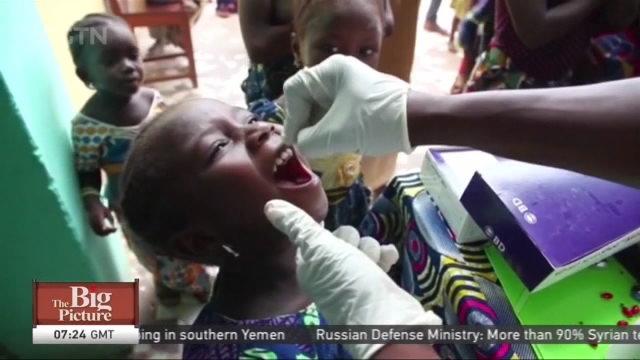
Now we continue our special series THE BIG PICTURE. In many parts of Africa though, just getting access to health care is a challenge. Our reporter Robert Nagila tackles the continent's approach to that challenge.
Africa is confronting the world's most dramatic public health crisis, according to the World Health Organization.
ROBERT NAGILA NAIROBI, KENYA "With an estimated population of over 1.2 billion people, 83 % living in rural areas have no access to health care. Africa suffers a myriad of healthcare challenges. At the very centre of this are financial resources."
MERCY KORIR DOCTOR "The biggest challenge which most African countries face is financial resources in the health sector."
In 2001, African Union member states. Pledged to allocate at least 15% of their budgets, to their health sectors. A decade later, while 26 countries had increased their allocations, only one African country had achieved the 15% target.
NELLY BOSIRE HEALTHCARE REGULATOR, KENYA It's only Rwanda that has actually met this and even surpassed this.
MERCY KORIR DOCTOR "The thinking was that 15% would be enough to cater towards providing services, include taking care of the human resources component, which requires a lot of resources , provide supplies and commodities and putting up the actual infrastructure."
The Ebola virus that swept across parts of West Africa exposed the continent's weak healthcare systems. In countries like Guinea and Nigeria where more resources had been allocated to the health sector, they were more effective in containing the virus. In sharp contrast, countries with almost non-existent healthcare infrastructure were decimated by the virus.
According to data from Afri-dev health and social development agency, in 2014, Liberia had 51 doctors to serve the country's 4.2 million people. While Sierra Leone had 136 doctors for a population of six million people. Other challenges facing the continent are a lack of infrastructure, lack of adequate trained healthcare personnel, corruption.
NELLY BOSIRE HEALTHCARE REGULATOR, KENYA We need to clean up our systems, cut down on wastage, once we minimize the wastage then we do adequate budgeting because it won't make sense to pump more money into a leaking sieve. If we are able to handle our financial Management around healthcare, that is an immediate need and it is something that systems are already in place, it just needs implementation.
But it is not all doom and gloom. There HAVE been vast improvements. According to the WHO, in 2015, more than 12 million HIV positive Africans were on ant-retrovirals compared to 100,000 in 2003. Of the 42 malaria-endemic countries, 33 have adopted artemisinin-based combination therapy, the most effective antimalarial medicines available today.
Most countries are also making good progress on preventable childhood illness. Polio is close to eradication, while measles deaths have declined drastically in the last decade. But a lot more still needs to be done. Of the 20 countries with the highest maternal mortality ratios worldwide, 19 are in Africa.
NELLY BOSIRE HEALTHCARE REGULATOR, KENYA Lack of awareness of how important it is to seek health, becomes our first problem. Because that aspect is still failing it means primary healthcare overall then begins to fail, because it is targeted more towards prevention, towards continued care of chronic illnesses so that they don't complicate. That aspect in africa is very poorly developed.
ROBERT NAGILA NAIROBI, KENYA "Then there is the strain on African health systems imposed by the high burden of life-threatening communicable diseases, which could be largely avoided by meeting basic sanitation needs."
But it is an increase in non-communicable diseases such as hypertension and coronary heart disease that may prove more worrying. And for all these challenges, more funding, research and training are required.