
16:06, 13-Nov-2017
Schengen Agreement: EU nations ask for extension of internal border controls within Schengen Zone
 []
[]
Share







Copied
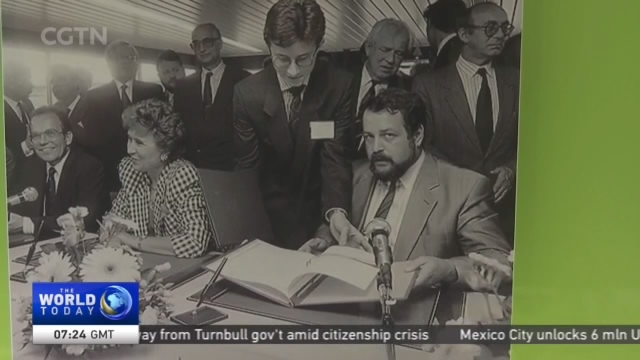
The Schengen Agreement, which came into force in 1995, was a key milestone on the road to the creation of the EU Single market. However, facing security concerns, governments in several European Union countries have proposed an extension of internal border controls within the passport-free Schengen zone. CGTN's Mariam Zaidi has more.
Europe in the 1980s. Despite increasing economic integration, border and passport controls between member states remained. But in June 1985, in a little-known town, came a breakthrough agreement on abolishing internal border checks.
MARIAM ZAIDI BRUSSELS Schengen gets its name from this small town in Luxembourg, chosen for its geographic significance. It's where Germany meets France and the Benelux countries. The perfect place to sign off on an agreement that would one day lead to an almost borderless Europe.
Ten years after France, Germany, Belgium, Luxembourg and the Netherlands signed the Schengen Treaty, it came into force. The free movement of people was finally realized. The Schengen passport-free area now extends to 26 countries who all share a common external border.
BIRTE NIENABER, PROFESSOR OF POLITICAL GEOGRAPHY UNIVERSITY OF LUXEMBOURG "If you think of the early 1980s, people had to queue for hours and hours just to go from one country to another. Without this border control any longer, it's just an easier exchange between the people, goods, economies and the societies.”
But 20 years on, Schengen has been shaken to its core. Germany, Austria, Denmark, Norway and Sweden re-imposed temporary border controls in reaction to the refugee crisis in 2015. France followed suit after multiple acts of terrorism. With the refugee crisis seemingly under control, the European Commission no longer sees any justification for restrictions based on migration - which expired on November 11th.
DIMITRIS AVRAMOPOULOS EU COMMISSIONER FOR MIGRATION "The reintroduction of border controls at internal borders, is and should remain the exception. But in an area without controls, cross border threats affecting public policy or internal security are a matter of common interest. We need to carefully balance two important principles: freedom of movement and security threats.”
But will that balance remain? In a move to appease member states, the European Commission has proposed changes that will allow countries to extend internal border controls within the passport –free Schengen zone for up to two years. But media reports suggest Germany and France are already pushing for an extension for up to four years. Mariam Zaidi, CGTN, Schengen.