
By CGTN commentator Robert Lawrence Kuhn
A prime example of how the National People’s Congress (NPC) is becoming more of an empowered deliberative body (and less a reflex ratification cheerleader) is the multifaceted process of developing a comprehensive Civil Code, now targeted for 2020. This year, a draft of the General Provisions of Civil Law will be reviewed by lawmakers and political advisors.
Compiling a Civil Code requires two steps: first formulating the General Provisions of the Civil Law, and then integrating separate civil laws into a unified code. The General Provisions cover comprehensive areas of legal regulations that concern people's civil lives, and it is seen as a major step forward in codifying a legal system that will better protect the civil activities of society.
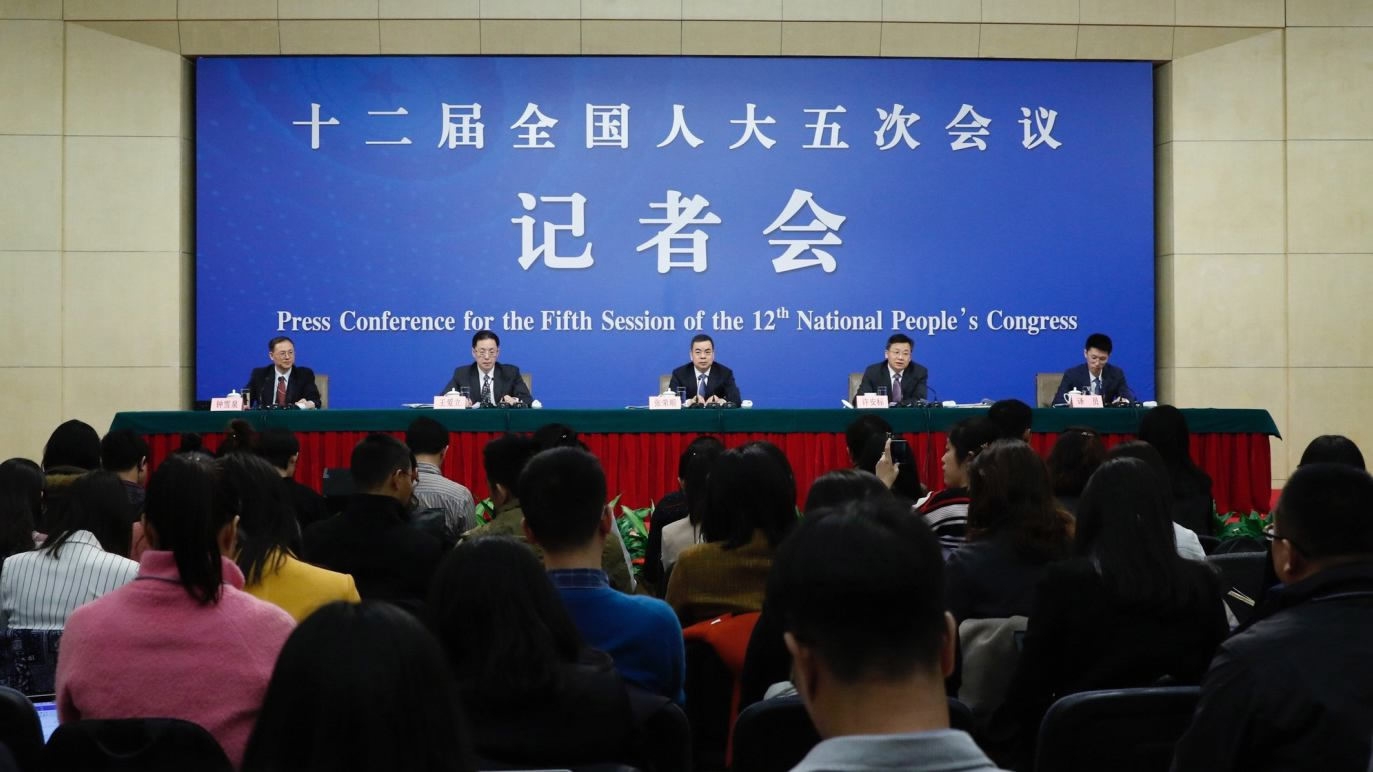
Press conference on the draft of the General Rules of Civil Law and the NPC’s legislative work /CGTN Photo
China's current General Principles of the Civil Law has been in place since 1986. Though it was amended in 2009, many of its articles have become obsolete or inapplicable as a result of rapid economic development and dramatic social change catalyzed by China's reform and opening up. Once approved, the completely revised General Provisions will provide a framework for interpreting some 200 current civil and commercial laws.
The draft revised General Provisions of the Civil Law was first submitted to the NPC Standing Committee in June 2016, and since being released to the public it has received 70,227 suggestions (to date). (I love the government’s commitment to numerical specificity.) Even though the law has gone through three revisions, some of its terms and principles are still in dispute.
At an annual plenum last October 23, the CPC Central Committee promised that the socialist system of laws with Chinese characteristics would be implemented by 2020 -- and it would lead to extensive and profound changes. If the changes prove to be anywhere near as significant as those economic changes that China’s former leader Deng Xiaoping’s catchphrase “with Chinese characteristics” heralded, then this would be a development most welcome.
China’s enhanced enthusiasm for instituting the rule of law springs, in part, from its relentless campaign against corruption. President Xi Jinping, the party general secretary and core of the CPC Central Committee, is committed to curtailing rampant corruption for multiple reasons including rebuilding Party rectitude, upholding the rule of law, breaking up interest groups who oppose reform, and assuring political stability, as well as for restraining public anger and, of course, for punishing the guilty.
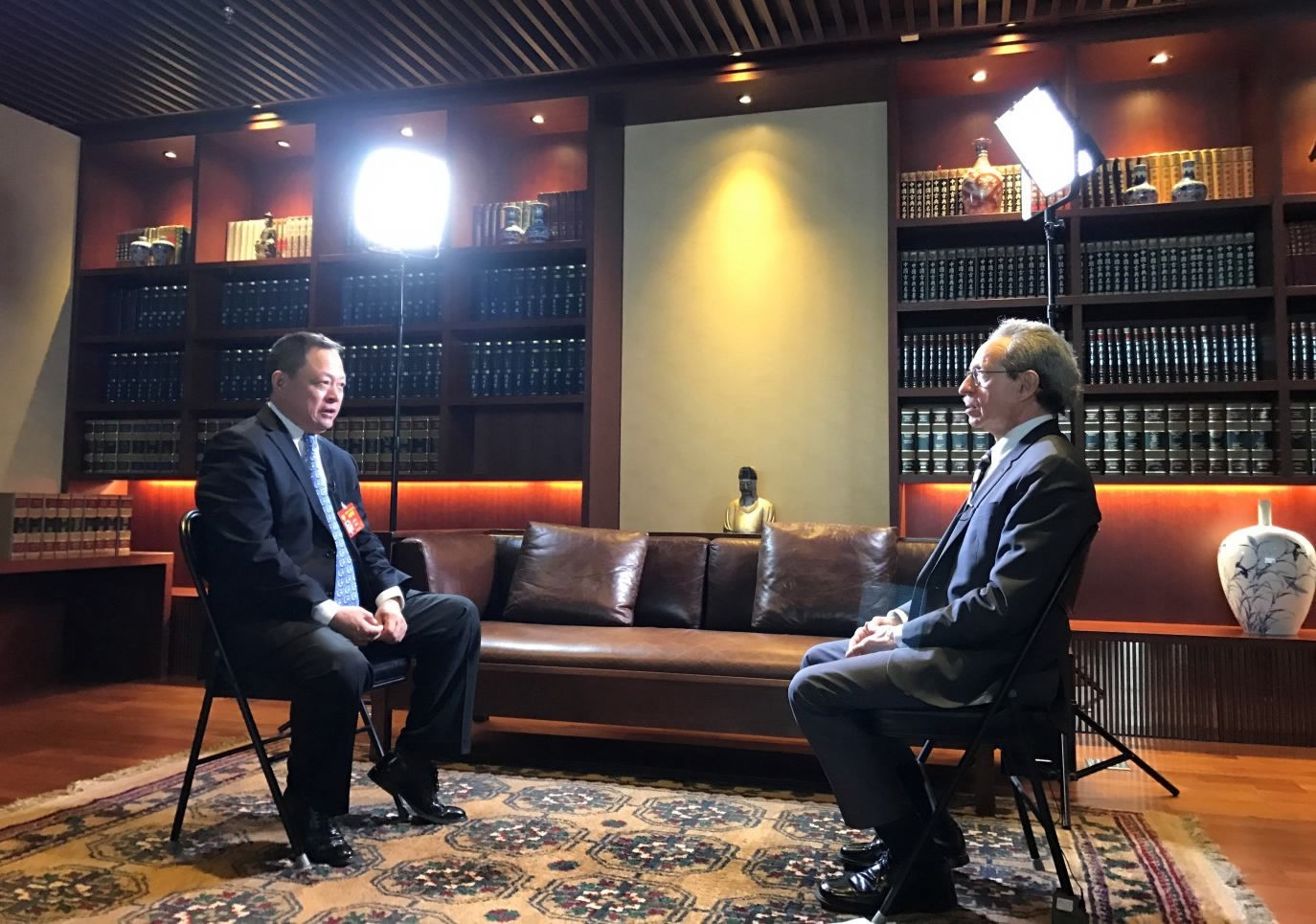
Kuhn interviews Wang Junfeng, president of the All China Lawyers Association. /CGTN Photo
In a major but underreported enhancement to rule of law, local courts no longer report to local governments and officials will be punished for trying to influence judges. Moreover, President Xi is increasing respect for China’s Constitution. All officials will now have to swear loyalty to the Constitution. There is to be a new “National Constitution Day”. Schools are to teach its importance. The idea is to make it brutally clear to errant officials that, no matter how they may dismiss ordinary laws and regulations, they cannot ignore the Constitution. For example, because the Constitution enshrines property rights, officials cannot degrade those rights.
The draft General Provision of Civil Law, submitted to the NPC for review, is a milestone in two ways. First, its substance begins to formalize President Xi’s commitment to strengthening rule of law. Second, the course of its development exemplifies the evolution of the NPC itself.
While in the past the NPC might get more or less a “rubber stamp” image, the process of developing a civil code shows that progress is being made. The way of thinking that discloses public disputes and allows, indeed encourages, public debates, is a breakthrough. Controversy, like competition, fosters innovation. We watch in real time as the draft General Provisions of the Civil Law makes its way through a transforming NPC.
(Robert Lawrence Kuhn is a public intellectual, political/economics commentator, and international corporate strategist. He is the host of Closer to China with R.L. Kuhn on China Global Television Network (CGTN), produced by Adam Zhu.)