Scientists discover how S China Sea was formed after seabed drilling expedition






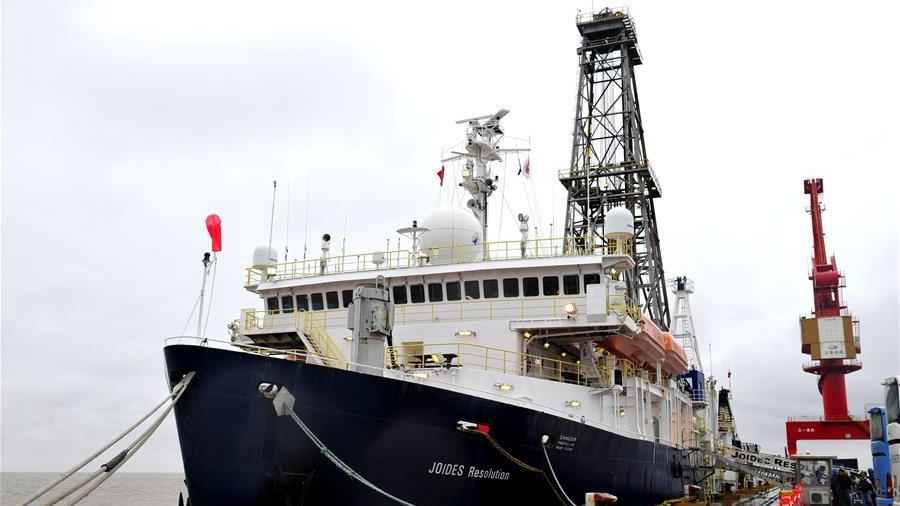
China is aiming to build the world's third ocean drilling research vessel and become a leader in international deep-sea drilling scientific efforts by 2028, a senior government consultant said Monday.
Wang Pinxian, a marine geologist from Tongji University and also with the Chinese Academy of Sciences, made the remarks at a press event to announce the successful conclusion of a China-led international drilling mission to find out how the South China Sea was formed tens of millions of years ago.
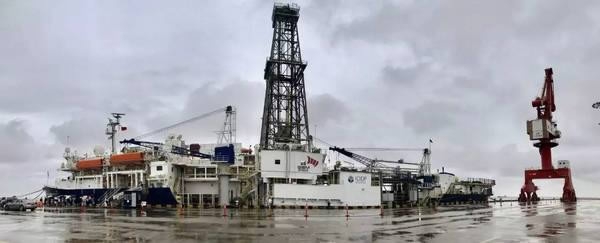
The ocean drilling research vessel. /Xinhua Photo
The four-month mission was conducted on board the American vessel JOIDES Resolution as part of the 367th and 368th expeditions of the Integrated Ocean Drilling Program (IODP), an international collaboration on deep-sea geological scientific research that began in 1968.
China joined the IODP in 1998 and participated in three drilling missions focusing on the South China Sea in 1999, 2014 and 2017, respectively. The latest mission was proposed, designed and led by Chinese scientists. An international group of over 60 researchers was involved.
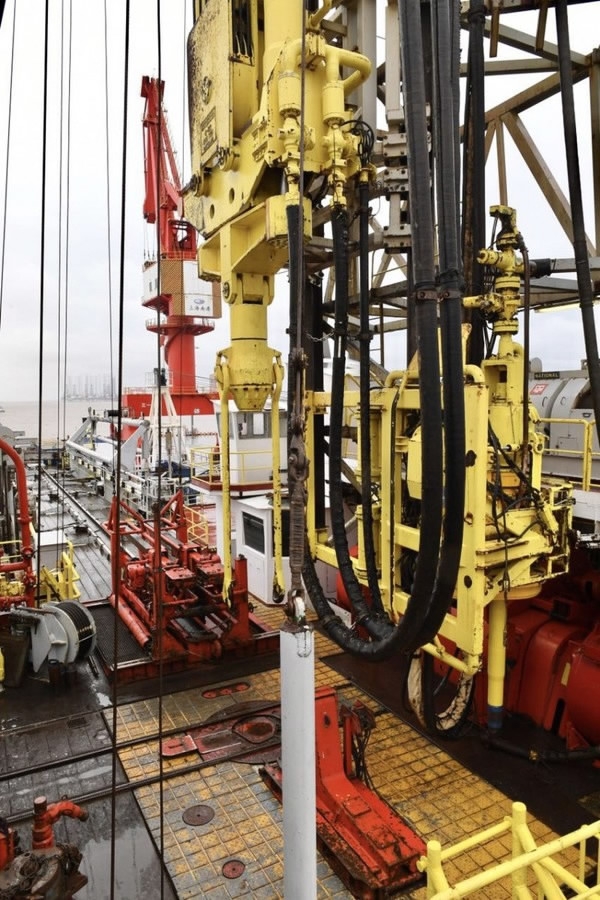
The ocean drilling research vessel. /Xinhua Photo
Wang, who serves as a consultant for China's IODP involvement, said the mission marked the first step in a three-part strategy for China to engage in international ocean drilling activities.
He said China aims to drill seabeds in other oceans and set up the world's fourth seabed rock database and a lab before attempting to build an ocean drilling vessel.
The two ships used by the IODP are JOIDES Resolution and Japan's Chikyu.
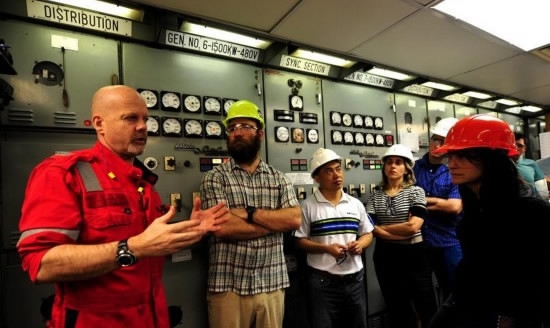
Explaining how the ship is powered. /Xinhua Photo
JOIDES Resolution docked in Shanghai Sunday, the first-ever visit of an international ocean drilling vessel to a Chinese port.
Tongji University marine geologist Jian Zhimin, a co-lead of the IODP mission, said at Monday's press briefing that during the expedition they dug 17 holes at seven sites in the South China Sea. The combined drilling depth exceeded 7,669 meters, and samples including sedimentary and volcanic rocks were collected.
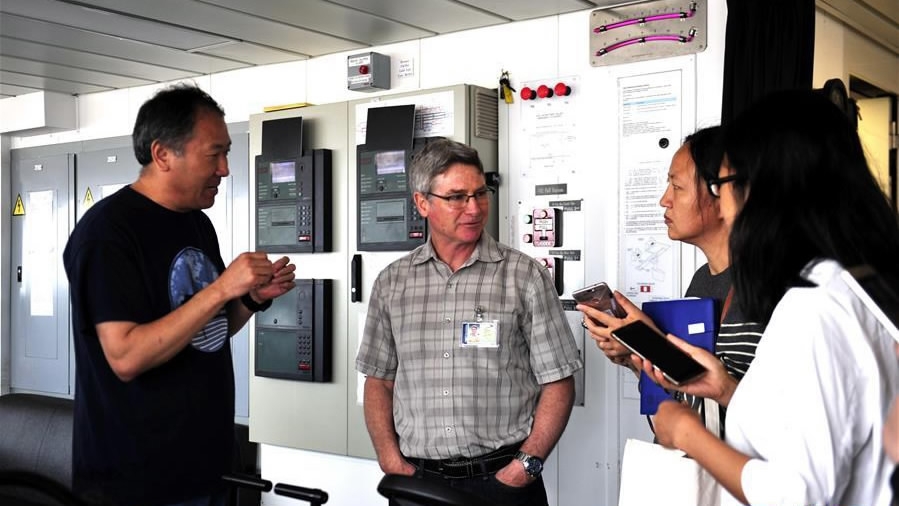
A scientist from Tongji University (L) and the captain of JOIDES (M) in the control room. /Xinhua Photo
The study of the rocks indicates the South China Sea was formed differently than the Atlantic, scientists have found.
Jian said the newly-discovered formation on the South China Sea was so unique that they might need to rewrite the textbooks on continental shelf break-up and ocean formation.
Hans Christian Larsen, a professor from the Geological Survey of Denmark and Greenland, said the findings are significant.
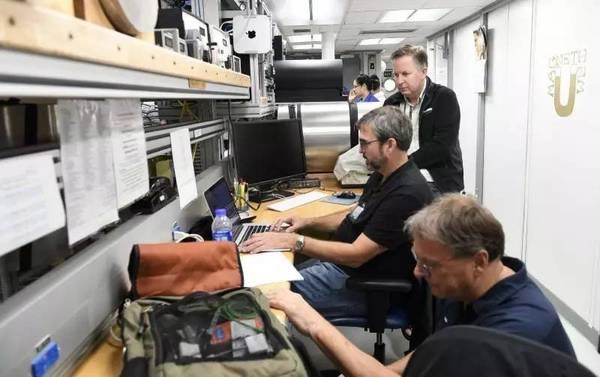
Scientists working in the lab on the ship. /Xinhua Photo
"We have provided very strong, firm evidence for a different history here and a different process. So that very important element of plate tectonics, then the textbooks need to be revised, rewritten in that particular area," said Larsen.
A total of 64 scientists from 14 countries including China, the United States, the United Kingdom, Germany, France and Italy joined in the four-month IODP expedition, during which time they also found sediments and sedimentary rocks of high scientific value from a depth of over 2,540 meters in the north of the South China Sea, gaining a compelling insight into the evolution of the Sea.
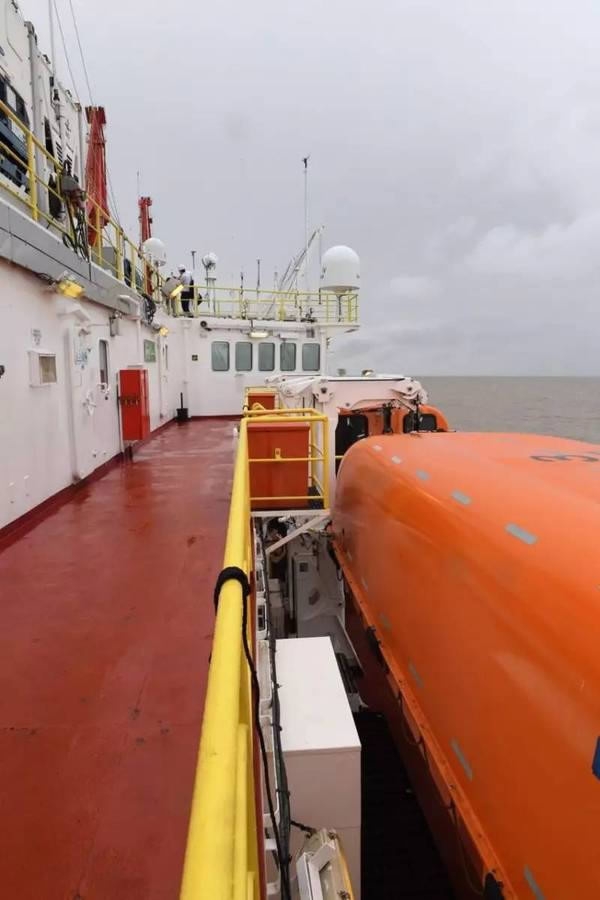
JOIDES has just completed an ocean drill in the South China Sea, led by Chinese scientists, in which they discovered how the area was formed. /Xinhua Photo
"We obtained the complete sedimentary record of the South China Sea in the past 34 million years, which is perfect for the scientific studies of the South China Sea’s formation time and its environmental changes. Our findings are also very important to oil and gas exploration at the northern continental shelf of the South China Sea," said Liu Chuanlian, a professor from School of Ocean and Earth Science, Tongji University.
Among the 64 scientists involved in expedition, 26 are Chinese who come from 13 universities and research institutions.
The first expedition was conducted back in 1999, with the second following in 2014.
(With inputs from Xinhua)
- EXPLORE
- MORE