
Chinese Foreign Minister Wang Yi on Friday urged all parties to refrain from inflammatory or threatening statements to prevent the situation on the Korean Peninsula from becoming irreversible. He made the remarks at a press conference after holding talks with his French counterpart Jean-Marc Ayrault.
Talking about the “heightened tension” between the United States, the ROK and the DPRK, Wang said the precarious situation "deserves our attention and concern".
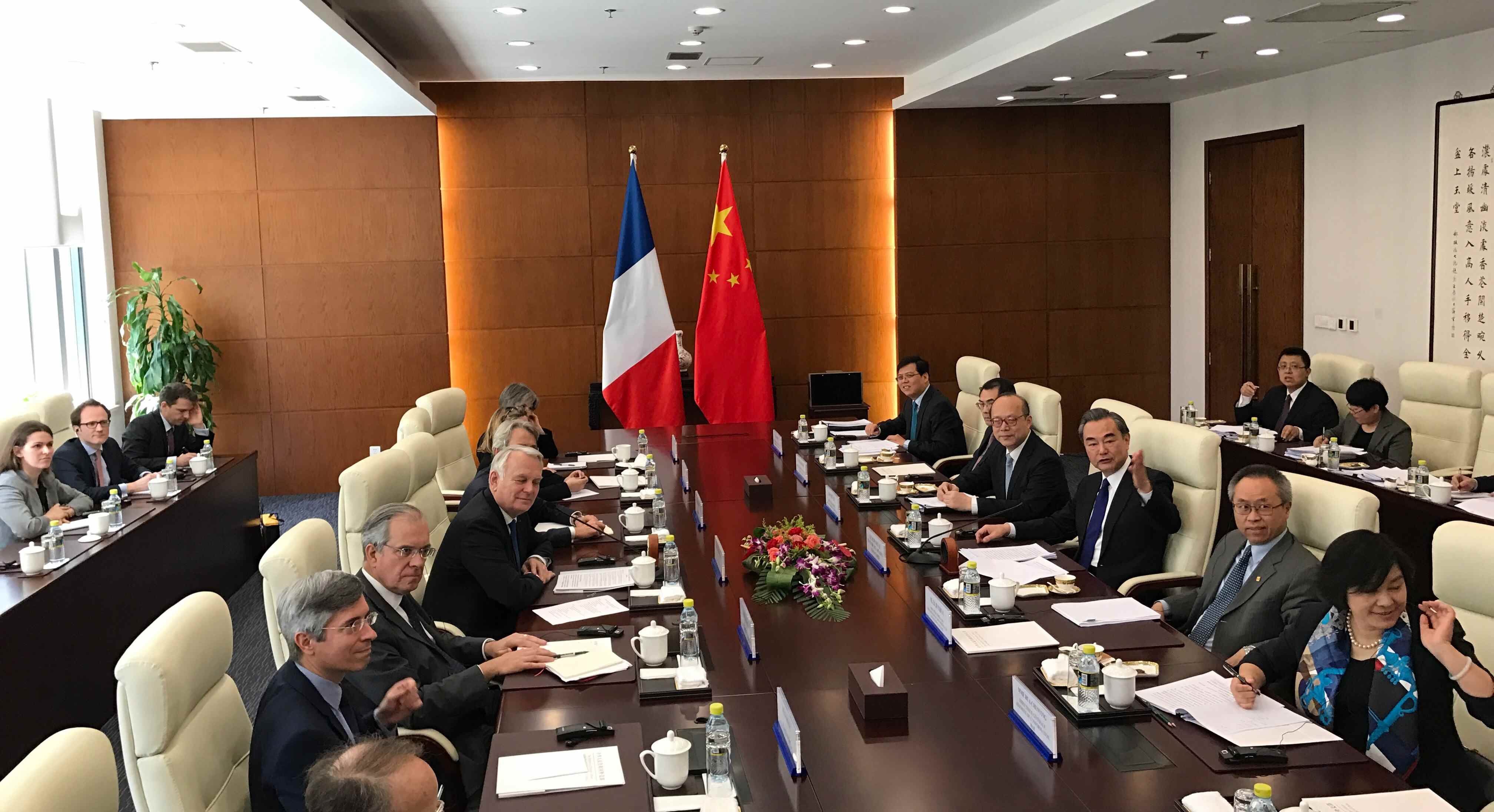
Chinese Foreign Minister Wang Yi talks to his French counterpart Jean-Marc Ayrault on April 14, 2017. /CGTN Photo
“China has always opposed any rhetoric or actions that would escalate tension, and historically dialogue has proved to be the only solution,” Wang said.
The foreign minister said that on the Korean Peninsula, “it is not the one who espouses harsher rhetoric or raises a bigger fist that will win."
“No one would win and multiple parties will lose if there was a war on the Korean Peninsula,” Wang said.
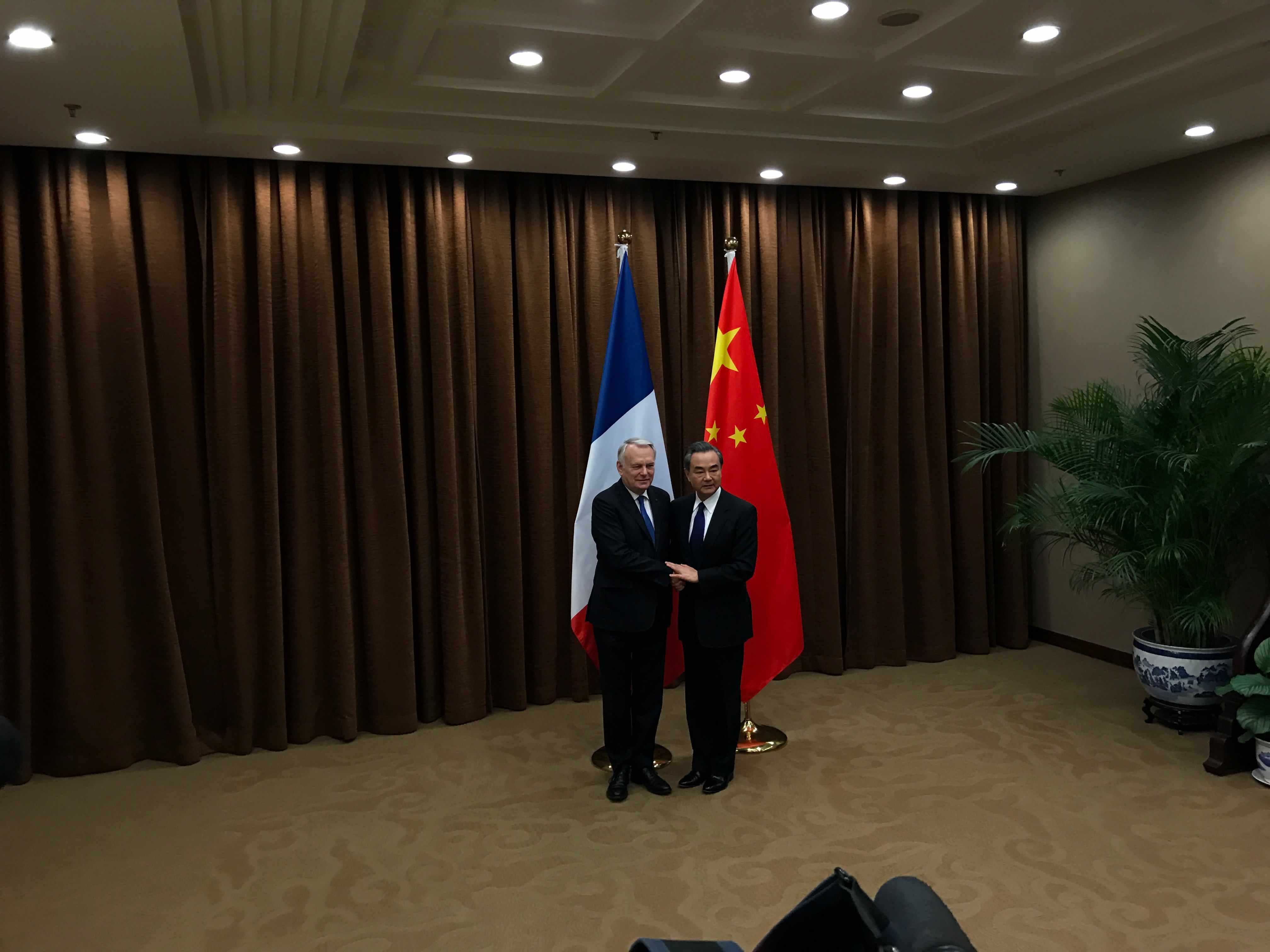
Chinese Foreign Minister Wang Yi shakes hands with his French counterpart Jean-Marc Ayrault on April 14, 2017. /CGTN Photo
The Chinese foreign minister urged all sides not to provoke or threaten each other, and warned all parties to not leave the situation irretrievable.
“A cost must be paid and historical responsibility will be undertaken if anyone causes chaos on the Korean Peninsula.”
China, said Wang, proposes a “dual-track approach,” and is calling for a “suspension for suspension” method - referring to halting the DPRK's nuclear program as well as the ROK and US military drills - to denuclearize the Korean Peninsula, and establish a peace mechanism to defuse the looming crisis.
"China has noticed that there are indeed some voices supporting the resumption of talks on the Korean Peninsula. China earlier proposed the idea of 'suspension for suspension,' and has mapped out some practical plans to make it happen. Also, China is open to all constructive suggestions. The communications on the issue can be in all forms. As long as it is dialogue - it could be formal or informal, bilateral talks or multilateral talks - China would show its full support," Wang said.
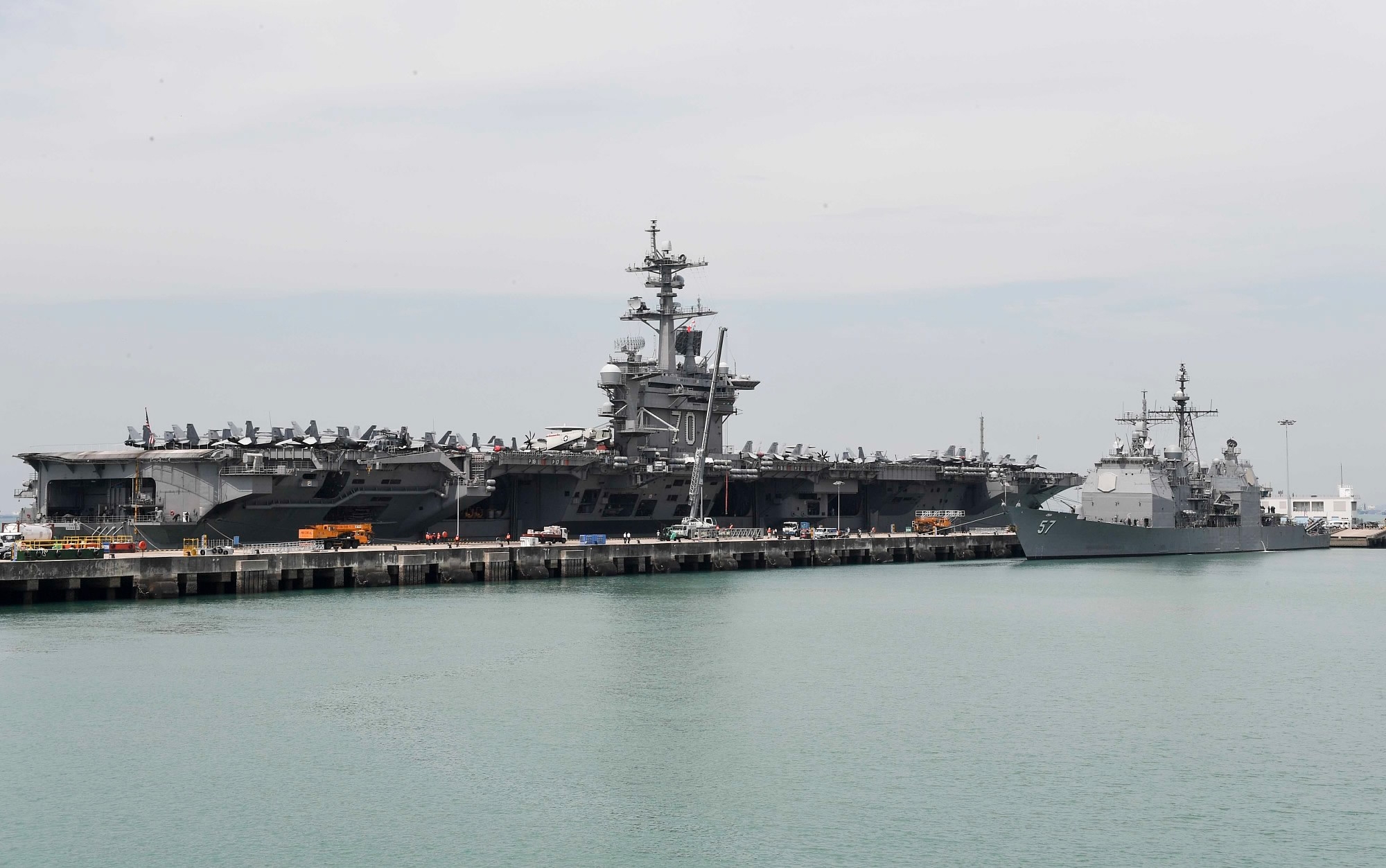
This US Navy handout photo obtained on April 12, 2017 shows Nimitz-class aircraft carrier USS Carl Vinson moor at Changi Naval Base, Singapore, for a scheduled port visit on April 4, 2017. /CFP Photo
The Carl Vinson Strike Group was sent by the US to waters near the Korean Peninsula, as Washington looks to discourage the DPRK’s nuclear ambitions. US President Donald Trump said on Thursday that the DPRK was a problem that "will be taken care of.”
The tensions have also seen China voice its strong opposition to the deployment of the THAAD (Terminal High Altitude Area Defense) system in the ROK.
“Ever since the US and ROK made their decision to deploy THAAD in the ROK, the situation on the Korean Peninsula has become even more tense, and the situation in the ROK has not become secure, but faces even greater threats. China once again urges all relevant parties to cease the deployment process, and would like to reiterate that China will take all necessary means to safeguard its national security and interests, as well as regional strategic balance,” said Chinese Foreign Ministry spokesperson Geng Shuang on Friday.
Related stories:
3km