
13:12, 13-Dec-2017
National Memorial Day: A visit to memorial exhibition on Nanjing Massacre victims
 []
[]
Share







Copied
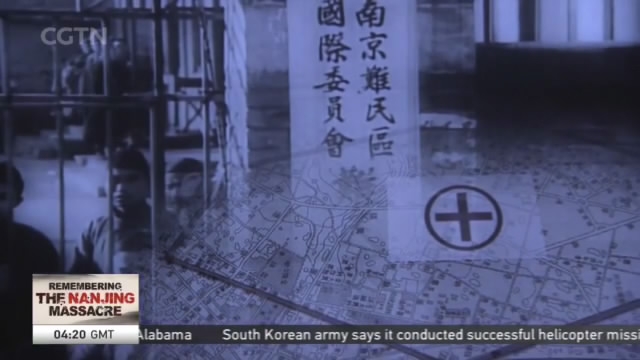
A renovated exhibition has opened to the public today at the Memorial Hall of the Victims of the Nanjing Massacre. CGTN reporter Su Yuting was given access for a close-up look.
The Nanjing Massacre was a brutal crime against humanity and one of the darkest pages in human history. The total number of victims exceeded 300,000.
In this display, a person's name fades away every 12 seconds, while a star and a drop of water fall down. This means that during the six weeks of slaughter by Japanese invaders, one life perished every twelve seconds. This huge wall contains over 12,000 boxes of files about the Nanjing Massacre. These archives contain personal information of victims, survivors and overseas witnesses and their detailed testimonies.
This is the photo wall of 100 registered survivors of the Nanjing Massacre who were still alive by September 30th, 2017. There are 50 on each side, and the light on that photo has been turned off, which means this survivor has died recently. Although survivors of the tragedy are taken away from us one by one, history will never be forgotten.
It was a disaster from the sky in August 1937, Japanese aircraft launched a raid on Nanjing. The city was continuously bombed for nearly four months. This photo shows an elderly man in Nanjing holding a child who was killed by the Japanese bombing. And on December 13th, Nanjing fell into Japanese hands. After seizing Nanjing, the Japanese troops resorted to massive hunting and killing of soldiers and even innocent civilians in violation of international conventions.
In the first month following the fall of Nanjing, nearly 20,000 cases of rape occurred in the city, during the six weeks, about one-third of the city was destroyed. Japanese troops also robbed public and private properties and committed arson wherever they went.This photo shows the bodies of Chinese soldiers massacred by Japanese troops. The victims' belongings unearthed at the massacre site include hairpins, a thimble, copper coins, a tea mug, buckets, a seal, a cream bottle and so on. These are the evidence that Japanese soldiers killed civilians no matter young or old, male or female.
They also conducted sporadic massacres everywhere, by shooting, stabbing, chopping, burning, and burying people alive. They even conducted a killing contest. A Japanese newspaper published a report saying that a soldier had killed 106 people while the other had killed 105. Since there was no way to decide who had been the first to kill 100 people, they adjusted the target to 150 people and continued the race of killing. This is the "hundred cuts" army sword used in the contest to kill 100 people by Japanese soldiers.
In the days dominated by terror, many international friends risked their lives by staying in Nanjing. They helped protect the people of Nanjing in various ways and recorded the atrocities of the Japanese invaders. They worked closely with the Chinese people in establishing the Nanjing Safety Zone, and set up over 20 refugee shelters where about 250,000 people were accommodated and assisted. One of them is American priest John Magee. This is the camera he used to record the Japanese and these are the video films of the Nanjing Massacre. Many of the images published by the media are from these films. Paster John Magee was also invited to the International Military Tribunal for the Far East to testify as a key witness to the Nanjing Massacre. A number of Japanese war Criminals names were published then.
ZHANG JIANJUN, CURATOR MEMORIAL HALL OF THE VICTIMS OF NANJING MASSACRE "We are now standing at the last hall of the exhibition. This room is full of sunshine. It symbolizes that we are now living in a peaceful environment. Although we live in peace, we can't forget the horrible past. We should remember history forever."
This is a sculpture composed of a mother holding the dove of peace in her hand and one child anticipating peace. Just as survivor of the Nanjing Massacre, Li Xiuying, said, "remember history, but not with hatred." The Nanjing Massacre should be remembered to inspire everyone with a kind heart to safeguard peace, increase the awareness of building a community with a shared future for mankind, eliminate hatred and war, and promote peaceful development and common prosperity. Su Yuting, CGTN, Nanjing, Jiangsu Province.