
Business
11:15, 31-May-2017
Ethiopia overtakes Kenya as East Africa's economic giant
 []
[]
Share







Copied
By CGTN's Sam Kisambe
Kenya has officially been toppled by neighboring Ethiopia as East Africa’s leading economic giant.
Figures by the International Monetary Fund (IMF) indicate that Ethiopia's annual economic output (GDP) for this year is expected to hit 78 billion US dollars, up from the 72 billion US dollars recorded last year.
Kenya recorded a GDP of 68.91 billion US dollars last year, compared to 63.62 billion US dollars in 2015, and is expected to touch 75 billion US dollars this year. Ethiopia’s growth rate since 2015 has been pegged at 10.8 percent, which has helped put a significant gap between Addis Ababa and Nairobi.
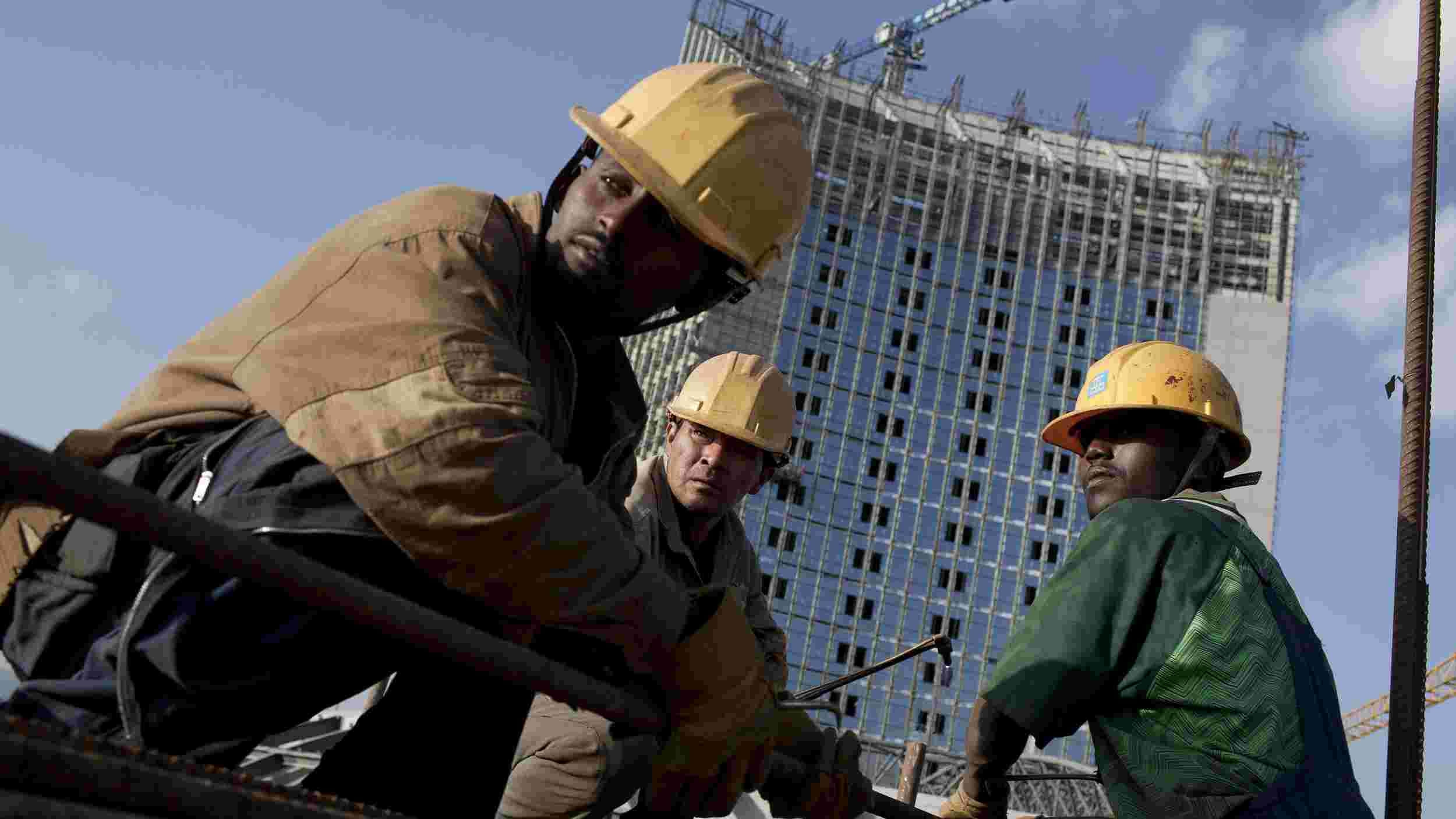
Construction workers in Ethiopia /VCG Photo
Construction workers in Ethiopia /VCG Photo
Having established its economic lead ahead of Kenya, Ethiopia is forecast to maintain its position as East Africa's largest economy over the medium term – a position that is also expected to improve its standing as an investment destination.
The country's economic growth is hinged on public-led spending on infrastructure, and a strong demand by locals.
"Non-resource-intensive countries, such as Ivory Coast (Cote d'Ivoire), Ethiopia, Kenya, and Senegal, generally continued to grow robustly, benefiting from strong domestic demand and high levels of public spending, though in some cases, growth eased from 2015," reads an IMF report released in April 2017.
Ethiopia's large population, almost double that of Kenya, is also believed to be driving the economy.
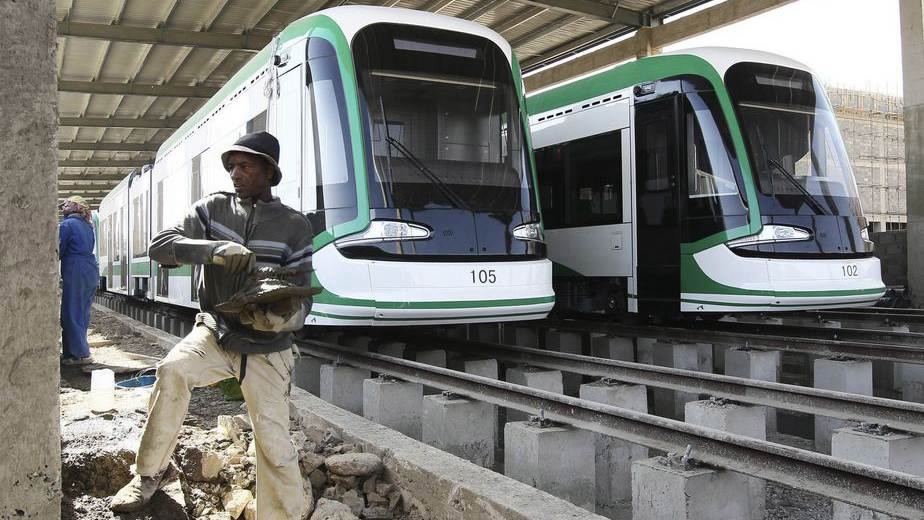
Since 2015, Ethiopia's economy has been on an upward trajectory after the government moved to modernize its roads, railway and power plants.
One example is the Grand Ethiopia Renaissance Dam (GERD), which is on cue to become Africa's largest hydroelectric dam upon its completion. The project is being jointly financed by China and Ethiopia.
Ethiopia, which is landlocked, is also connected with the Red Sea port nation of Djibouti via an electric railway which was launched in October 2016.
The 3.4 billion US dollar railway was 70 percent financed by the Export-Import Bank of China, and was jointly built by China Railway Group and China Civil Engineering Construction.
Huge profits have been realized in the area of power supply to neighboring countries including Sudan and Djibouti. The country has also signed agreements with Tanzania and Kenya to supply power as generation capacity increases.
8327km