
13:15, 03-Nov-2017
A Further Look at the 19th Congress: Resource allocation, imbalance need addressing
 []
[]
Share







Copied
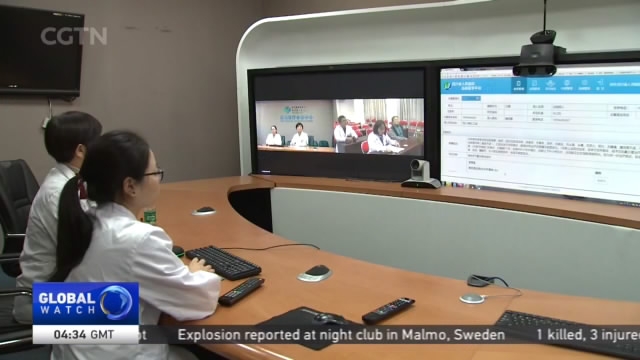
One problem China faces in its healthcare system is that of limited and imbalanced medical resources. Some big hospitals are exploring ways to tackle it. Our reporter Yang Jinghao has more.
This 14-month-old girl from Huili – the southernmost county in Sichuan's Yi Autonomous Prefecture – was fortunate to have her thumb treated at the Provincial People's Hospital in Chengdu, about four months after she was diagnosed with a vascular malformation.
DENG JIAHUA FATHER "We were in big trouble – the hospitals in my hometown, and even the neighboring cities, were unable to deal with the disease. Then we had to turn to this hospital for help."
The family managed to secure an appointment at the hospital following a diagnosis through a special "telemedicine mechanism".
But not everyone is quite as lucky enough as this little girl.
Millions of people in remote areas still worry about their lack of access to top-quality healthcare resources. To get the treatment they need, more and more patients are flocking to prestigious hospitals in the big cities. As a doctor himself, Jiahua has some strong feelings on the matter.
DENG JIAHUA FATHER "A lack of skillful doctors has been a long-term problem of grassroots-level hospitals. Worse still, many of them would choose to work for higher-level hospitals once they get an opportunity. This has further worsened the situation."
In response, the Sichuan Provincial People's Hospital introduced the telemedicine system some years ago. Now, it's cooperating with about 200 county- or township-level hospitals, and even plans to include some village clinics.
KAN GUANGSHU PRESIDENT, YILONG COUNTY HOSPITAL, SICHUAN "The telemedicine system has helped our medical staff improve their knowledge and skills. With it, patients can also have qualified diagnoses. It not only improves medical efficiency, but it also eases the patients' burden."
In a response to the nation's call to establish regional medical alliances to integrate medical resources, the hospital has also sent specialists to remote areas to help train other doctors there.
However, experts say, the system is in dire need of many more general practitioners.
DENG SHAOPING PRESIDENT, SICHUAN PROVINCIAL PEOPLE'S HOSPITAL "I think the main problem now in China in the medical field is that we are lacking family doctors, or general doctors, or the proportion is much lower compared with developed countries. So I think, in the future, if we really want to improve medical care, the quality for the general people, especially for the people living in suburban areas or the far countryside, we should have more general doctors."
YANG JINGHAO SICHUAN PROVINCE "China has seen remarkable progress in medical reform over the past few years, but it still faces many challenges in the area. During the opening of the 19th CPC National Congress, General Secretary Xi Jinping said the country would aim to further strengthen the construction of medical system from the grassroots level, so it's hoped that the remote areas can have high-quality services matched by experienced staff. YJH, CGTN, Chengdu, Sichuan Province."