
19:31, 27-Sep-2017
Yingluck Corruption Trial: Former Thai prime minister's political rise and fall
 []
[]
Share







Copied
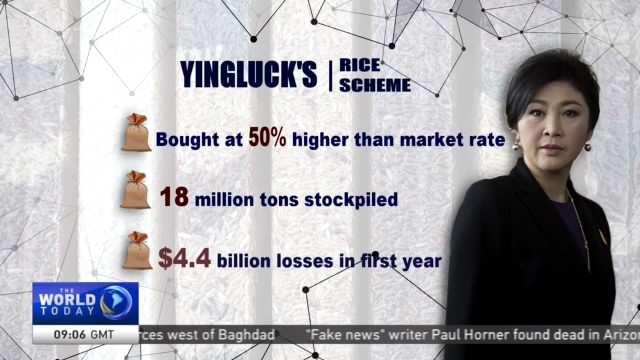
Let's take a look at the rise and fall of Yingluck Shinawatra's political career, including the beginning and the end of her rice scandal.
Yingluck made history in 2011 when she became Thailand's first female prime minister. Before entering politics, she had carved out a career in the corporate world. The sister of exiled former prime minister Thaksin Shinawatra, Yingluck rose to power largely thanks to the support of Thailand's poor rural regions.
Her time in office ended in May 2014, when the constitutional court forced her to step down after finding her guilty of abusing power. Thailand's military junta later overthrew her government.
The rice subsidy scheme that contributed to Yingluck's political demise was part of her campaign promise to boost rural income. Her government bought the rice from farmers at prices up to 50 percent higher than market value. This led to a stockpile of 18 million tons of rice, and losses of 4.4 billion US dollars in 2011.
In February 2015, the office of the Prosecutor General in Thailand formally filed a criminal appeal against Yingluck over the rice acquisition program.
The country's Supreme Court held its first hearing on the case in May the same year. The former prime minister appeared in court and protested her innocence.
On July 21, 2017, the Supreme Court held its final hearing. Ten days later, Yingluck appeared in court for the final closing statement, denying all charges against her.
On August 25, Yingluck fled the country ahead of the verdict in her trial over the rice subsidy scheme. The court issued an arrest warrant for her while confiscating her bail.