
By CGTN's Guan Yang
The half-finished Lotte World commercial complex in Shenyang city, Liaoning Province, was designed with an aim to be the city's new shining landmark. But things are now looking bleak ahead of Lotte World's completion in 2019, as the conglomerate is expected to sign a land-swap deal with its government to facilitate the deployment of the Terminal High Altitude Area Defense (THAAD).
The South Korean retail giant has been trying to expand its presence in the world’s most populous nation, and it has earned a lot from Chinese consumers. But the giant is now struggling to juggle conflicting interests. It is caught between its operations in China and the will of the South Korean government. Whatever happens at the end, it can be certain that the people of China won’t support a company against the country’s interests.
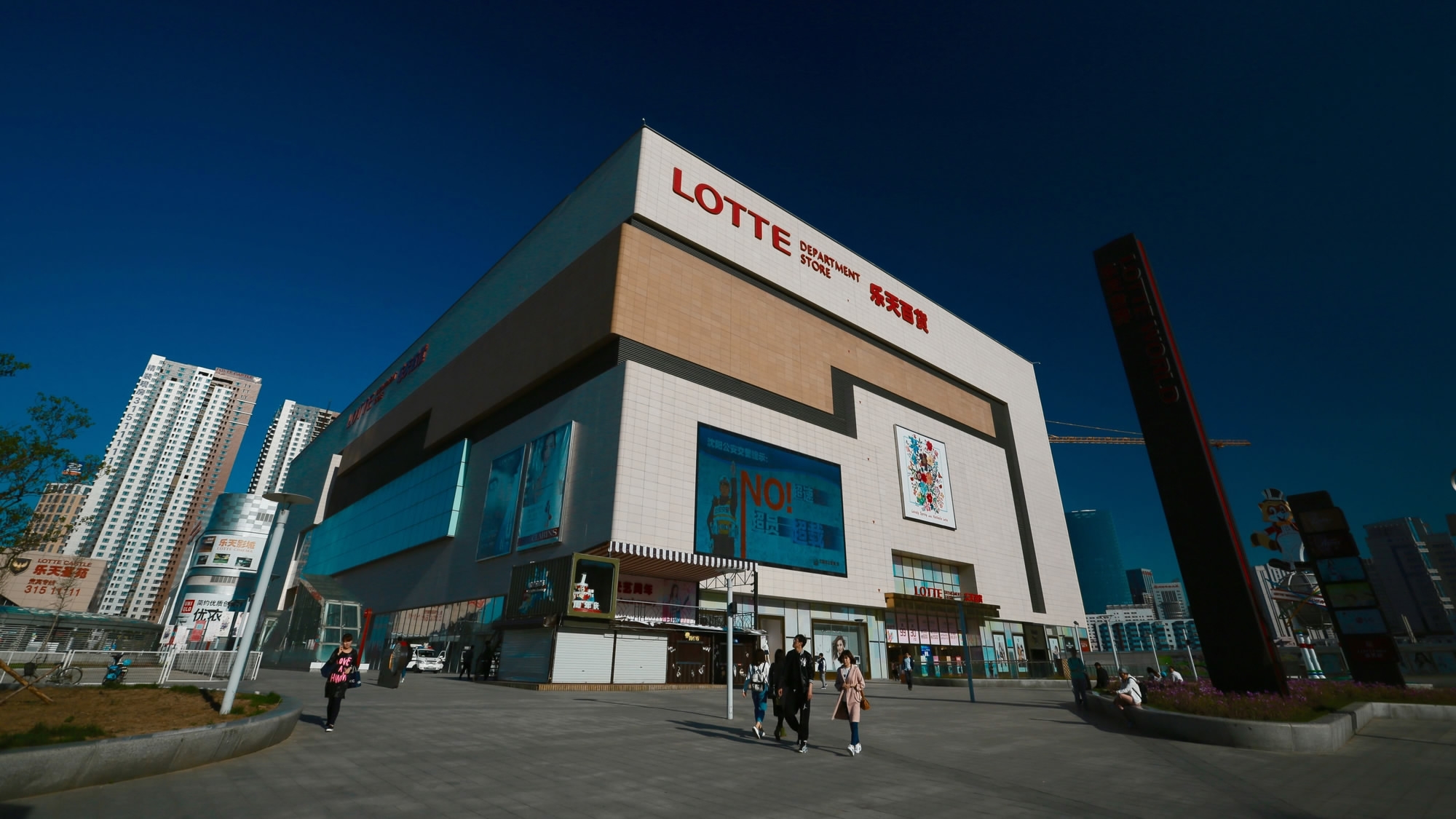
A Lotte Department Store in Shenyang, Liaoning Province, China, May 7, 2016. /CFP Photo
Lotte has a lot at stake in Shenyang, as the company -- one of South Korea's biggest operators of hotels, theme parks and department stores -- has invested big money in the Chinese city. Aiming to get some insight from Lotte, CGTN contacted its head office in Shenyang. The interview request was swiftly turned down and senior management also refused to comment on the land-swap deal.
“Some people say the reason Lotte has agreed to the deal is that the company might be under pressure from the South Korean government, I disagree ... as an independent business entity, Lotte can voice its own opinions regardless of outside influences,” said Lu Chao, an expert on Korean studies.
The message from the Chinese people is quite clear. If Lotte becomes officially involved in the THAAD issue, it's likely to undo all the work the South Korean giant has carried out through the years to penetrate the Chinese market, putting the future of its businesses in China at stake.
627km