
Guest commentary by Guo Hui
Merely chasing economic growth will take China down the same path followed by western countries decades ago when it comes to the environment: “treatment after pollution.”
Throughout much of China’s most developed regions, thick smog is a common occurrence and remains the biggest environmental problem in winter.
Local governments spend great time, effort and resources on cleaning up black and odorous water, without significant results. Soil pollution threatens the agricultural land and underground water supply.
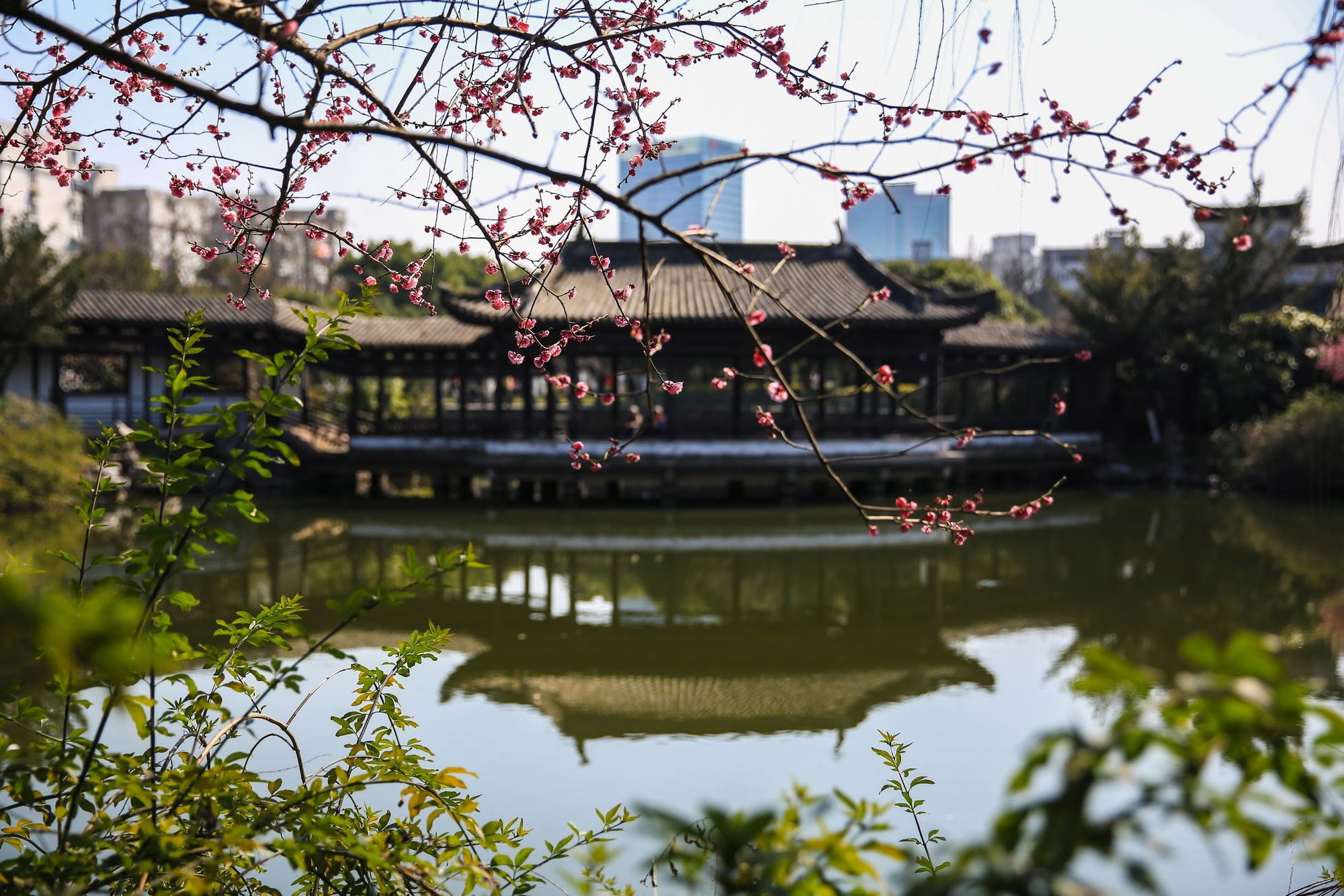
A plum tree is in full bloom in Ningbo city, eastern China's Zhejiang Province on February 13, 2016. /CFP Photo
The economy is still growing, but the ecological environment is getting worse.
China does not want to repeat the same mistakes made in the West.
Since “Striving for a new era of socialist ecological civilization” was announced in a report to the 18th National Congress of the Communist Party of China, promoting ecological progress has been a significant part of the “Five in One” strategic concept.
The report emphasized that making ecological progress shall be incorporated into the whole process of advancing economic, political, cultural and social progress.
“Three Actions” have to be carried out without any hesitation for it to work. Instead of following the “Western path”, President Xi announced the “Two Mountains Theory”, which is at the core of the concept of “ecological civilization.” The theory explains that ecological progress is as important as economic progress, and regards ecological progress as a national strategy.
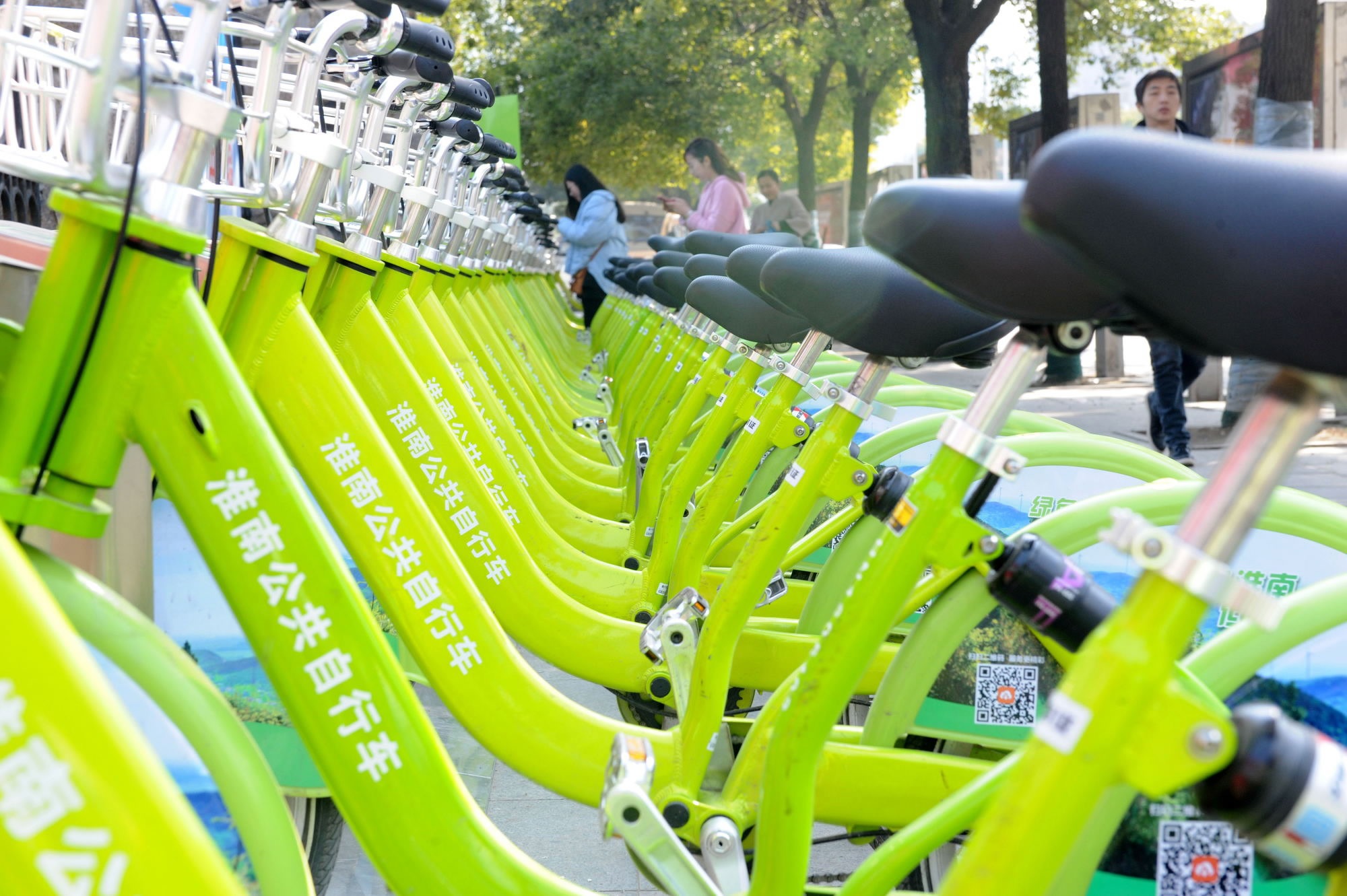
Local citizens have access to free public bicycles for one hour in Huainan city, eastern China's Anhui Province. Photo taken on February 13, 2016. /CFP Photo
This indicates that China is exploring new ways to pursue its development goals not previously seen.
If we observe ecological progress from the perspective of environmental protection, it is not difficult to summarize that China’s environmental management strategy is changing from “Discharge under standards” to “Environmental quality improvement.” In the “National Plan on Ecological Environmental Protection” for the 13th Five-Year Plan, several tasks such as intensifying quality management were emphasized to improve the quality of air, water and soil.
Following the implementation of the “Air Pollution Prevention and Control Action Plan”, a reduction in emissions of sulphur dioxide, mono-nitrogen oxides, and fine particles has continued.
Seventeen provinces also released a “Detailed rule for collection of pollutant discharge fees for volatile organic compounds” to control volatile organic compounds (VOCs) emissions from key industries such as refineries and chemical plants.
By the end of 2020, VOC emissions in key industries and key regions shall be reduced by 10 percent. By joint prevention and control of mono-nitrogen oxides and VOCs, smog should be reduced, and heavy and severe air pollution shall be eliminated.
To improve water quality, the “Water Pollution Prevention and Control Action Plan” was implemented to clarify responsibilities over river basins - from controlling the pollution of river basins and eliminating black and odorous water, to protecting high-quality water, preventing pollution of underground water and improving coastal environments.

The sun rises in Zhenjiang city, eastern China's Jiangsu Province on February 13, 2016. /CFP Photo
The “Soil Pollution Prevention and Control Action Plan” has looked at ways to improve soil quality. Basic investigations and monitoring construction work are underway to get further information about the soil pollution situation. Soil resource management is based on pollution levels and environmental risks. Soil remediation – to remove contaminants like heavy metals and pesticides – has also been gradually implemented.
Beyond these plans, more policies have been released to ensure effective implementation. According to incomplete statistics by E20 Institute of Environment Industry, over 130 documents relevant to ecological conservation, environmental pollution control and reduction have been put into force in 2016 to regulate the manner of discharges and treatment plants. Factories must suspend work during heavy pollution or they will be fined. Last year alone 150 million yuan (21.8 million US dollars) worth of fines were issued in Beijing for environmental law violations.
Environmental quality, instead of economic growth, is becoming top priority in China. A great amount of capital is flooding into environmental protection, bringing new vitality into environmental industries.
Since the announcement of the new “Five in One” strategic concept, government departments have taken on the role of “supervisors” instead of mere “participants”, while enterprises and individuals have changed from “spectators” into “participants” as well, by introducing social capital into environmental treatment. Ecological progress is now an intrinsic part of every government department, every enterprise and every person, and is becoming an irreplaceable part of socialism with Chinese characteristics.
(Guo Hui is a research fellow of E20 Policy and Market Research. The article reflects the author's opinion, not necessarily the view of CGTN.)