
Ba, qi, liu, wu (8, 7, 6, 5 in Chinese) ... The crowd at Wenchang Space Launch Center started counting down in unison. Hundreds of people were standing on balconies and outside a residential building on the base to witness the launch of Tianzhou-1, China's first cargo spacecraft.
Employees at the Launch Center, families with kids, all mingled in a cheerful atmosphere - some had even brought food and snacks.
But as the countdown began on a few TV screens set up for the occasion, all heads turned to the launch pad some three kilometers away, floodlit in the Hainan night.
... si, san, er, YI (4, 3, 2, 1)! A pause and brief confusion among those watching as nothing happened. Then a clamor as flames erupted and the Long March-7 rocket carrying Tianzhou-1 lifted off in an explosion of fire and smoke. The ground shook and the sound was deafening. Arms held up mobile phones and cameras, as the ball of fire moved skywards. There was an awed silence as everyone just watched. Then cheers and applause: Tianzhou-1 was on its way to space where it will dock with the Tiangong-2 space lab, bringing China one step closer to its goal of establishing a space station by 2022.
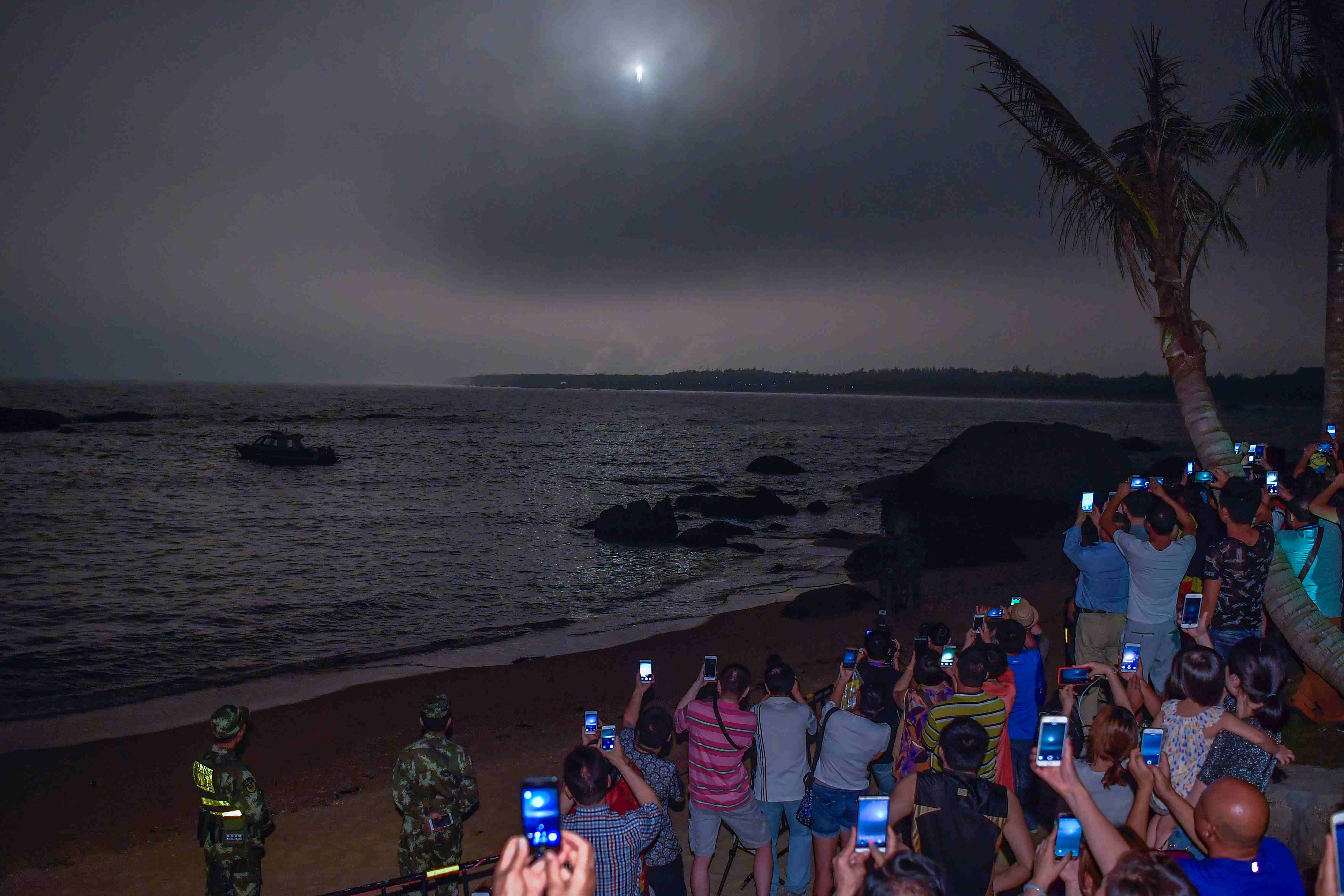
A crowd watches the launch of a Long March-7 rocket carrying the Tianzhou-1 cargo spacecraft from a beach near Wenchang, Hainan Province on April 20, 2017. /CFP Photo
This was my first time witnessing a space launch live; and even at a three-kilometer distance, it was every bit as impressive as you'd expect.
A CGTN team flew down from Beijing on Saturday for the event, and we spent the week preparing lives, getting footage and doing interviews in and around the Launch Center. But it was all just a lead-up to this.
There was some doubt about the launch: All week the weather in Wenchang had been beautiful and sunny. But since Wednesday, the wind had picked up and on Thursday, the sky was overcast. As we prepared to do a live for social media in the late afternoon we even felt a few raindrops.
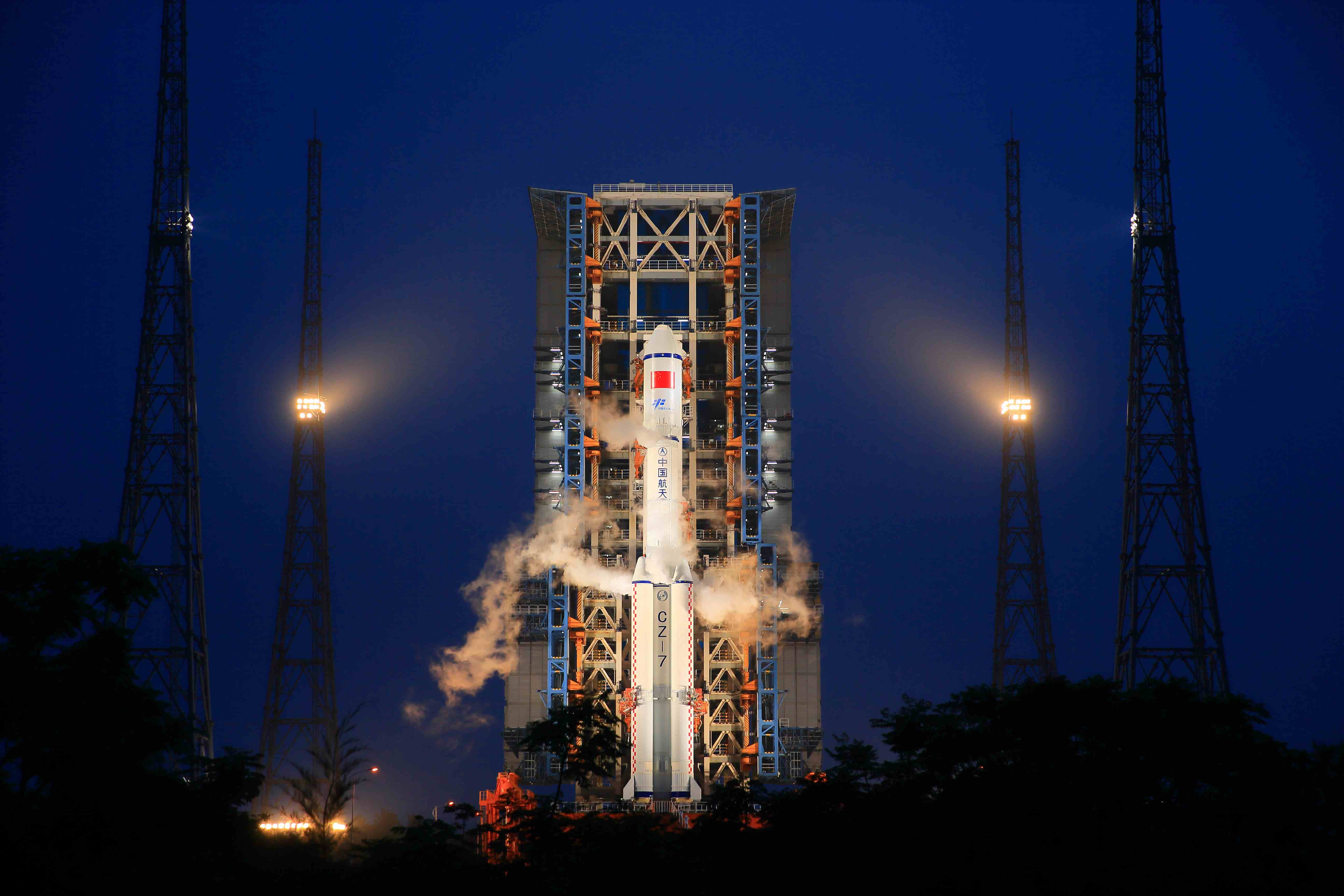
A Long March-7 rocket carrying China's first cargo spacecraft, Tianzhou-1, prepares for launch on April 20, 2017, at Wenchang Space Launch Center in southern Hainan Province. /CFP Photo
The launch time had been confirmed for 7:41 p.m. (1141GMT) but this was also a narrow window.
So in those few seconds between the countdown and lift-off, I wondered if maybe the launch had been called off after all.
Thankfully, it went smoothly and in the coming days and weeks, we will hopefully see Tianzhou-1 dock and refuel the Tiangong-2 space lab as planned.
Exceptionally, two foreign reporters were included in the CGTN and wider CCTV team covering the event. Never have any foreign media been invited to such an event, but working for Chinese media, my colleague Ryan Chua from the channel and I were given rare access and allowed to come within 400 meters of the launch pad, close enough to make out people walking around the rocket and see vapor escaping from it as it was being fueled.
China's space program has made leaps and bounds in recent years and it has set big goals for the future. I feel privileged to have been allowed such a close look at its efforts and witnessed a literally ground-shaking step on China's journey into space.
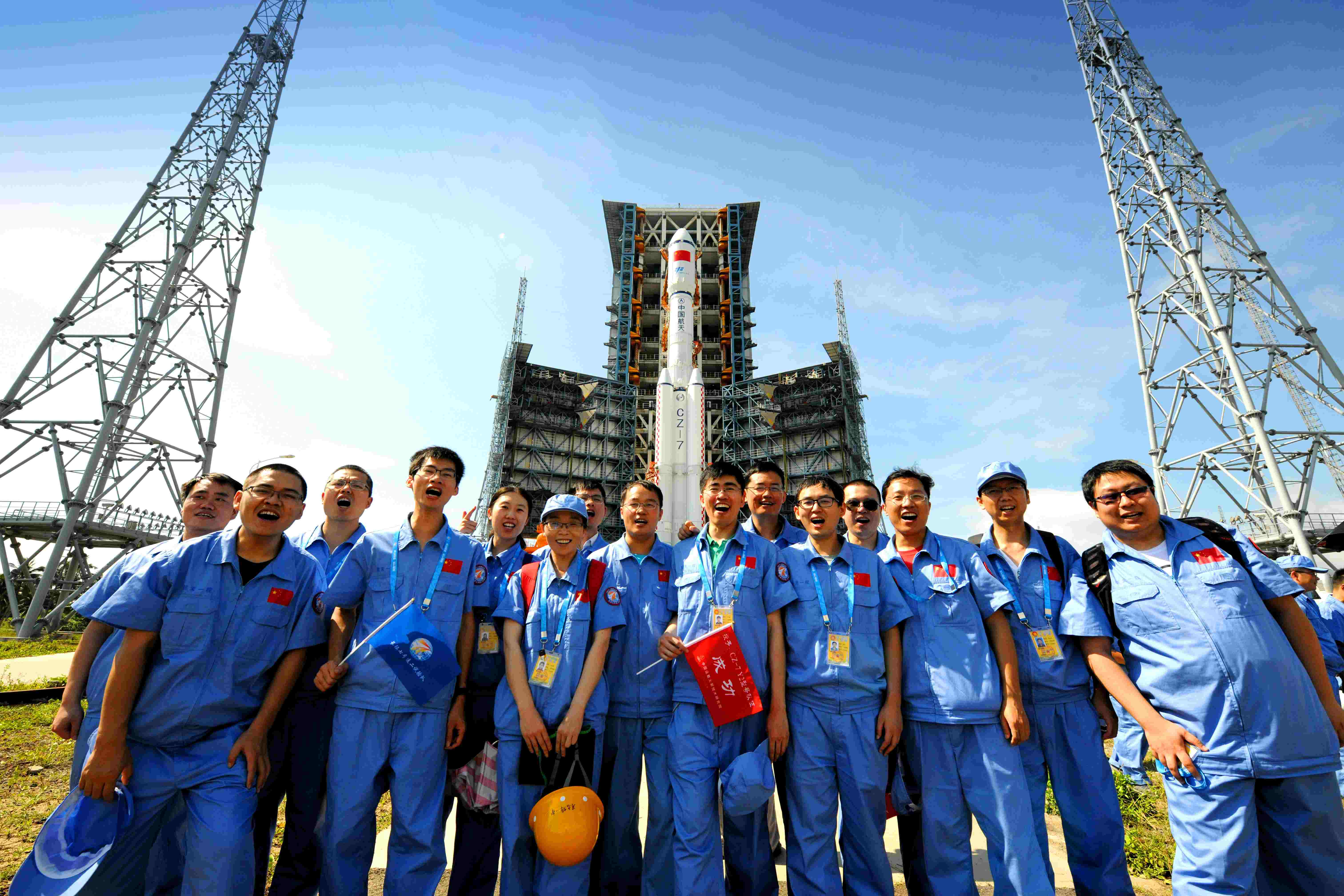
Engineers working on the Long March-7 rocket carrying the Tianzhou-1 cargo spacecraft on April 17, 2017, at Wenchang Space Launch Center in China's southern Hainan Province. /CFP Photo
As the bright light that was the Long March-7 rocket got smaller and smaller on Thursday evening, people crowded around the TV screens, which were showing video from inside the spacecraft, while others remained with their faces turned up to the skies.
The crowds started to leave soon after, but clusters of men in light blue uniforms and cloth caps still stared intently at the screens. Finally, 10 minutes after lift-off, they too let out a huge cheer as Tianzhou-1 detached from the rocket, clapping each other on the shoulder and shaking hands: These were engineers, visibly relieved their months and years of work had paid off.
It was a simple and human moment but it brought home just how much this launch, and this mission, means to so many people.