
10:45, 19-Nov-2017
Cocaine in Colombia: Government subsidizing farmers to stop growing coca crops
 []
[]
Share







Copied
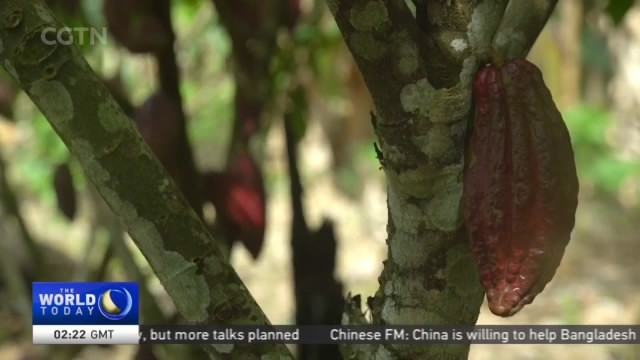
Colombia says it sees an opening to end its infamous cocaine trade. The government is enticing farmers to change their crops from coca to another plant -- whose fruit some say is also addictive, but legal. And it's the peace between the government and rebel group FARC that's making this possible. CGTN's Michelle Begue reports.
This was Uriel Casallas's trade for years. On his four hectares of land, he had seven workers and even a lab where a chemist made cocaine base.
URIEL CASALLAS CACAO FARMER "Coca farming was the bread of each day because the town was very far away."
Trying to leave the stress of the illegal trade behind, Uriel opted five years ago to slowly transition out his coca crops - replacing them with cacao, the plant behind chocolate.
URIEL CASALLAS CACAO FARMER "This requires money and dedication because cacao is a plant that requires three years to mature before you can receive money, and if you don't have money to eat, to pay for the sowing of seeds and the plowing, reforestation. That is why people don't want to change their plants."
For years armed groups like the FARC and ELN insurgents funded their operations through taxation of the cocaine trade in remote regions of Colombia. With the signing of the peace agreement last year, the government saw a chance to uproot the rebel-controlled drug trade.
MICHELLE BEGUE GUERIMA, COLOMBIA The Colombian government hopes that farmers will be enticed to substitute their coca crops by offering a monthly payment of about 325 dollars for the first year that farmers give up coca and plant new crops like this cacao.
The first 50 thousand families that take the offer will also receive subsidies and education on how to grow their new crops. In the isolated town of Guerima, Uriel is among the farmers now receiving support to replace the rest of his coca hectares. But convincing them this is a good investment for the future is difficult. Colombia's Air Force is helping them export their cacao, but otherwise, they see little hands-on government help.
COL. JEAN PAUL STRONG COLOMBIAN ARMED FORCES "And there are some farmers that we have detected that continue planting coca along with their new projects thinking 'just in case the government fails me I have a plan B,' so this involves a change in mentality and culture but we need to incentive confidence in the project."
Despite the challenges, Uriel is determined not to give up and says at his age, he is looking to leave a crop that his sons can proudly inherit.
URIEL CASALLAS CACAO FARMER "I want a future for my children and grandchildren, because this tree can last 30 to 40 years. Imagine a future of 35 years."
Michelle Begue, CGTN, Guerima, Colombia.