
10:32, 29-Dec-2017
Zimbabwe Economy: Business community gets new outlook from new government
 []
[]
Share







Copied
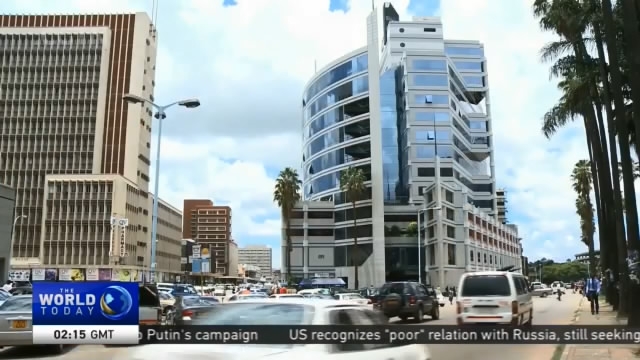
Zimbabwe will unveil a "robust" re-engagement policy and open to foreign investment after years of isolation. New president, Emmerson Mnangagwa, urged businesses to show restraint after a massive spike in prices of food and household items in recent weeks. Although economic growth has been encouraging, there are some major challenges. CGTN's Farai Mwakutuya reports from Harare.
The resignation of Robert Mugabe and his replacement by a less hardline Emmerson Mnangagwa has already lifted the mood in Zimbabwe. Businesses are expecting that the new administration which, has already begun reducing expenditure, reversed controversial empowerment laws and made commitments to respect property rights, can get the economy going again. The three point seven GDP growth for 2017 has been driven by agriculture, where food production jumped 270 percent, thanks to a state sponsored command farming scheme that is to be expanded in the new year.
ANXIOUS MASUKA, CEO ZIMBABWE AGRICULTURAL SOCIETY "What we need is farmer capacitation so that the yields can increase per hectare. We currently are targeting 5 tonnes per hectare I think we should target 8-10 tonnes per hectare, our cost of production is also unrealistically too high at $800 to $1200 per hectare I think that must substantially come down."
A strong agricultural base will feed industries that have been performing below capacity and in dire need of capital to re-tool. Finance Minister Patrick Chinamasa will have to combine his charm offensive to international lenders with overtures to private investors.
JOHN ROBERTSON ECONOMIST "We need capital injections in the form of equity investments not loan capital. We don't want to borrow anymore, the country is already over borrowed. We need people to have trust in the future and have trust in the prospects of their investments here being very profitable."
But there are some major challenges.
FARAI MWAKUTUYA HARARE "Among them a crippling liquidity shortage that's seen bank queues for cash get longer and international payments held up disrupting businesses."
Monetary authorities have acknowledged there is no quick fix to the cash crisis. They are banking on export incentives increased from 5 to 12 percent for the tobacco, gold mining and tourism sectors to bolster foreign currency inflows. In 2018, government is prioritizing infrastructure development projects including expansion of power plants and upgrading railway and road networks. But their completion is some years off.
JOHN ROBERTSON ECONOMIST "We may see a better 2018, but I think the real benefits are going to come in 2019 onwards. It's going to take time."
That means Zimbabweans will need to be more patient with their new government. FM, CGTN, Harare, Zimbabwe.