POLITICS


The significance of the '228 Incident' across the Taiwan Strait
2017-03-01 12:28:13 GMT+8






Editor
Zhao Hong
By CGTN's He Yu
February 28 marked the 70th anniversary of the “228 Incident” in Taiwan. This year, both the island and the mainland commemorated the event.
On February 28, 1947, a Kuomintang (KMT) party enforcement team assaulted a woman near Taipei railway station as she was selling contraband cigarettes. The incident caused a bloody confrontation between Taiwanese civilians and the KMT government, which developed into an island-wide movement against the suffocating rule of the KMT, which had taken back the island from the Japanese.
Even today, the “228 incident” remains an issue of heated discussion between the KMT and Taiwan’s pro-independence pan-green camp.
Then why was the mainland commemorating the event this year?
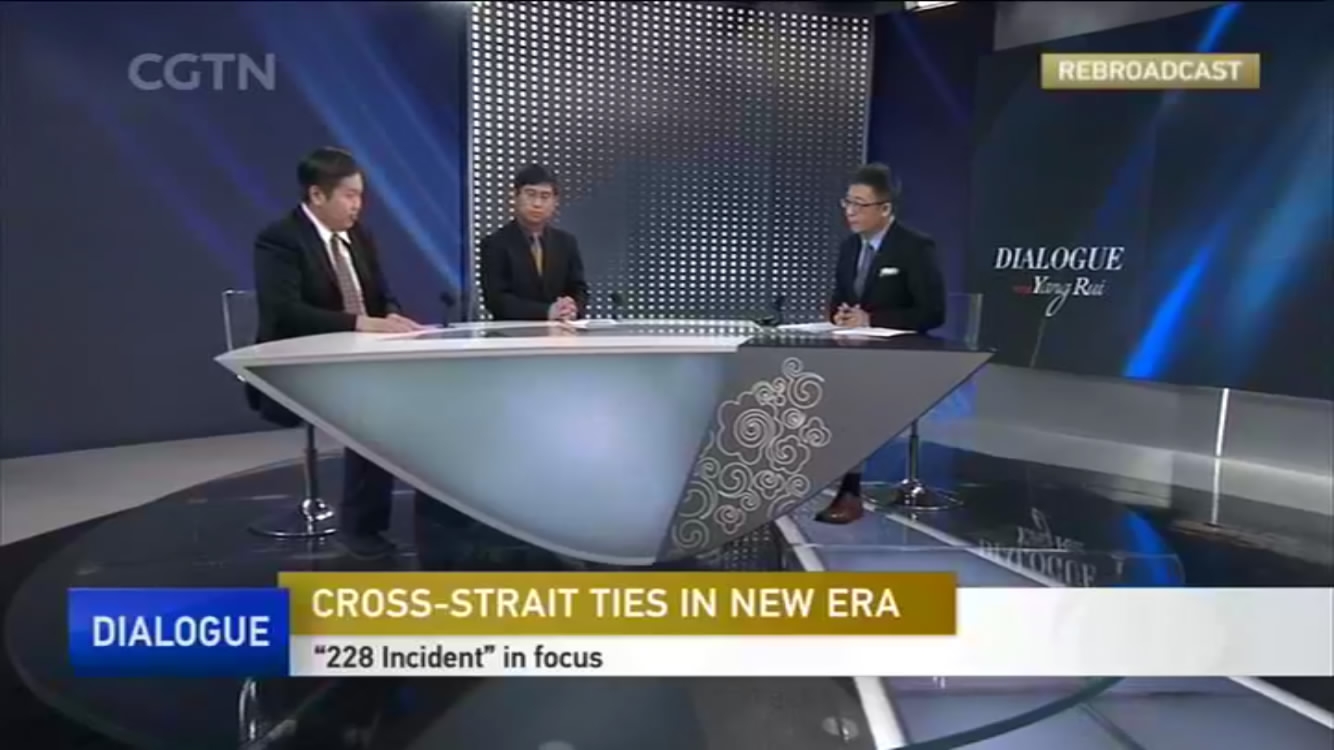
Zhong Houtao, Assistant Research Fellow at the Taiwan Studies Institute of the Chinese Academy of Social Sciences, said the “228 Uprising” was part of the Chinese people’s struggle for liberation at the time. But there is a more important reason for Beijing to mark the event – the need to correct distorted perceptions.
“We have to correct the interpretation about the February 28 Incident, which is distorted by the DPP (Democratic Progressive Party). That means it has nothing to do with the ‘Taiwan independence’ ideas. It has nothing to do with the ‘confrontation’ between the Taiwanese and the mainlanders. And actually it is just a rebellion of the common Taiwanese people for, at that time, the KMT authority. So we have to correct those kinds of distorted interpretation,” Zhong pointed out.
Since DPP chairwoman Tsai Ing-wen was elected Taiwan leader, and the pro-independence DPP became the ruling party of the island last year, pessimism has been rising about cross-Strait relations. Some surveys conducted in Taiwan show that many Taiwanese people don’t identify themselves as Chinese.
But Wang Yuqing, a PhD candidate at Peking University from Taiwan, doubts the truthfulness of these survey results. He said many of these surveys were conducted by organizations and media with political bias, and suggested more objective surveys jointly conducted by organizations across the Taiwan Strait be held. As for “Taiwan Consciousness”, Wang said the concept is often misinterpreted.
“Firstly, ‘Taiwan Conscious’ is just the thinking for loving the land, the place, the local, something like Beijing people love to watch Peking Opera and also eat Peking noodle, but doesn’t mean that they want to support ‘Taiwan Independence’. Secondly, the society tie and also cultural tie is very, very close. How close is it? About myself, my wife is also a mainlander. A lot of Taiwan people, even the young people... one is mainlander, one is from Taiwan. So what happens is, if we talk about a war, I believe Taiwan's local people, the ordinary people, they really don’t support it. And they care about the life.” Wang said.
Copyright © 2017
SHARE
- EXPLORE
- MORE
FOLLOW US