POLITICS


Opinion: Abe-Trump summit opens new chapter in Japan-US relations
2017-02-10 15:12 GMT+8
11109km to Beijing






Editor
Li Kun
Guest commentary Shastri Ramachandaran
When Japanese Prime Minister Shinzo Abe meets with US President Donald Trump today, Friday February 10, there is a lot at stake. Trump has sought to put Abe at ease with his “Asia outreach”, which also extends to the Chinese President Xi Jinping.
Although this is Abe’s third trip to the US and second post-election meeting with Trump, it is his first official meeting with the Donald Trump in his role as US President. If Abe’s state visit is expected to open a new chapter in US-Japan relations, it is because, on the summit’s eve, President Trump reached out on a warm note to both Japan and China.
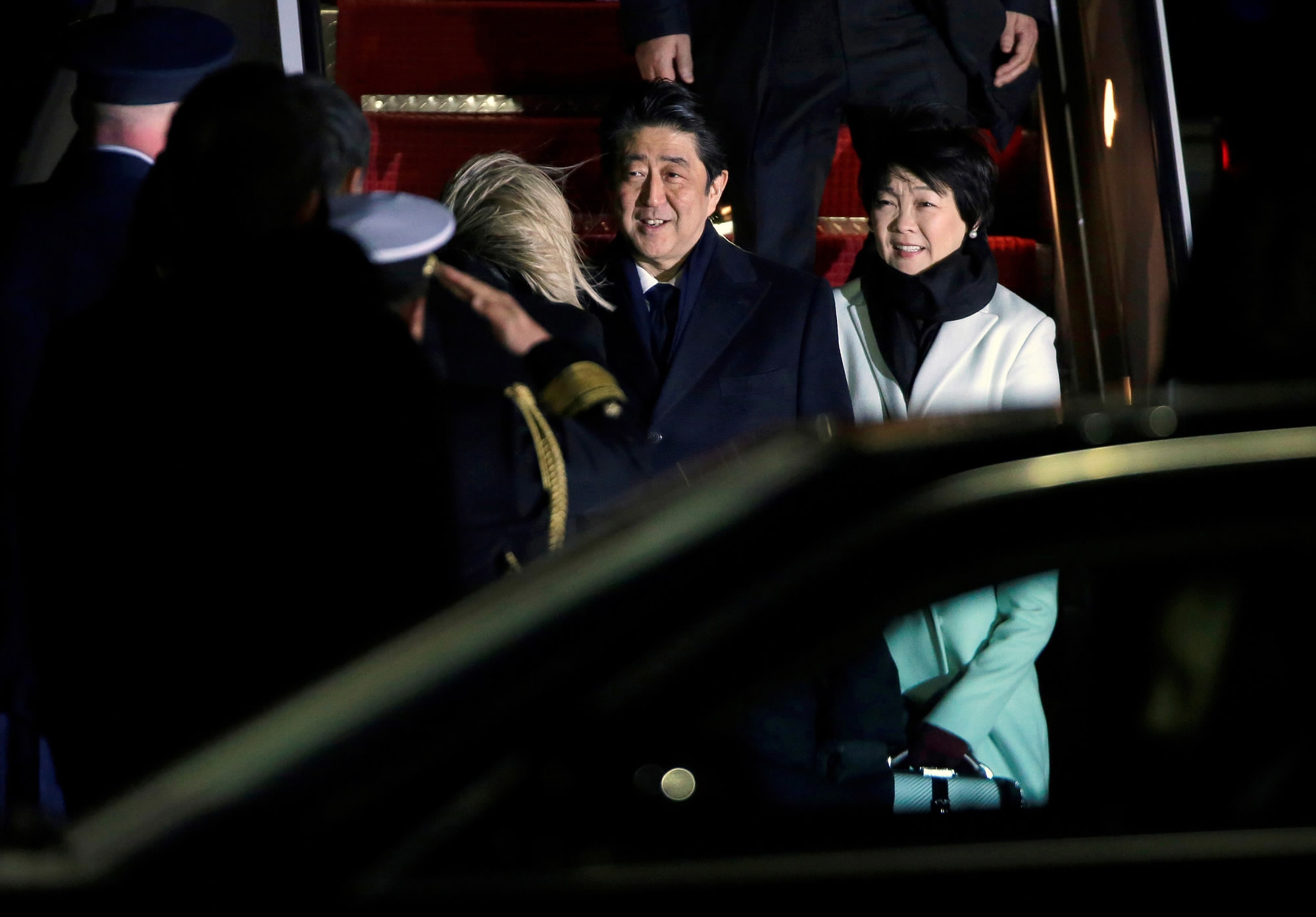
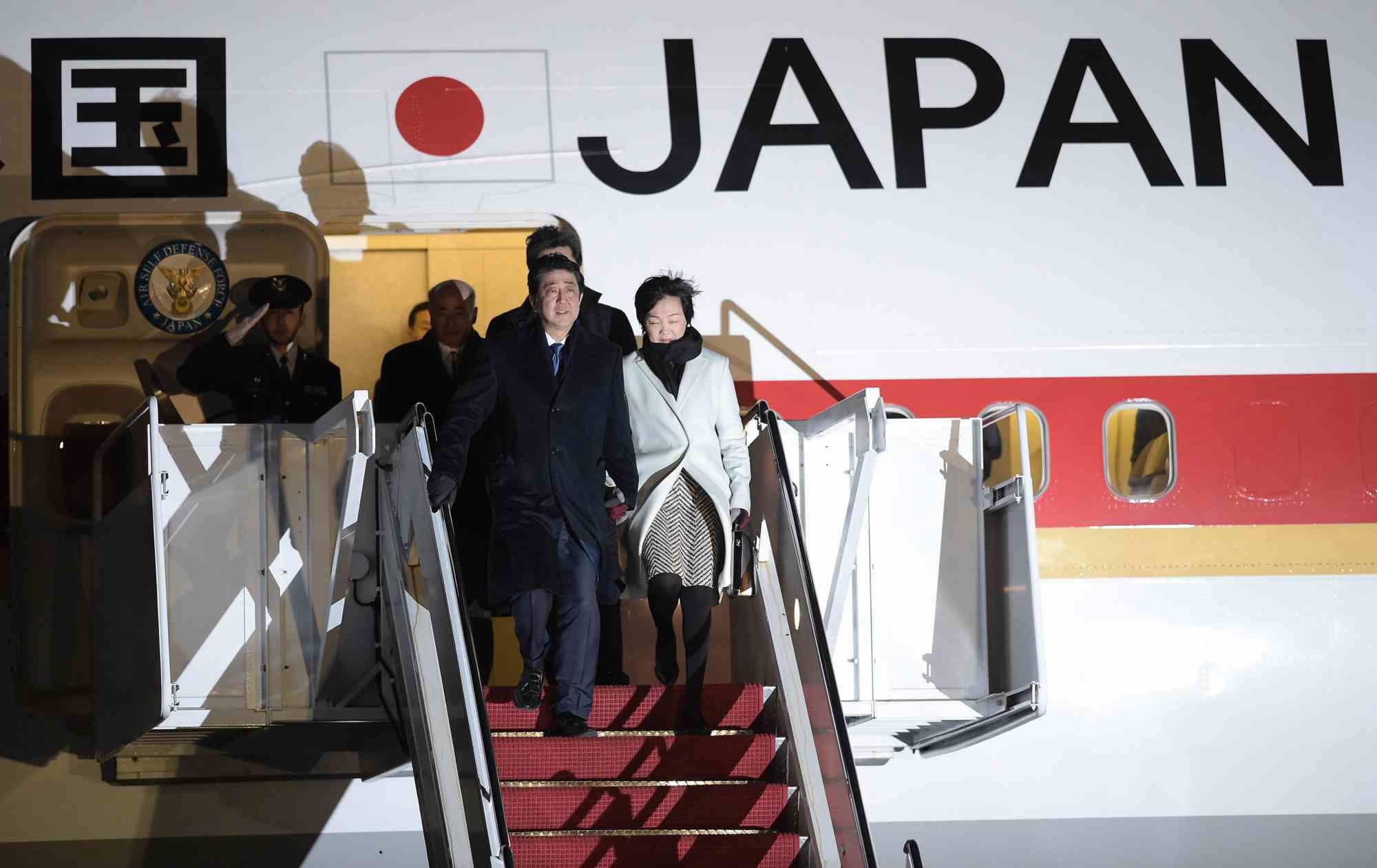
Japanese Prime Minister Shinzo Abe and his wife Akie Abe arrive ahead of his meeting with U.S. President Donald Trump, at Joint Base Andrews, Maryland, U.S., on February 9, 2017. /CFP Photo
Abe’s earlier meeting in November was with Donald Trump as the President-elect, before he assumed office. At that time, Abe met him in New York’s Trump Tower. And, it was under a cloud of controversy – and not only because Trump had daughter Ivanka sit in on the meeting. It was also disappointing to Abe because, as the first world leader to call on Trump, he had hoped to get a sense of US ambitions in the Pacific and Japan’s place in the new President’s scheme of things. But Abe failed to strike a chord, and returned home with nothing to show for the expectations raised over that meeting.
Thereafter, Abe, keen on another opportunity to remain visibly engaged with the US, went for a memorial meeting to the US naval base in Hawaii where Japanese forces had struck on December 7, 1941.
Since then and particularly after Trump was sworn in, Abe has been waiting for a chance to engage Trump to strengthen US-Japan ties, including military-strategic objectives in the Pacific. Abe needs this to boost his political stock at home, raise his profile on the world stage and impress Beijing that it still enjoys US backing as before.
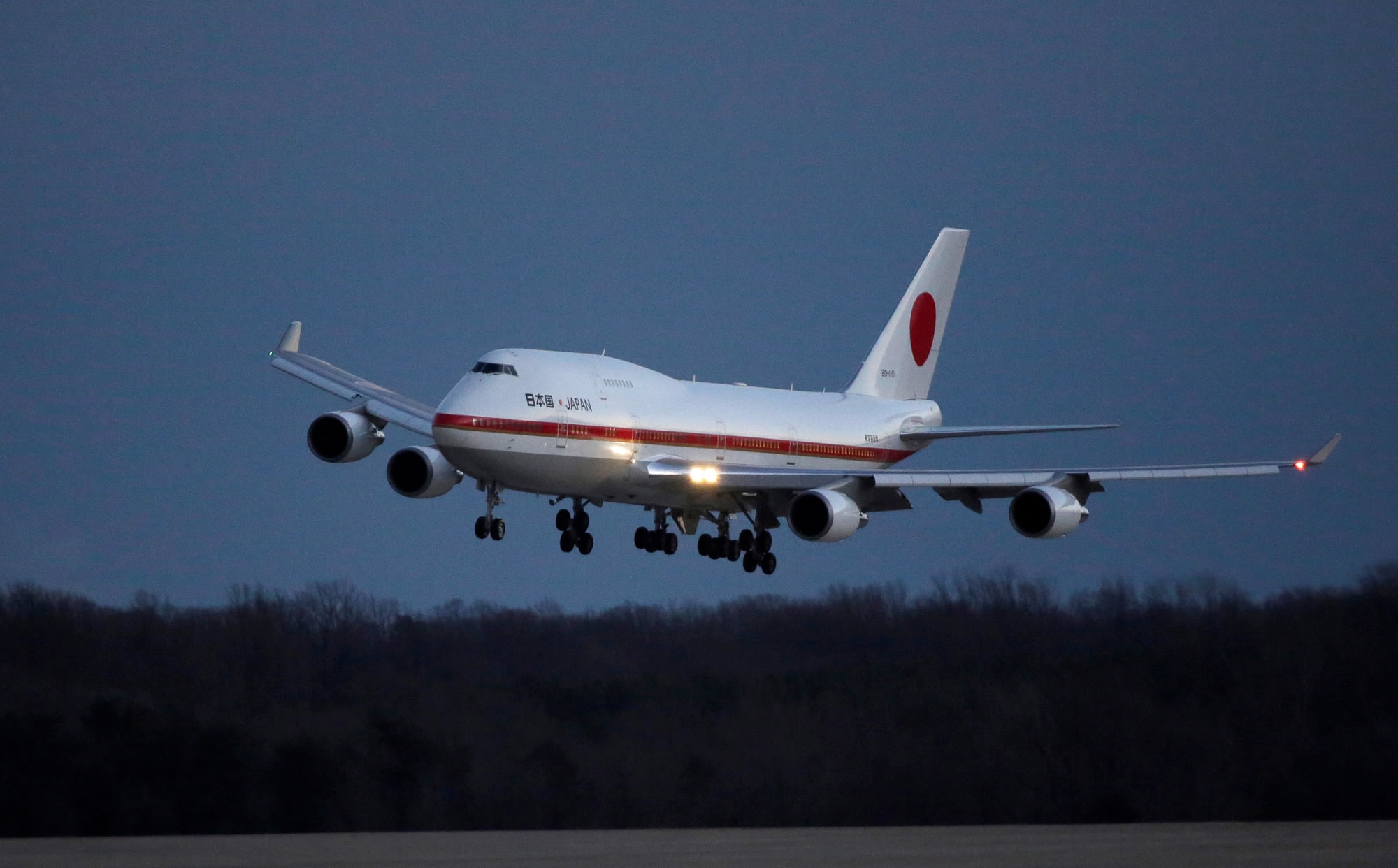
The plane carrying Japanese Prime Minister Shinzo Abe dips its wing in the wind as it lands at Joint Base Andrews, Maryland, U.S., on February 9, 2017. /CFP Photo
Thus, the Abe-Trump summit may provide the first signals of what the US outreach in Asia would be under Trump. Japan, shaken after Trump’s campaign rhetoric of allies having to pay more for US military support, seems to be craving reassurance.
The dumping of the Trans-Pacific Partnership is a blow to Japan, which has to now find other ways of strengthening its ties with the US. But, now Trump has held out hope of deepening bilateral trade and investment relationship when he spoke to Abe ahead of the latter’s visit. He told Abe that the US considers Japan an “extremely important partner” and the alliance as one of “high importance”.
That would be music to Abe’s ears. On Friday, Trump is hosting Abe at the White House and then flying him to Florida for a weekend of golf. This should reassure Abe that US-Japan relations under Trump could be better than expected.
After putting Abe at ease, Trump wrote to Xi that he was looking forward to working with him “to develop a constructive relationship that benefits both the US and China”.
This suggests that Trump does not want his engagement with Japan, which will be watched closely in world capitals, to be misread in Beijing.
(This piece was written before the White House statement that President Trump had a phone conversation with President Xi that he honors the “one China” policy).
(Shastri Ramachandaran, independent journalist and global affairs commentator based in New Delhi. Previously he was Senior Consultant & Editor of China-India Dialogue. The article reflects the author's opinion, not necessarily the view of CGTN.)
11109km
Copyright © 2017
SHARE
- EXPLORE
- MORE
FOLLOW US