
The nomination process for Hong Kong's new chief executive (CE) begins this week. It is the first vote for the SAR’s leader since the Occupy Central movement in 2014.
As the first round of voting begins, the five candidates have announced their policy promises as they kickstart their campaigns for the CE.
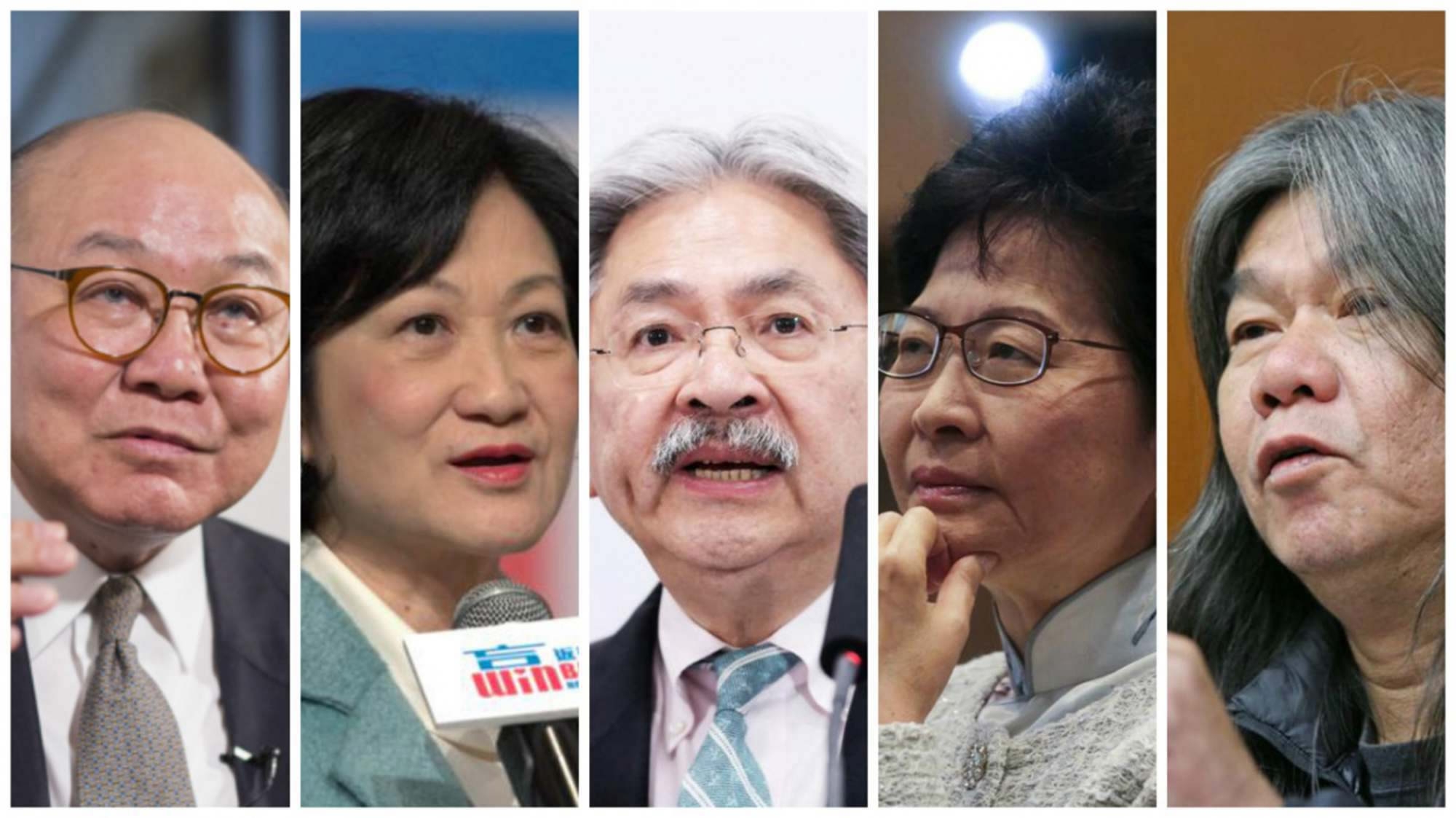
Five candidates (from left Woo Kwok-hing, Regina Ip, John Tsang, Carrie Lam and Leung Kwok Hung) have announced their policy promises as they kickstart their campaigns for the CE. /Internet Photo
The two front runners are former chief secretary Carrie Lam and former financial secretary John Tsang. They asked their spouses to join the campaign on the Valentine’s Day to woo the public.
While Carrier Lam posted a letter from her husband saying he hoped she could continue to contribute to ‘one country, two systems’, John Tsang’s wife showed the public a handmade book that his husband made in their college days.
Another candidate, Regina Ip, also handed out flowers to people in Lee Tung Street in Wan Chai.
The first round of voting comes against a backdrop of complex social and economic challenges in Hong Kong. The emergence of localism, pro-independence sentiments, Hong Kong's sky-high housing prices and its sluggish economy are testing the city's resilience and the wisdom of the CE candidates.
At least three of the five candidates are pushing for political reform to be introduced, according to the framework laid down by the National People’s Congress Standing Committee last August. The framework allows two to three candidates to run in the race for the city’s leader. The candidates have to obtain the support of at least half of the nominating committee members to get on the ballot. The formation of the nominating committee shall be made in accordance with the 1,200-member election committee. It was elected by around 240,000 voters.
Here are some of the main policy promises that have been laid out by the contenders:
John Tsang
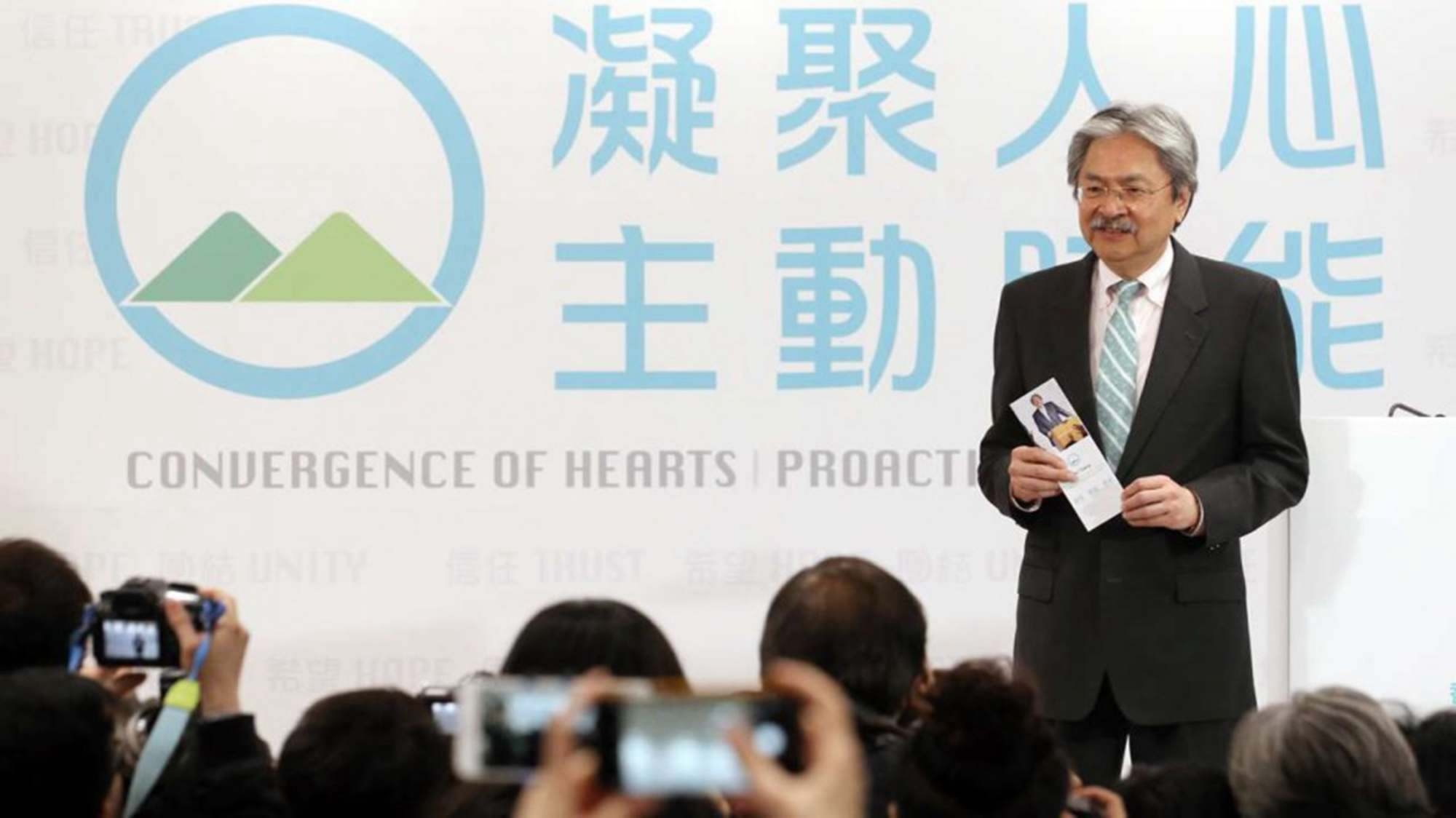
Internet photo
Relaunch the process for political reform to realize a "one person, one vote" system to elect the SAR’s chief executive, according to the National People’s Congress Standing Committee’s framework.
Push the Legislative Council to pass Article 23 of the Basic Law, a bill against treason and sedition, which was rejected in 2003 after mass protests in the SAR.
More support for new start-ups and the fintech sector, in a push to make Hong Kong the world’s fintech center.
Support Beijing-proposed Belt and Road Initiative, and export Hong Kong’s service goods to countries along the Belt and Road.
Provide public housing accommodation for 60 percent of the population. Build more affordable homes for people with low incomes.
Carrier Lam
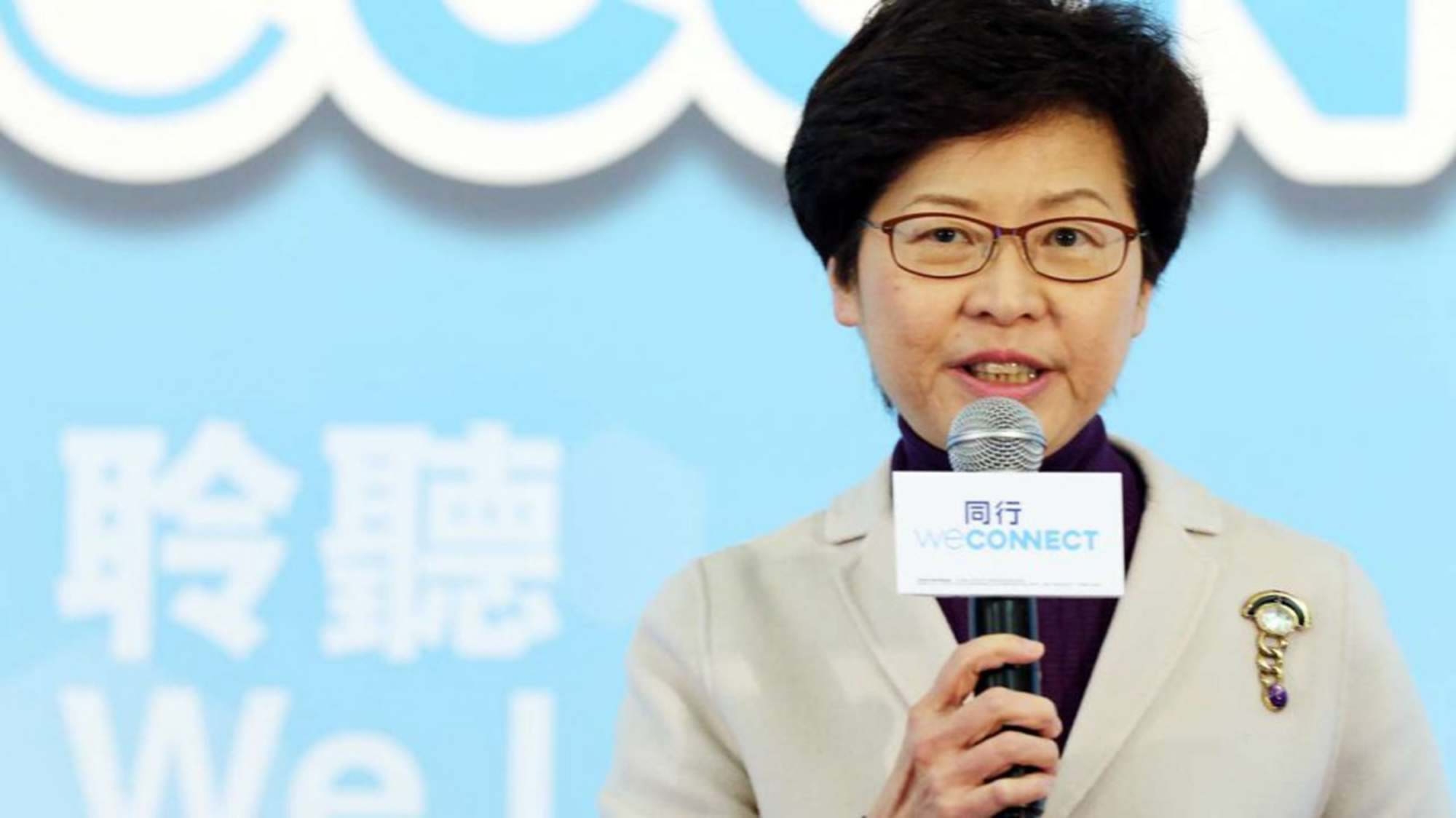
Internet photo
Views on political reform to be elaborated next month.
Small- and medium-sized enterprises should face less tax burdens – cut the tax rate for profits within 2 million Hong Kong dollars from 16.5 percent to 10 percent.
Provide more affordable homes. Prices of home ownership scheme flats should be referenced to medium monthly domestic household income.
Criticize education officials for being too bureaucratic and increase expenditure on education by 5 billion HK dollars each year.
Woo Kwok-hing
Relaunching political reform is the priority, aiming to achieve the "one person, one vote" system in time for the 2022 election. Promises to first focus on widening the franchise of the 1,200-strong Election Committee.
More support for high-tech sectors and the Belt and Road Initiative.
Set aside sites for first-time ownership housing for Hong Kong permanent residents.
Phase out the 15 percent double stamp duty for non-first-time home buyers within five years.
Regina Ip
Promise to relaunch political reform process to achieve "one person, one vote" to elect the SAR chief executive, based on the NPC Standing Committee’s framework.
Enact Article 23 with “suitable measures.”
Solve land and housing issues.
Achieve social harmony, with “one country, two systems” the only basis.
How is the CE elected?
The SAR government chief executive must fulfill four basic requirements: they must be a Chinese citizen, over 40-years old, with no right of abode in a foreign country and ordinarily have lived in the city for at least 20 consecutive years.
Each nominee must receive at least 150 votes from the 1,200-member Election Committee and each member can nominate only one candidate. If a nominee cleared 600 votes in the first round, he would win outright. Otherwise the two nominees would advance to a run-off, in which one must still clear the 600 vote minimum. And the person who won the election would be formally appointed by the central government in Beijing as the new chief executive.