
15:56, 03-Nov-2017
UNESCO World Heritage Site: Slave wharf a reminder of Brazil's brutal past
 []
[]
Share







Copied
The Valongo wharf in Rio de Janeiro operated for three centuries and became the biggest entry point for African slaves in Brazil. Many of them did not survive and were buried at a nearby cemetery. Their remains were discovered during renovation work for the 2016 Olympics. Last summer, the slave port in Rio de Janeiro was declared a UNESCO World Heritage Site. It is deemed to be of outstanding universal value as a reminder of a painful and brutal past. Brazil was the last country to end its involvement in the trans-Atlantic slave trade. As CGTN's Lucrecia Franco reports, the country was the world's biggest importer of slaves.
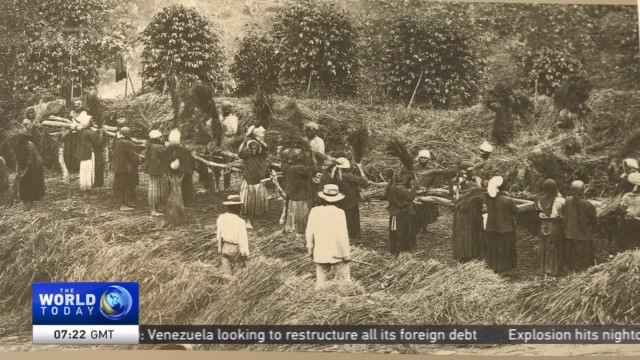
These Afro Brazilians are celebrating the recognition of a wrong and an honor for the place where their ancestors set foot for the first time in Brazil. This is the Valongo Wharf, the main entry port for African slaves arriving in the Americas. It is located in Rio de Janeiro's port area. Of more than four million brought to Brazil, nearly one million landed here to be put to work on Brazil's tobacco, coffee and sugar plantations. The stone wharf was added by UNESCO in July as a world heritage site, following a campaign led by Brazilian anthropologist Milton Guran.
MILTON GURAN, ANTHROPOLOGIST FLUMINENSE FEDERAL UNIVERSITY "It refers to an event in the history of humanity that humanity doesn't want to see repeated, such as Hiroshima, the target of the first nuclear bomb, or the concentration camp at Auschwitz."
Brazil imported more slaves than any other nation between the seventeenth and nineteenth centuries and it was the last country in the western world to abolish slavery, in 1888. Activists say the UNESCO designation will bolster their continued efforts to win reparations.
THIAGO LAURINDO AFRO-BRAZILIAN ACTIVIST "This title will help us knock on the doors of public authorities, not only the Brazilian government but all the European governments, to request some sort of compensation."
The wharf was built in 1811 and it became the busiest slave port in Brazil until the slavery trade was finally shut down. The site was eventually covered over.
LUCRECIA FRANCO RIO DE JANEIRO "Though the exact location of the Valongo wharf was discovered by chance during renovations for the 2016 Olympics, another chilling fact was the finding of a mass grave in a nearby home."
The home belongs to Merced Guimaraes. Part of it has now become the New Blacks Institute, an archaeological site and museum. She says it has become her life mission to preserve the memory of those souls who perished here.
MERCED GUIMARAES, PRESIDENT NEW BLACKS INSTITUTE "Survive and suffer, suffer and die. It is very hard for me that these 30 or 50 thousand people that were dumped here were witnesses of that crime. A crime that will continue if there is no memory."
Archaeologists are working at the institute where they have just discovered the first whole skeleton of a 20 year old woman. The rest are bone fragments.
REINALDO TAVARES, ARCHAEOLOGIST RIO DE JANEIRO FEDERAL UNIVERSITY "We found out that some bodies were burned, others destroyed by time. It is a small cemetery for so many bodies. So what we have here is a mass destruction of human remains."
The discoveries here include branding irons used by slave owners. As for the human remains, experts say it will take years to identify exactly who is buried here, if it's possible at all. With UNESCO's recognition of Brazil's brutal slave period, Afro Brazilians are embracing the moment -- to force the country to come to terms with a past that can no longer be erased. Lucrecia Franco, CGTN, Rio de Janeiro.