TECH & SCI


US scientists use microbubbles in hopes of reducing biopsies for tumors
2017-04-16 10:55 GMT+8
9554km to Beijing






Editor
Xie Zhenqi
A team of researchers have developed tiny bubbles that bind to malignant tumors, making them visible to ultrasound imaging.
The ultrasound imaging of patients' bubble-labeled tumors, as a way to diagnose cancer without resorting to surgery, was followed up with biopsies and pathology studies that confirmed the accuracy of the diagnostic microbubbles.
In a small, preliminary safety trial of the technique, which raised the possibility of far fewer biopsies, 24 women with ovarian tumors and 21 women with breast tumors were intravenously injected with the microbubbles capable of binding to and identifying cancer.
The microbubbles were designed to bind to a receptor called KDR found on the tumor blood vessels of cancer but not in healthy tissue. Noncancerous cells don't have such a receptor.

Stanford University Photo
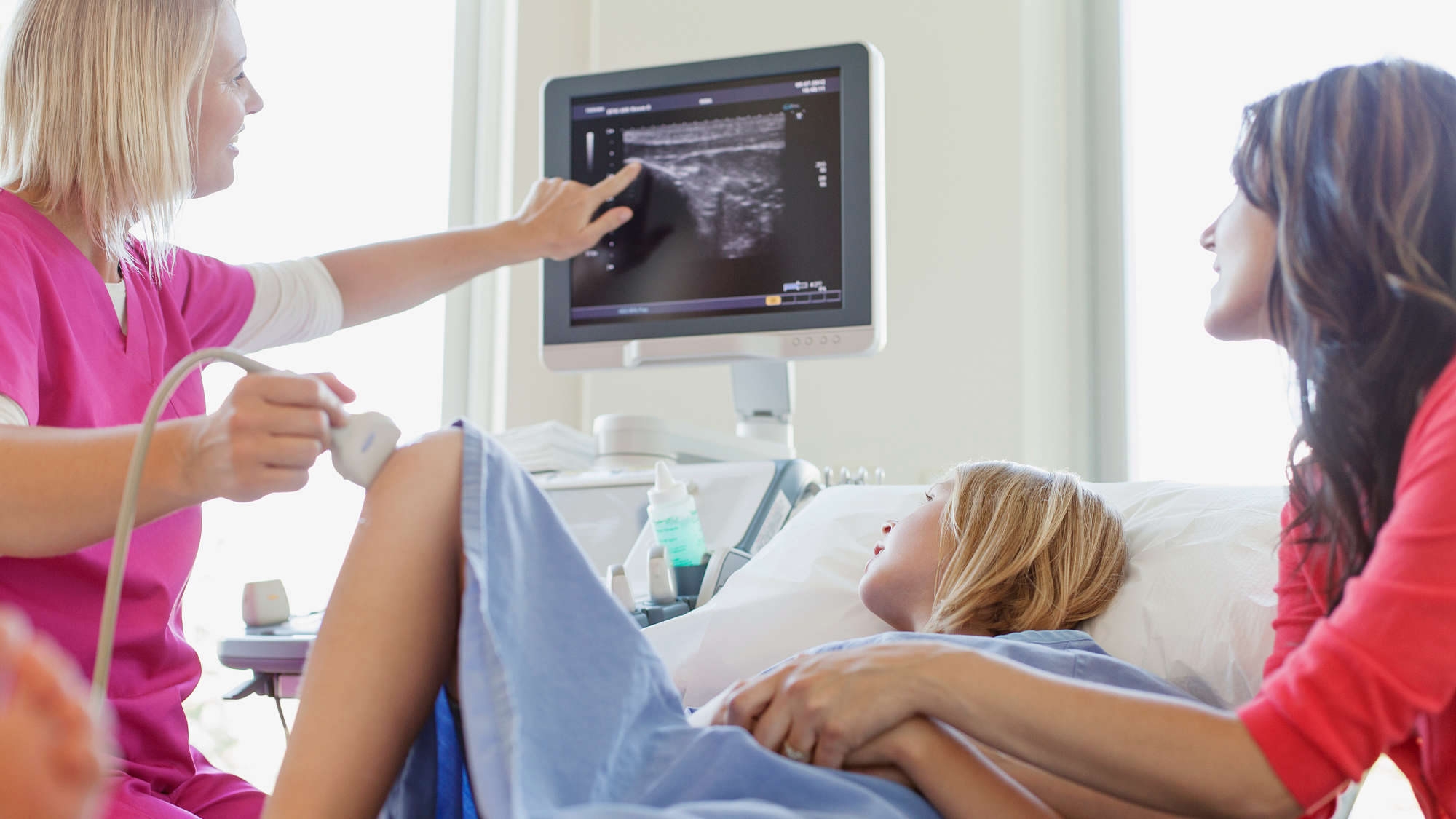
Clinicians used ordinary ultrasound to image the tumors for about a half-hour after injection. The labeled microbubbles, called MBKDR, show up clearly when they cluster in a tumor.
The technique appeared to be both safe and sensitive, said Jurgen Willmann, a professor of radiology at Stanford University School of Medicine and lead author of a study published online this week in the Journal of Clinical Oncology. And it also works with ordinary ultrasound equipment.
"So, there's no new ultrasound equipment that needs to be built for that," he said. "You can just use your regular ultrasound and turn on the contrast mode - which all modern ultrasound equipment has."
"The difficulty with ultrasound right now is that it detects a lot of lesions in the breast, but most of them are benign. And that leads to many unnecessary biopsies and surgeries," Willmann said in a news release from Stanford.
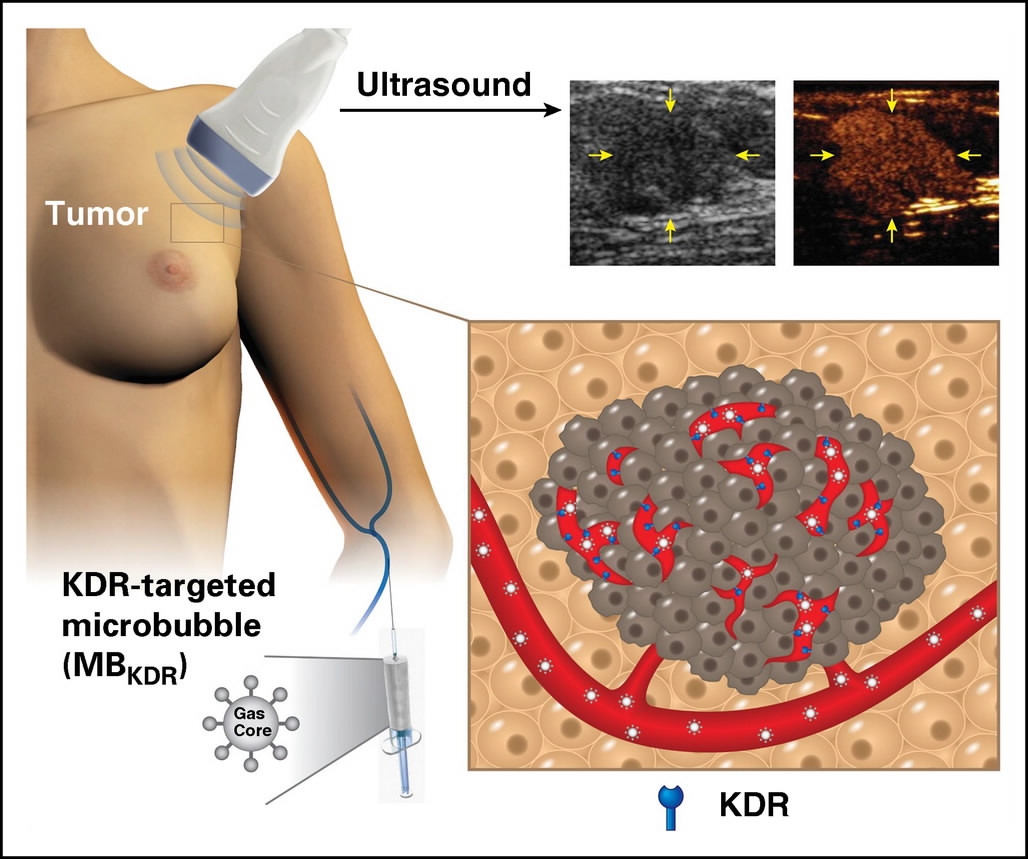
Schematic shows basic concept of ultrasound molecular imaging (USMI) in patients with breast cancer. / Journal of Clinical Oncology Photo
Distinguishing benign from malignant tumors with harmless ultrasound imaging could save millions of patients from biopsies they don't need. "To decrease those unnecessary biopsies and surgeries would be a huge leap forward," he said.
"We could make ultrasound a highly accurate screening technology that is relatively low cost, highly available and with no radiation."
Since ultrasound technology is accessible almost everywhere, Willmann said, the technology could potentially help patients all over the world.
(Source: Xinhua)
9554km
Copyright © 2017
SHARE
- EXPLORE
- MORE
FOLLOW US