Remains of 28 Chinese soldiers returned home from South Korea
Updated
11:07, 28-Jun-2018
[]
Share
Copied
By CGTN’s Wang Lei and Guan Yang
The remains of 28 Chinese soldiers killed in the 1950-1953 Korean War arrived in China on Wednesday, as a Chinese Air Force plane carrying their coffins from Incheon in the Republic of Korea (ROK), landed in Shenyang, northeast China's Liaoning Province.
Since 2014, the ROK has handed over the remains of 569 Chinese volunteer soldiers killed in the war. This year witnessed the fourth handover, and the remains of these soldiers will be buried in a memorial park for martyrs in Shenyang.
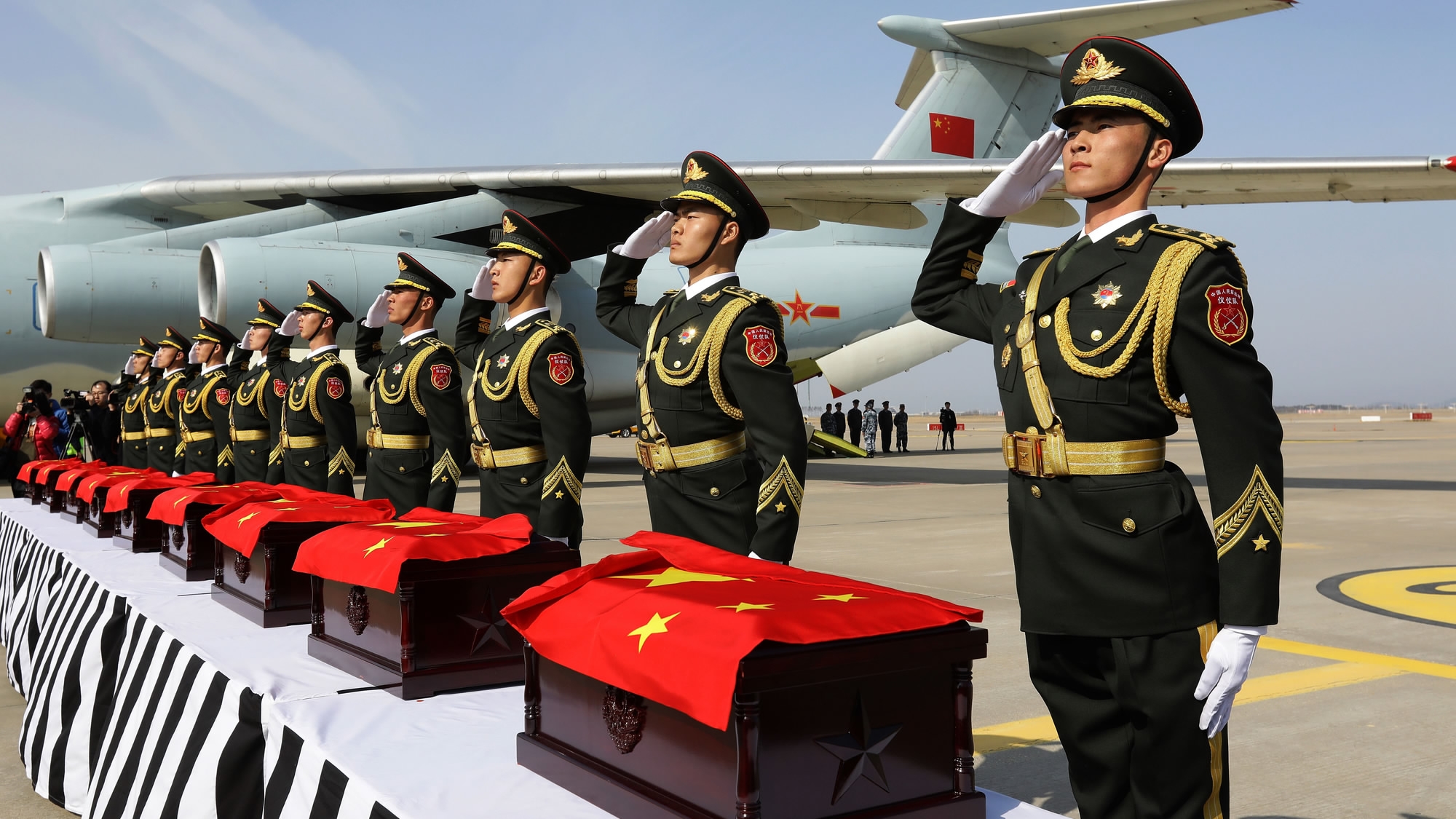
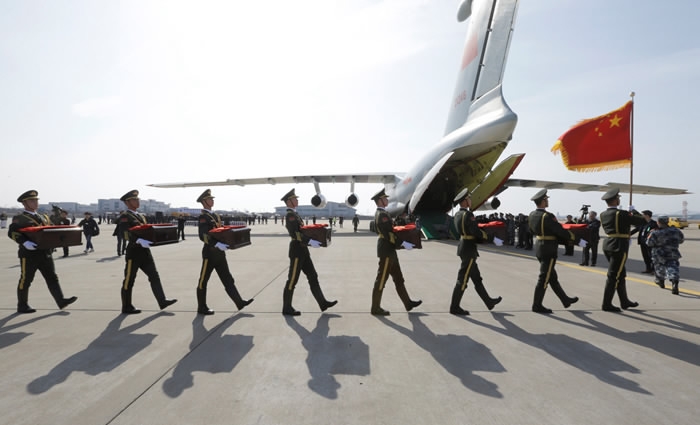
Chinese soldiers carry caskets containing the remains of Chinese soldiers during the handing over ceremony at Incheon International Airport on March 22, 2017 in South Korea. /CFP Photo
Chinese soldiers carry caskets containing the remains of Chinese soldiers during the handing over ceremony at Incheon International Airport on March 22, 2017 in South Korea. /CFP Photo
Earlier on Wednesday, a transfer ceremony was held at Incheon International Airport, just west of Seoul, where the coffins were handed over to the Chinese side. Sun Shaocheng, China's Vice Minister of Civil Affairs and Hwang In-moo, the ROK's Vice Defense Minister, attended the ceremony, Yonhap News reported.
"We appreciate the friendship and goodwill that the South Korean people and media have shown regarding the repatriation of Chinese soldiers' remains," said Sun.
"Historically, the repatriation of soldiers' remains between former war adversaries carries a peaceful message to heal the wounds of the past and develop their relations," Hwang stressed in a speech at the event.
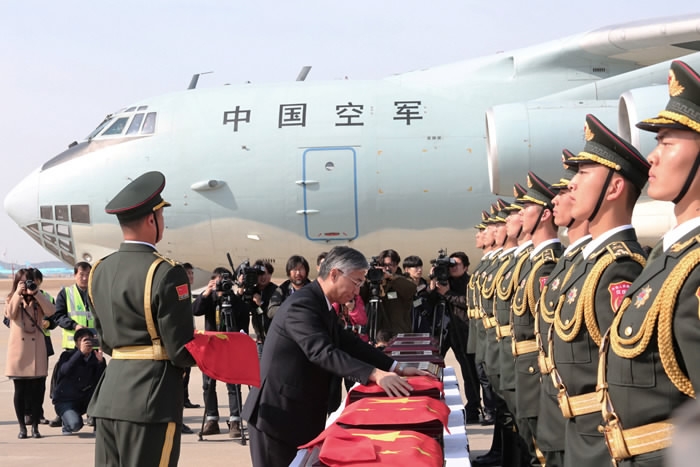
Qiu Guohong, Chinese Ambassador to the Republic of Korea, covers caskets containing the remains of Chinese soldiers with a Chinese national flag during the handing over ceremony at Incheon International Airport in the Republic of Korea on March 22, 2017. /Reuters Photo
Qiu Guohong, Chinese Ambassador to the Republic of Korea, covers caskets containing the remains of Chinese soldiers with a Chinese national flag during the handing over ceremony at Incheon International Airport in the Republic of Korea on March 22, 2017. /Reuters Photo
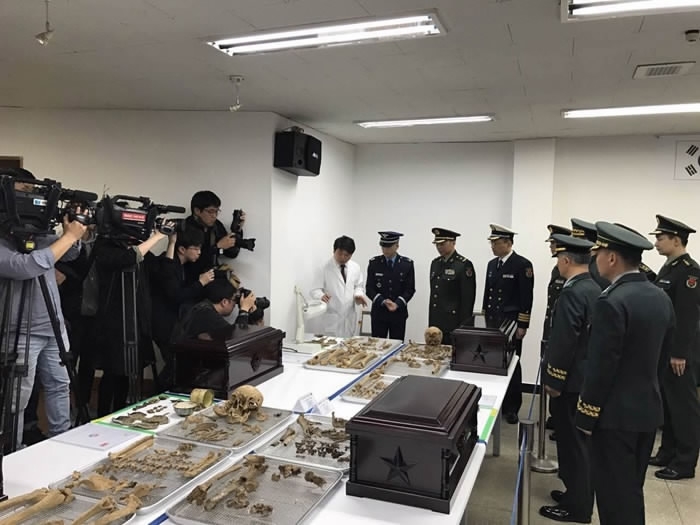
According to the ROK Defense Ministry, the 28 remains were discovered and exhumed between March and November last year, and have been identified as belonging to Chinese soldiers.
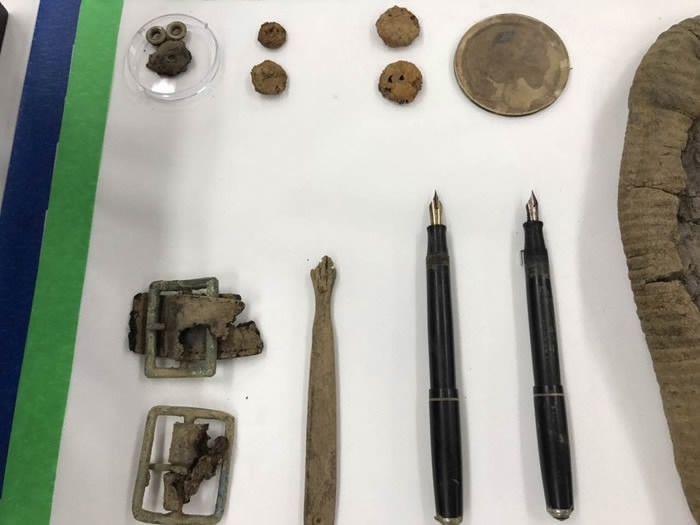
The remains, along with personal belongings of the soldiers, such as pens, cups, medals, flashlights, shoes, and cigarette cases, were sent to a military base in Incheon on Monday.
In recent years, China and the ROK have cooperated on the handover of remains of Chinese soldiers annually on a humanitarian basis, with the transfer usually taking place before Tomb-Sweeping Day, a traditional Chinese festival of remembrance and respect for ancestors held in early April, which is also known as “Qingming”.
Personal belongings of Chinese soldiers killed in the 1950-1953 Korean War. /CCTV Photo
Personal belongings of Chinese soldiers killed in the 1950-1953 Korean War. /CCTV Photo
This year’s transfer took place as planned, despite soured bilateral relations over the deployment of the US Terminal High Altitude Area Defense (THAAD) system in the ROK, which China strongly opposes.
“China will continue consultation with the ROK on the issue,” Chinese Foreign Ministry spokesperson Geng Shuang said at a press conference last month.
Between 1950 and 1953, more than 2.4 million Chinese Volunteer soldiers fought alongside the DPRK against troops from South Korea and the US. At least 180,000 soldiers died in action, but very few were buried in China.
The remains of 28 Chinese soldiers killed in the 1950-1953 Korean War are placed in coffins in Incheon, the Republic of Korea on March 20, 2017. /CCTV Photo
The remains of 28 Chinese soldiers killed in the 1950-1953 Korean War are placed in coffins in Incheon, the Republic of Korea on March 20, 2017. /CCTV Photo
Many of the dead were buried in cemeteries in the DPRK, while others lie in unmarked graves scattered across the Korean peninsula.
Excavation work on burial sites started in 2013 at a cemetery near the border city of Paju, just south of the demilitarized zone that separates South Korea and the DPRK.
The transfer was first suggested during former president Park Guen-hye's official visit to China that same year. Both countries agreed to repatriate the bodies on humanitarian grounds.
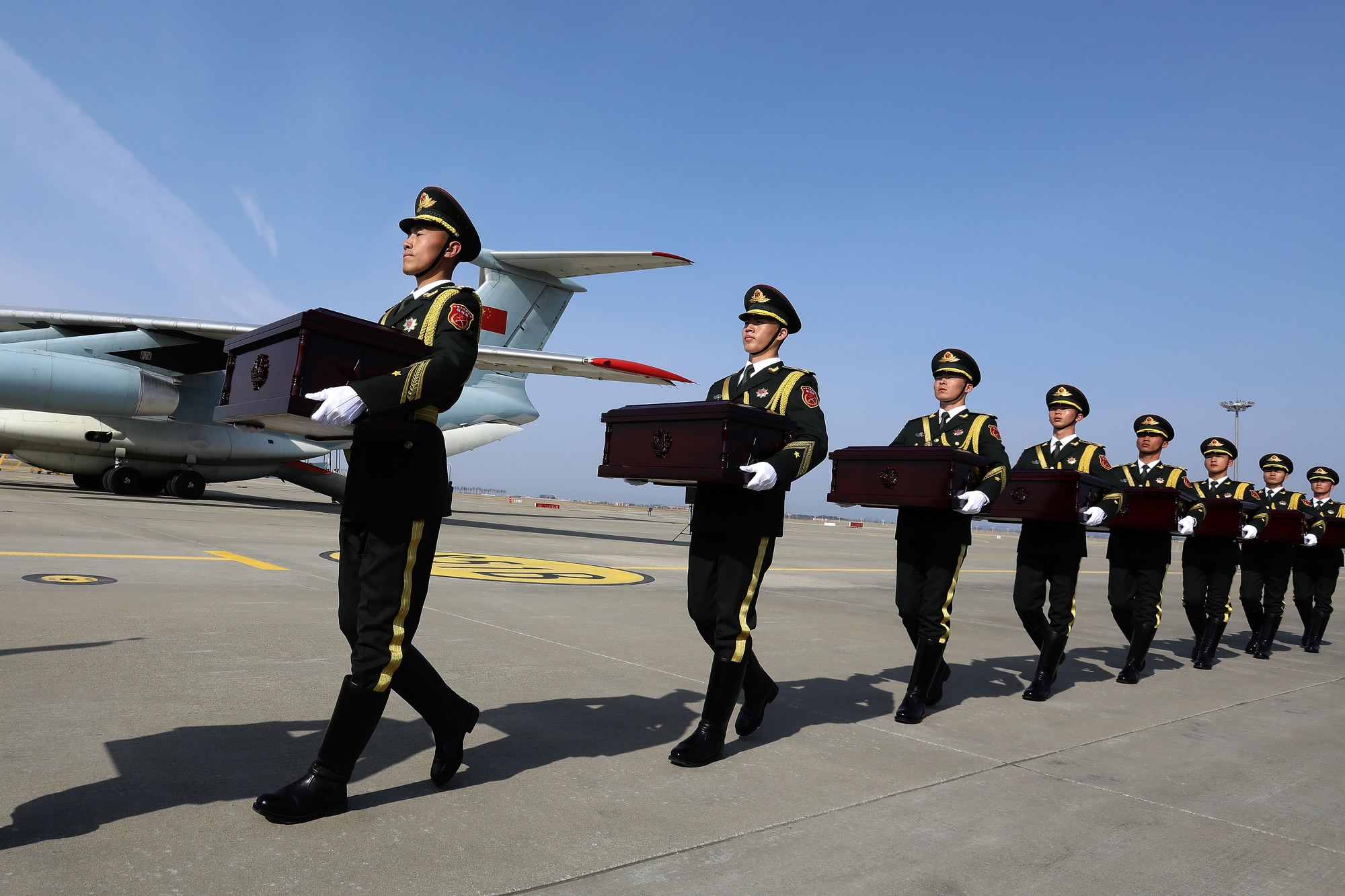
Chinese honor guards with caskets containing the remains of Chinese soldiers move into a cargo airplane during the handing over ceremony at Incheon International Airport in the Republic of Korea on March 22, 2017. /Reuters Photo
Chinese honor guards with caskets containing the remains of Chinese soldiers move into a cargo airplane during the handing over ceremony at Incheon International Airport in the Republic of Korea on March 22, 2017. /Reuters Photo
Scientists from the South Korean Ministry of National Defense have worked to identify the remains by conducting DNA tests and analyzing uniforms or ammunition, but are often unable to put names to the fallen soldiers.
For those veterans present at the ceremony, while the remains belong to unknown soldiers, the solemn occasion allows them to put to rest comrades-in-arms.

 []
[]