BUSINESS


EU Parliament approves FTA with Canada
2017-02-15 22:46:57 GMT+8






Editor
Dang Zheng
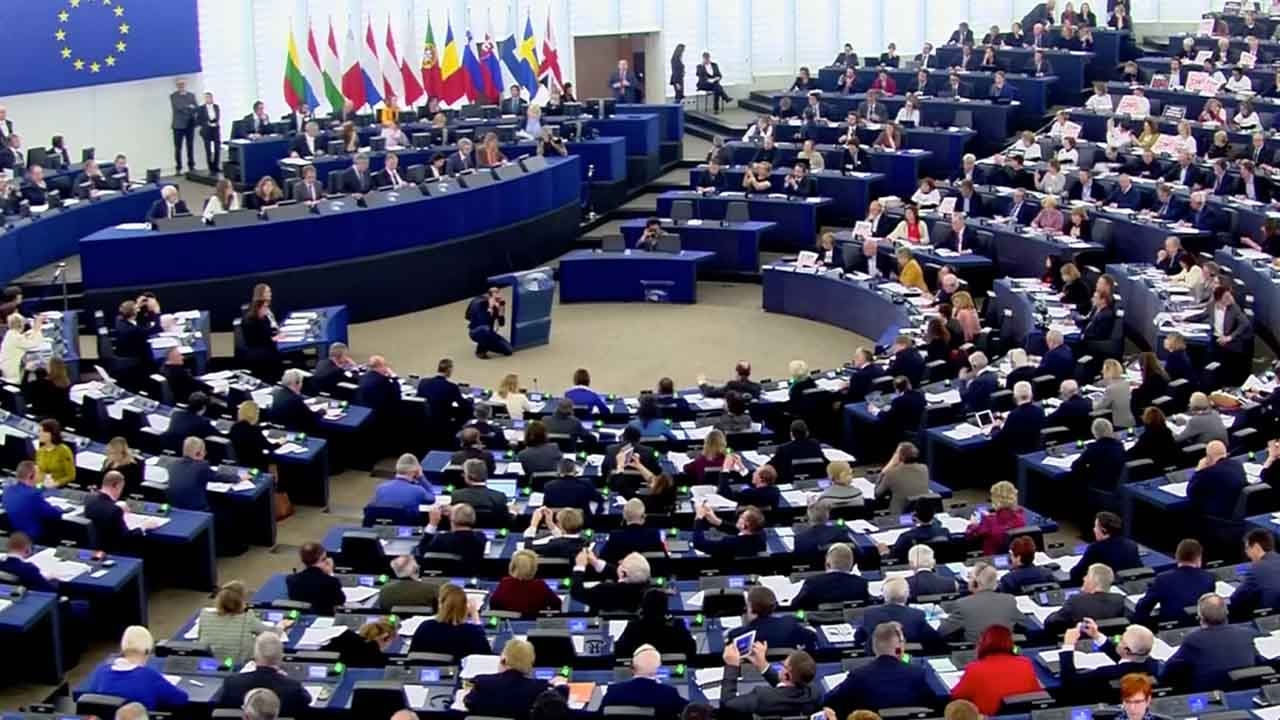
The European Union and Canada will kick-start a multi-billion dollar trade pact called the Comprehensive Economic and Trade Agreement (CETA) in the coming months after it secured approval from EU lawmakers on Wednesday.
Parts of the deal, particularly concerning investment, will only come into force after clearance by more than 30 national parliaments and the assemblies of Belgium's regions. This process can take several years and approval is far from certain.
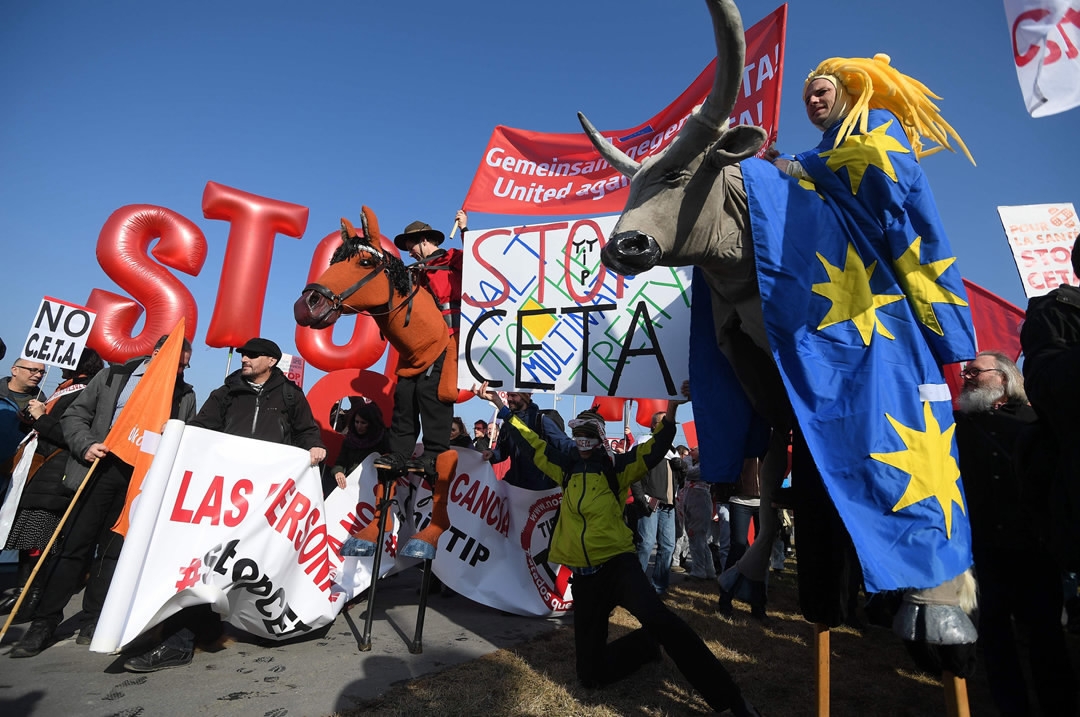
Protesters hold signs during a demonstration against the Transatlantic Trade and Investment Partnership (TTIP) and EU-Canada Comprehensive Economic and Trade Agreement (CETA) on February 15, 2017, during the vote at the European Parliament in Strasbourg, eastern France./VCG Photo
What’s in EU-Canada trade deal?
Canada is the EU's 12th most important trading partner. The EU is number two for Canada, accounting for nearly 10 percent of its external trade in goods.
A joint EU-Canada study forecast CETA would increase bilateral trade in goods and services by more than 20 percent.
For the European Union, this could boost annual economic output by 12 billion euros (12.7 billion US dollars) per year. Canada has put its economic gain at around 12 billion Canadian dollars (9.18 billion US dollars).
Tariffs
The European Union and Canada have agreed to eliminate tariffs on almost 99 percent of goods. The beneficiaries would include, for example, carmakers or the EU textile sector, for which Canadian duties can be up to 18 percent.
Agriculture
Each party will reduce tariffs on just over 90 percent of agricultural products. So for example, an 8 percent EU duty on maple syrup will go. Tariffs will remain on poultry meat and eggs. For other items, quotas will apply.
Canada will be able to increase its exports in stages to 80,000 tons of pork, 50,000 tons of beef and 100,000 tons of wheat free of duties to the European Union.

Internet Photo
EU dairy producers will be able to export more than double the amount of 'high quality' cheeses to Canada. Canada will also grant access for most processed agricultural products, for the EU notably wine and spirits.
Regional food products
Canada will protect the special status of certain EU agricultural products. Under EU rules, "geographical indications" may only come from a specific country or region, such as Prosciutto di Parma ham from Italy and Camembert cheese from France.

Internet Photo
Medical patent
The trade deal aims to create a more level playing field between Canada and the European Union, the latter having complained that pharmaceutical patents are not sufficiently protected in Canada.
Public procurement
Federal, state and municipal government in Canada have committed to opening their markets for procurement to European suppliers, a first for Canada in any trade deal, for example in urban transport.
Federal government contracts are estimated to be worth some 15-19 billion Canadian dollars per year and those of Canadian municipalities at around 112 billion Canadian dollars.
Cars
The European Union will eliminate its tariffs of 10 percent on cars and up to 4.5 percent on auto parts from Canada, while Canada will recognize a list of EU car standards that will make it easier to export vehicles to Canada.
Services
The European Union sees around half of the overall GDP gains coming from liberalizing trade in services - notably finance, telecoms, energy and maritime transport.
The two partners will also mutually recognize professional qualifications, such as for architects, accountants or engineers, making it easier for them to offer their services.
Investment
Canada is the fourth largest foreign investor in the EU and the value of goods produced by its companies there is worth more than all of EU-Canada trade.
The agreement aims to remove barriers to and enhance protection of foreign direct investment between the two parties, currently worth some 340 billion euros.
The investment chapter also covers investment protection, the most controversial aspect of the treaty, which critics say will allow multinational companies to dictate public policy.
Supporters say the investment court system fully answers those concerns.
Just big business?
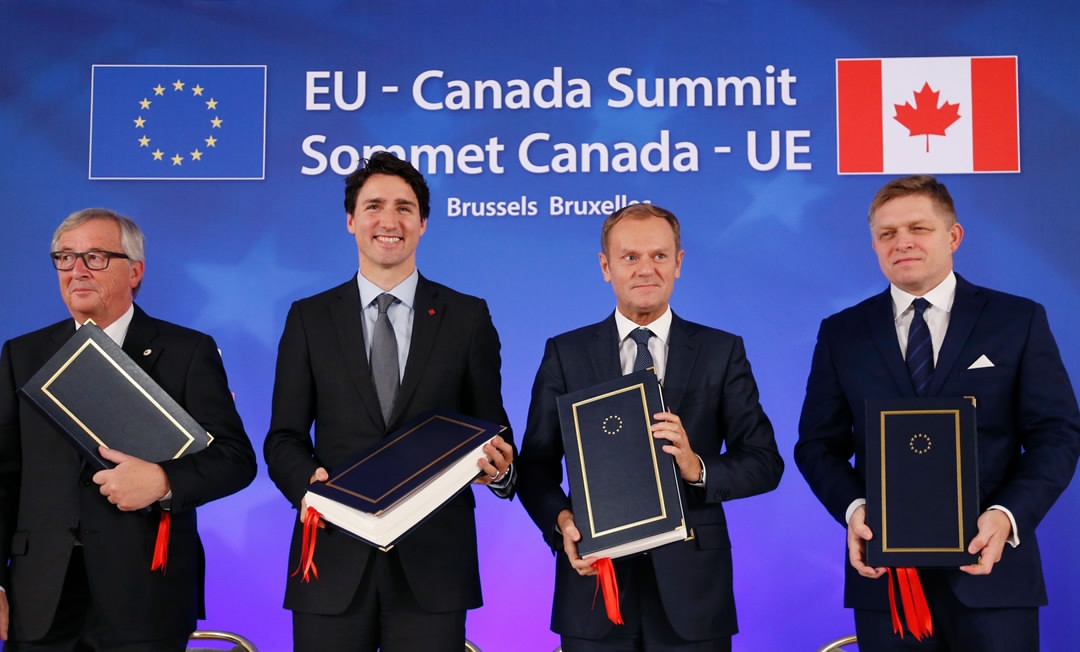
(From L) President of the European Commission Jean-Claude Juncker, Canadian Prime Minister Justin Trudeau, EU Council President Donald Tusk and Slovak Prime Minister Robert Fico pose during the signing ceremony of the Comprehensive Economic and Trade Agreement (CETA), at the European Council in Brussels, on October 30, 2016./VCG Photo
By cutting tariffs on cars and auto parts, CETA could lead carmakers such as Ford or Fiat Chrysler to realign their operations, but CETA supporters, such as the European Commission, say it will benefit smaller businesses too.
Indeed, they say smaller companies, not armed with subsidiaries and lawyers, are most constrained by tariffs and regulations.
(Story from Reuters)
Copyright © 2017
SHARE
- EXPLORE
- MORE
FOLLOW US