
21:41, 03-Oct-2017
Super High Speed Railway: Hyperloop and T-Flight are in the running
 []
[]
Share







Copied
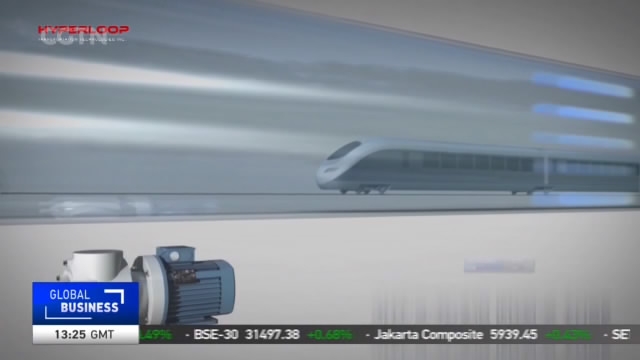
The pursuit of solving the problems of traffic, long commutes and inefficient travel is never ending, especially for countries as vast as the US and China. One proposed solution is super high speed rail and the race to build the fastest system is heating up. CGTN's May Lee has the details.
In 2012, Elon Musk first introduced the concept of Hyperloop, a sealed vacuum-like tube where a pod would travel nearly free of air resistance at a top speed of 1200 kilometers per hour.
Hyperloop is an open sourced concept, so other companies have attempted to further develop the experimental technology. Now China has jumped in the race toward super high speed travel with plans to create T-flight, a supersonic train that can travel up to 4000 kilometers per hour. To put that into perspective? the speed of sound is 1225 kilometers while a commercial jet travels at a sloth-like pace of 885 kilometers per hour.
So why the huge difference? Well, Hyperloop's tube is partially evacuated whereas T-Flight is completely evacuated? meaning no air. But with greater speed comes a much bigger price tag.
JAMES MOORE USC TRANSPORTATION ENGINEERING PROGRAM "It's very expensive to create a complete vacuum or something close enough to qualify for this purpose so I would expect that the capital cost of such a system would be so large that it could never be recovered from the fares that might be charged operating it."
But how large are we talking about?
JAMES MOORE TRANSPORTATION ENGINEERING PROGRAM, USC "The best official estimate I could give you is about a zillion dollars."
The estimate for a passenger and cargo Hyperloop system from San Francisco to Los Angeles, on the other hand, is seven-and-a-half billion dollars. Groups like Californians Advocating Responsible Rail Design want to make sure that resources are used to build a realistic, integrated transportation system.
ELIZABETH ALEXIS CALIFORNIANS ADVOCATING RESPONSIBLE RAIL DESIGN "Projects like high speed rail or Hyperloop, some kind of long distance service is part of the answer, but it really starts to be an interesting solution when it's the backbone of a wider network, and that's partly what we figured out is missing in California."
MAY LEE LOS ANGELES "And one final thought to leave you with? and it's about whether the average person can withstand traveling at 4000 kilometers per hour. Professor James Moore put it to me this way what happens if the train turns even slightly, how much curvature can be built into a system without passengers being flattened like wallpaper? Engineers working on the project in China have said the flying train will be safe, but no further details on safety have been released at least not yet. May Lee, CGTN, Los Angeles."