POLITICS


South Korean presidential candidates differ on THAAD deployment
2017-03-14 17:45 GMT+8
947km to Beijing






Editor
Wang Mingyan
With Park Geun-hye ousted as South Korean president, the race to be the next occupant of the Blue House is hotting up.
Leading candidate Moon Jae-in joined three other hopefuls from the main opposition Democratic Party for a televised debate on Tuesday, and the disputed THAAD deployment issue was prominent on their discussion list.
Moon maintained that the THAAD deployment should be decided upon by the new government. In his view, South Korea should make diplomatic efforts to persuade China to stop what he called the economic retaliation against Seoul.
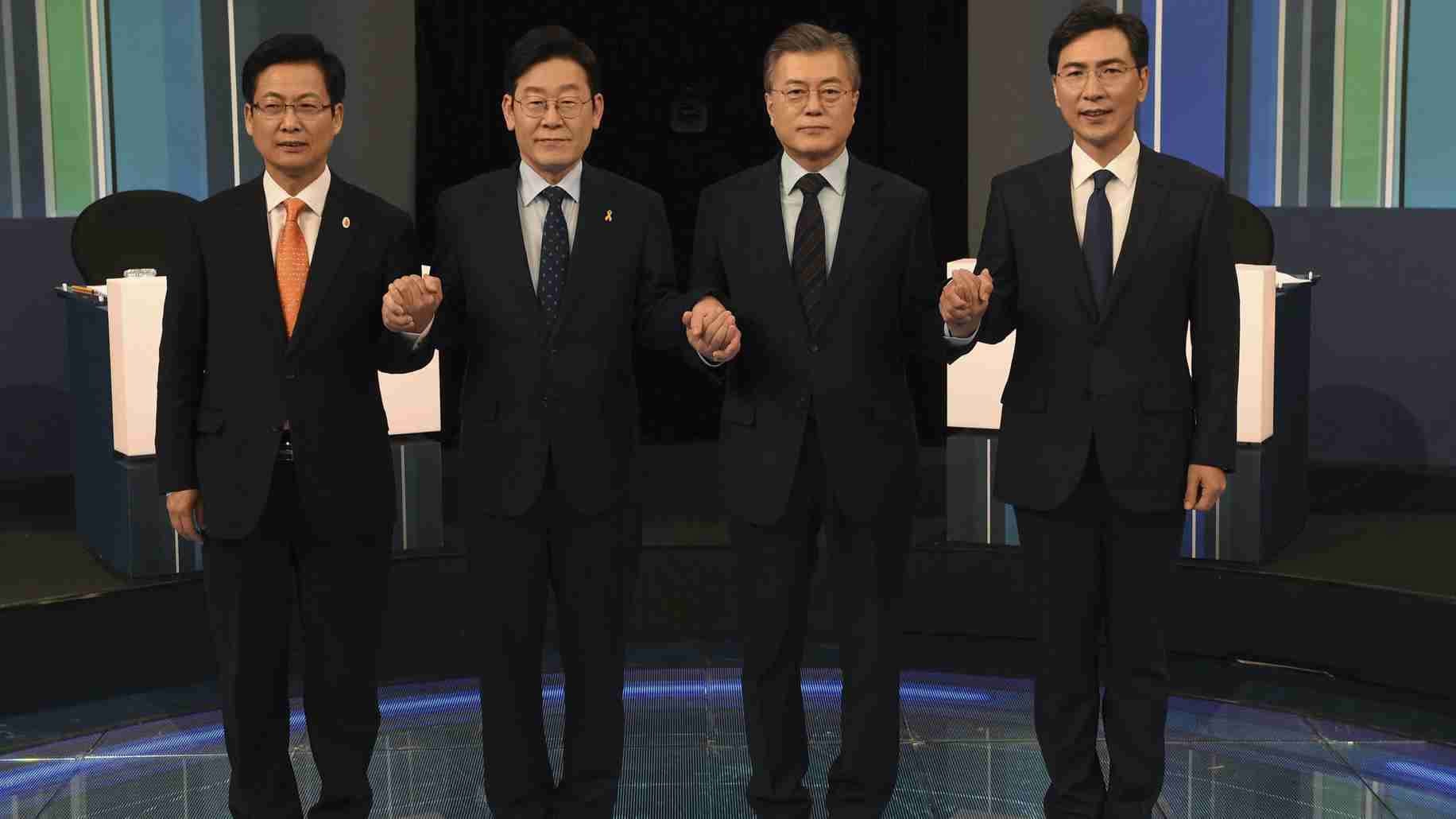
(From left) Goyang Mayor Choi Sung, Seongnam Mayor Lee Jae-myung, Moon Jae-in, former head of the Democratic Party, and South Chungcheong Governor An Hee-jung pose for a photo ahead of the public debate held in Seoul on March 14, 2017. /CFP Photo
However, South Korea's Finance Minister Yoo Il-ho said on Monday there is no firm evidence of Chinese retaliation.
Among the other candidates, Seongnam Mayor Lee Jae-myung had the most radical attitude toward THAAD, explicitly stating the deployment should be scrapped. "Even if the deployment began, I would return it to the original state if I became the president," said Mayor Lee.
South Chungcheong Governor An Hee-jung adopted a moderate tone, saying that the plan should be maintained given the Seoul-Washington alliance.
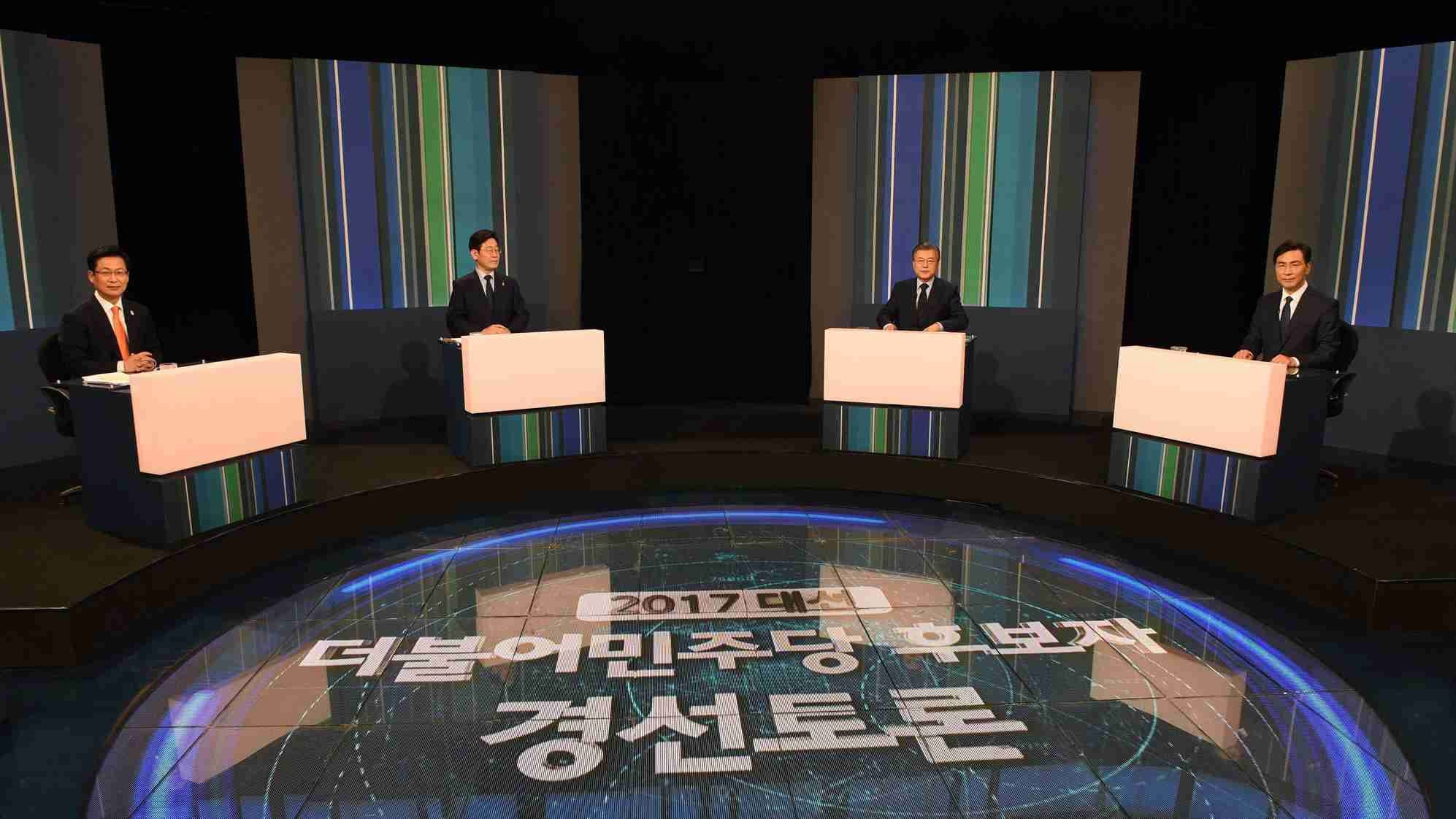
CFP Photo
The South Korean presidential election is likely to fall in early May, as the law stipulates an election should be held within 60 days if the president is removed from office. Moon, who lost the 2012 race to Park, currently tops the opinion polls.
A weekend poll conducted by Korea Research Center put Moon ahead on 29.9 percent, and An Hee-jung in second place with 17 percent. Acting President and Prime Minister Hwang Kyo-ahn recorded 9.1 percent support. Meanwhile, the main opposition Democratic Party had the backing of 46.4 percent, standing as the dominant player.
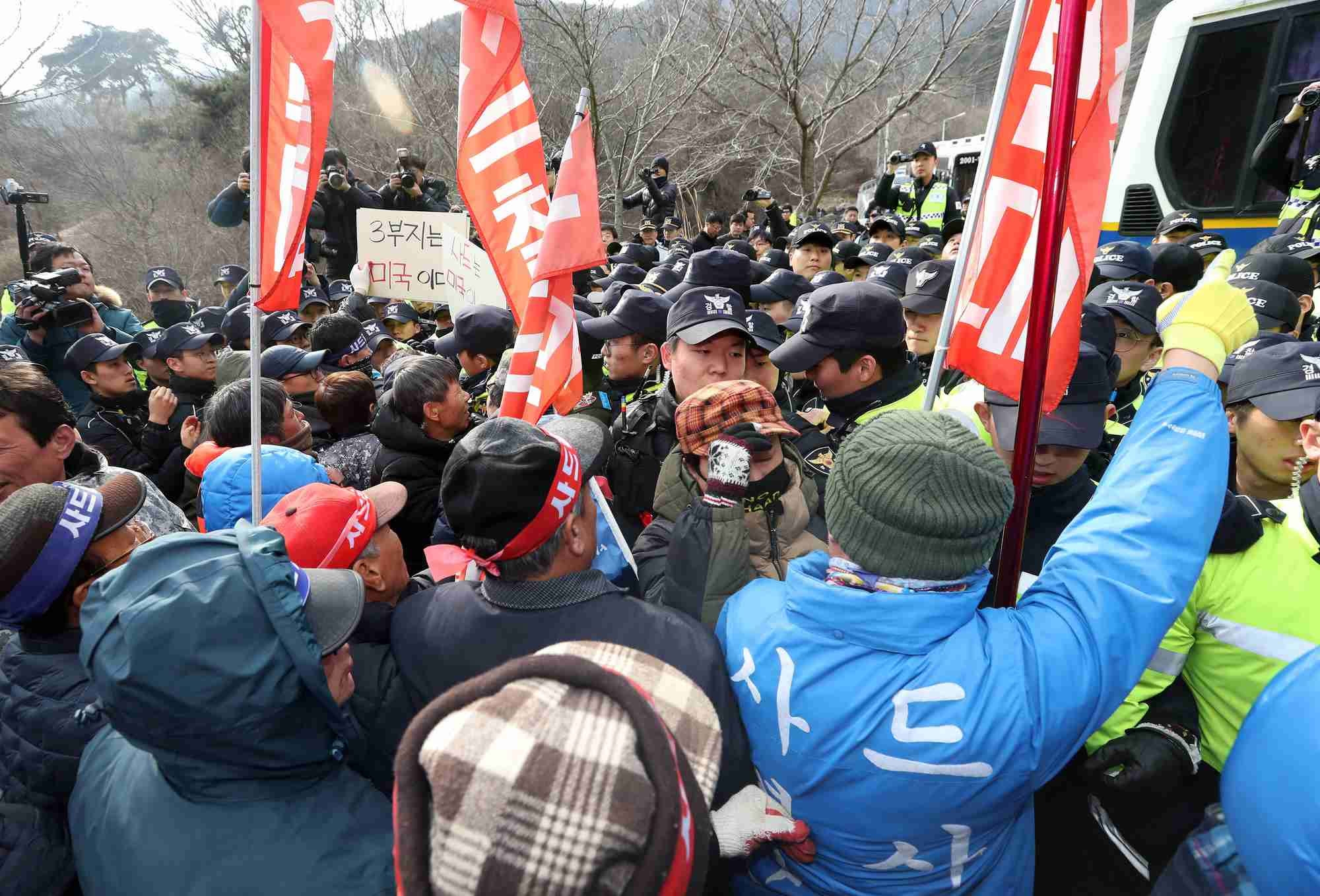
Residents in Seongju county protest the THAAD deployment on March 8, 2017. /CFP Photo
The stance the next South Korean leader holds on the THAAD deployment is a major issue that Beijing keeps an eye on. Bilateral ties are at a standoff over Seoul's determination to deploy the THAAD missile defense system, despite Beijing’s repeated opposition.
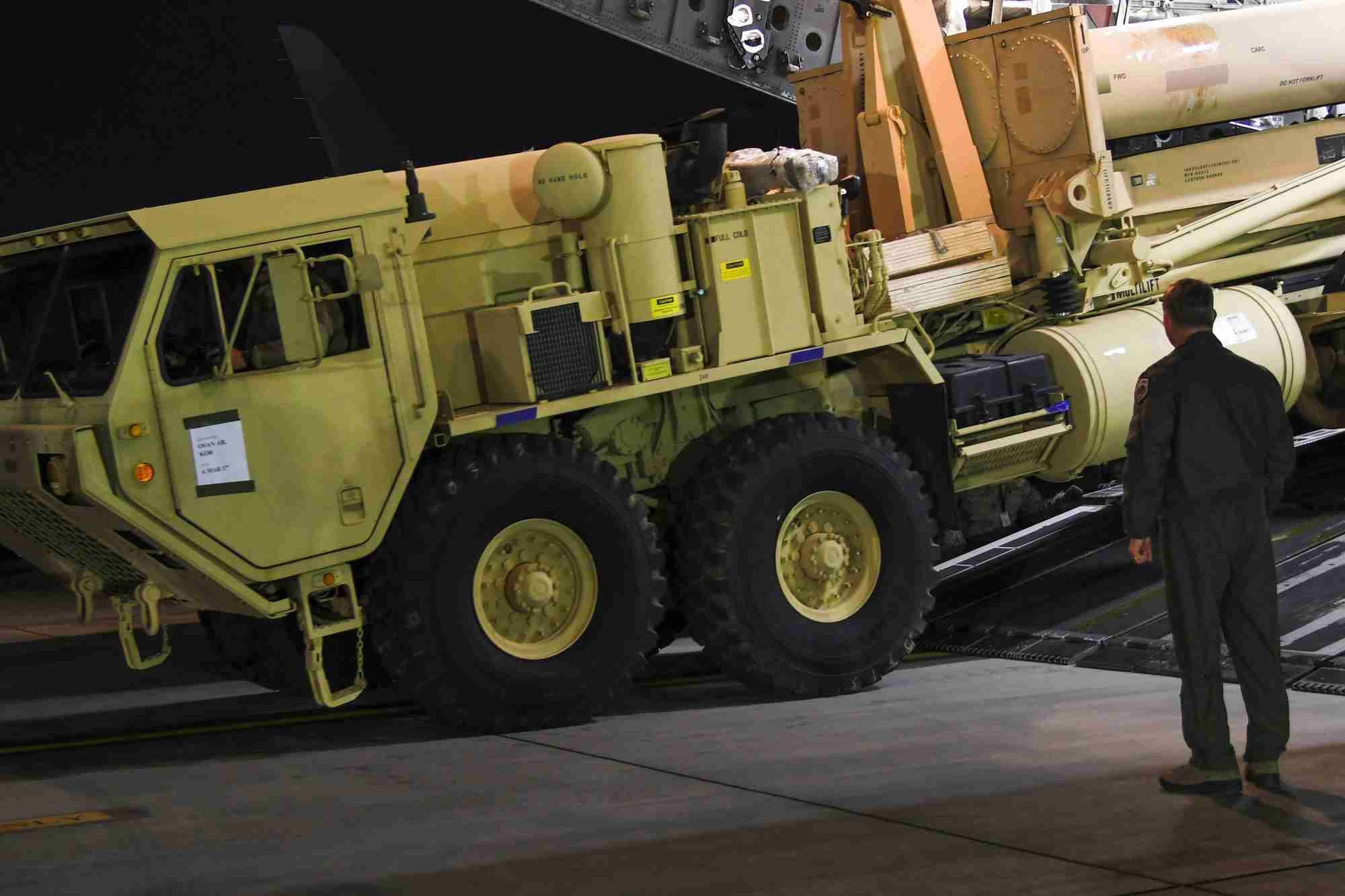
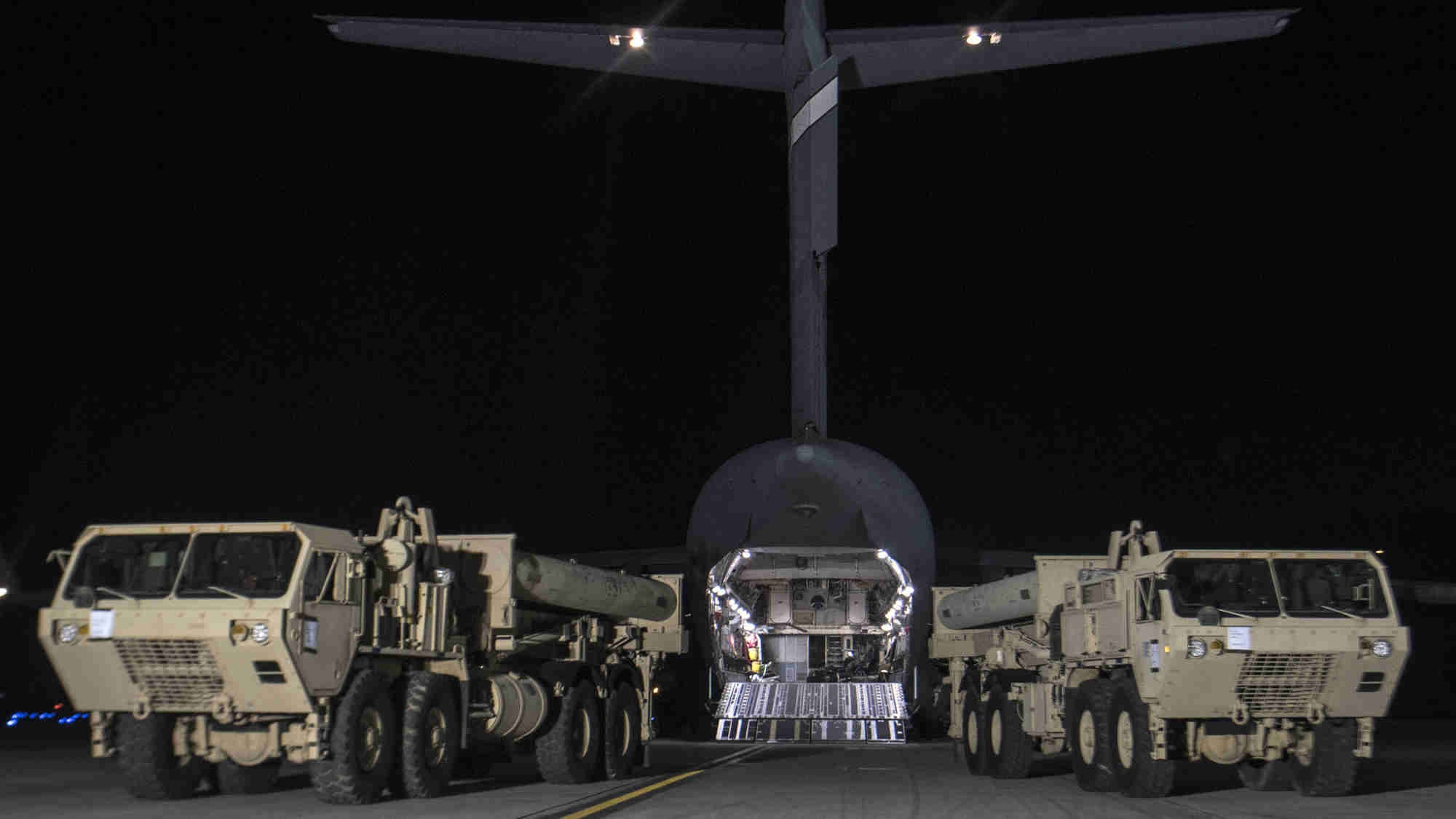
This handout photo from the US Forces Korea taken on March 6, 2017 and released on March 7, 2017 shows the first elements of the THAAD arriving at Osan US Air Base in Pyeongtaek, south of Seoul. /CFP Photo
The front-runner, Moon, has been criticized domestically due to his ambiguous attitude on the THAAD deployment, and urged to clarify his position. The divergent voices are from both his own party and contenders from rivalry groupings.
THAAD has a very limited capability when it comes to countering missile threats from the DPRK, as it is designed to intercept incoming missiles at an altitude of 40-160 kilometers. Pyongyang’s indigenous missiles can technically fly at an altitude far less than 40 kilometers, which would not be in THAAD's range. But THAAD's powerful X-band radar is capable of looking deep into the territories of China and Russia.
947km
Copyright © 2017
SHARE
- EXPLORE
- MORE
FOLLOW US