TECH & SCI


China looks to widen application of artificial intelligence
2017-04-10 10:40 GMT+8






Editor
Xie Zhenqi
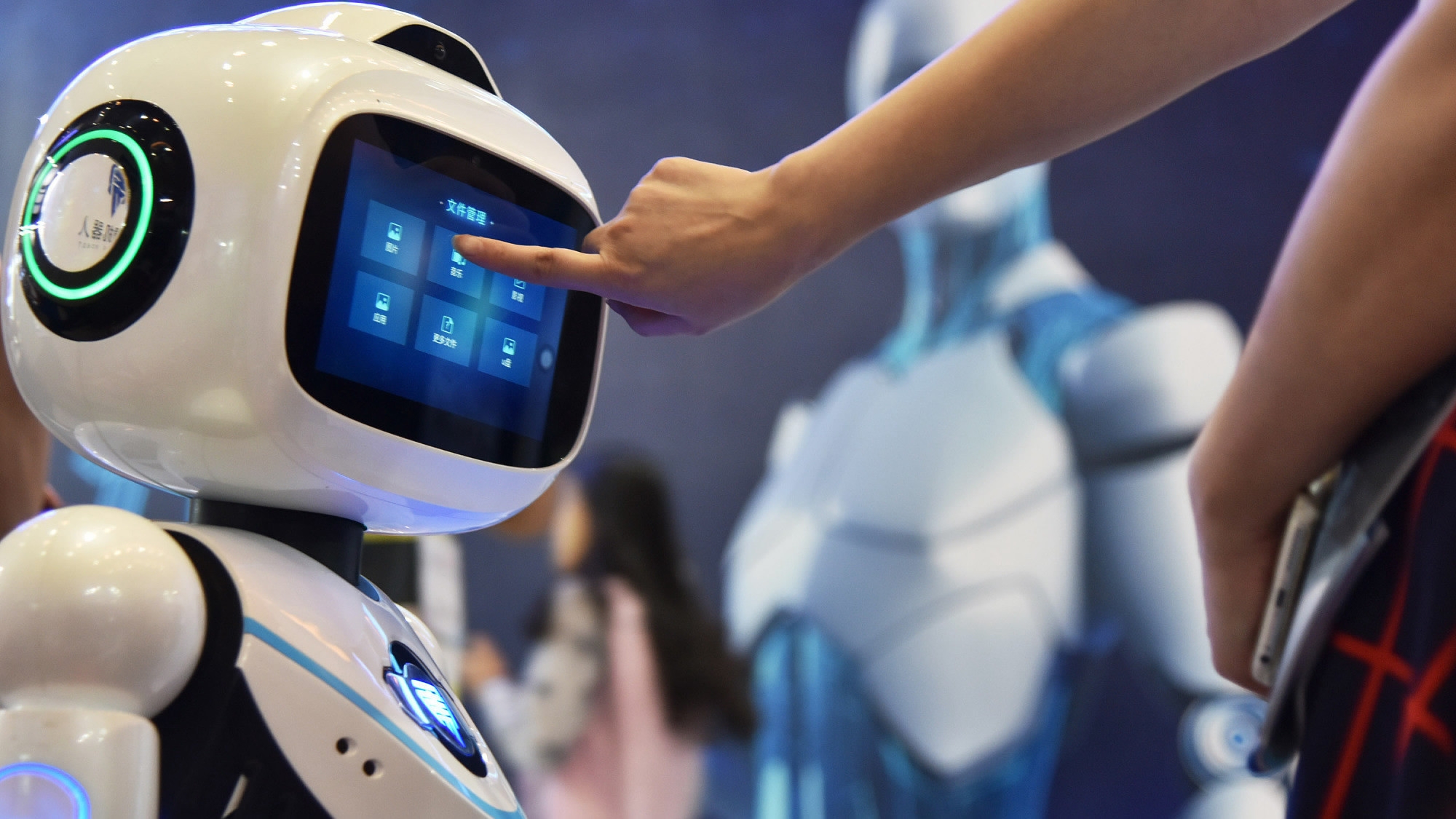
China has great potential in the application of artificial intelligence (AI), a senior official said Sunday, following MIT Technology Review's listing of three breakthrough technologies in 2017, for which Chinese companies are the main developers.
"Chinese researchers and entrepreneurs are among the best in the world, with technological innovations and good earnings in the sector," said Liu Lihua, Vice Minister of Industry and Information Technology.
MIT Technology Review recently released a report titled, "10 Breakthrough Technologies 2017."
Researchers with Chinese companies iFlytek, Alibaba, and Baidu participated in the study of the world's leading AI technologies, said Liu, referring to technologies of reinforcement learning, paying with your face, and self-driving trucks, the three breakthrough technologies among the ten in 2017.
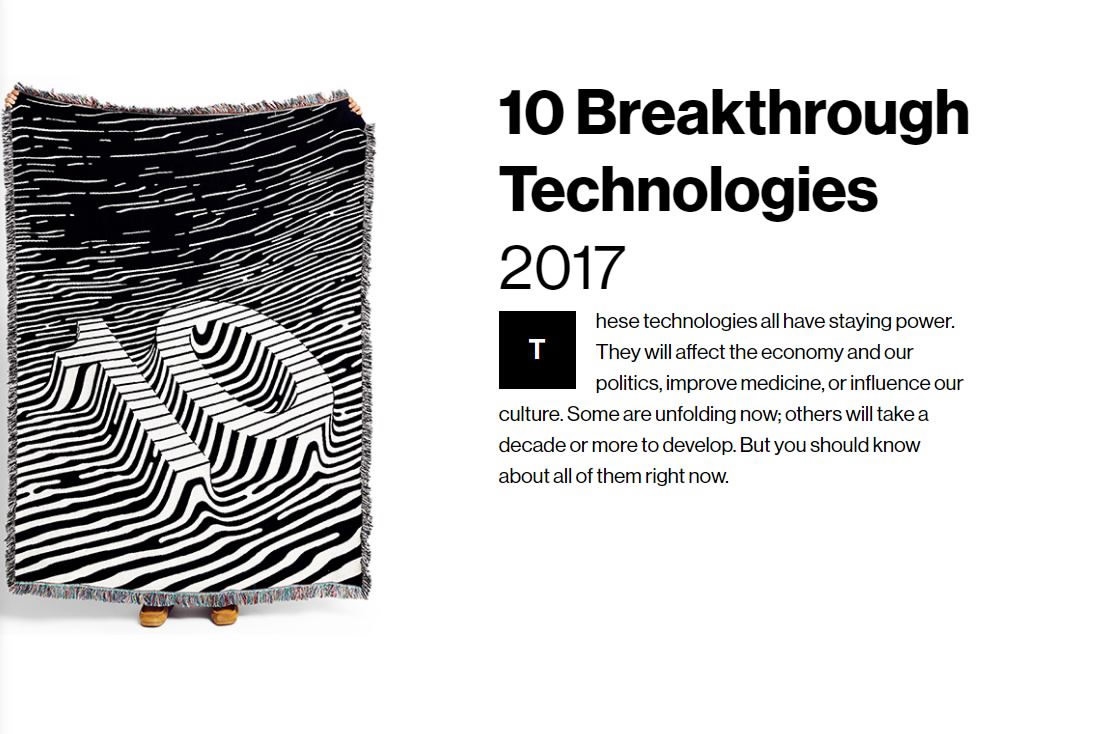
10 Breakthrough Technologies 2017 / MIT Technology Review Photo
AI research started more than 60 years ago and there have been some major ups and downs. The current wave is backed by unprecedented quantities of data and computing power.
"While we are just getting started, we have made prominent progress in applying artificial intelligence in smart city and intelligent customer service on automobiles," said Liu.
More sectors will see AI applications in the future, he added.
Chinese Internet giants are focusing on the development of artificial intelligence and believe the next few decades will be a golden age for the industry.
Liu Qingfeng, board chairman of tech firm iFlytek, said, "If we define 2016 as the first year of China's artificial intelligence, this year will be the beginning of applications of artificial intelligence in the country."
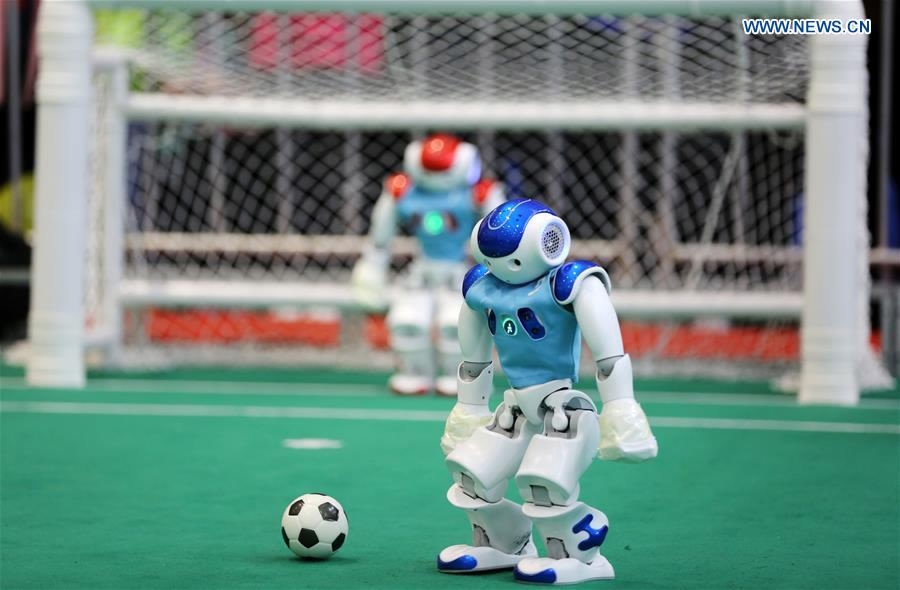
Robots take part in a soccer match during the 2017 RoboCup in Rizhao, east China's Shandong Province, April 2, 2017. / Xinhua Photo
In an interview with Tencent Technology, Li Kaifu, CEO of Sinovation Ventures, also said, "AI is growing dramatically, and in ten years 50 percent of labor work will be replaced by AI."
Internet giant Baidu set up a national deep learning technology lab in Beijing in March. The lab gathered AI experts from Baidu, Tsinghua University, Beijing University of Aeronautics and Astronautics, and China Academy of Information and Communications Technology.
"The Internet is just an appetizer. The main course will be AI. In the future, machines will develop to a point where they can understand humans and their intentions," said Li Yanhong, chair of Baidu, at the China IT Summit in Shenzhen last Sunday.
Baidu has invested heavily in machine-aided study, image recognition, voice recognition and driverless vehicles.
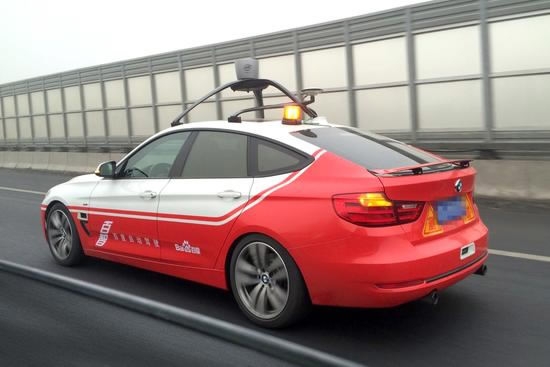
Baidu is the first tech firm in China that achieves driverless driving in city, ring roads and highways combined. / Baidu Institute of Deep Learning Photo
Another tech giant, Xiaomi, set up an "Explorer's Lab" last year to research artificial intelligence and will release an "exciting AI product" in the coming six months, according to Lei Jun, founder and CEO of Xiaomi.
"Companies in emerging markets need to offer their consumers a compelling vision so that they not only resolve problems today, but also address problems on the horizon," Lei said.
China will make greater efforts this year to implement innovation-driven development strategy, upgrade the structure of the real economy, and improve its performance and competitiveness, according to the government work report issued last month.
"We will accelerate R&D on and commercialization of new materials, artificial intelligence, integrated circuits, bio-pharmacy, 5G mobile communications, and other technologies, and develop industrial clusters in these fields," the report read.
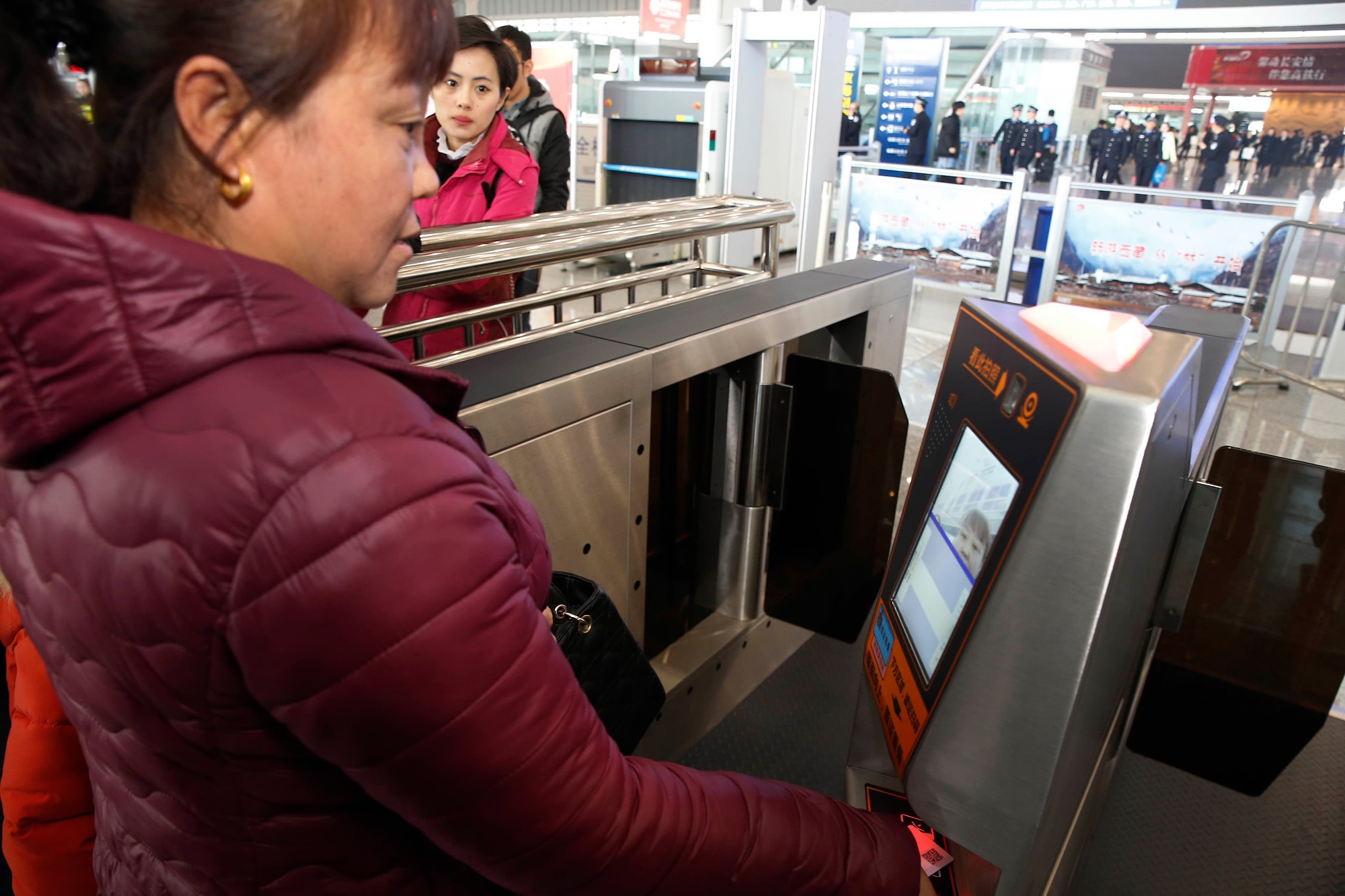
Passengers board train by facial recognition rather than ticket or ID. / CFP Photo
In May last year, the government made a three-year action plan to develop AI.
The industry's market size was 23.9 billion yuan (about 3.5 billion US dollars) last year, and will reach 38 billion yuan (about 5.5 billion US dollars) in 2018, according to the Ministry of Industry and Information Technology.
"As the AI era approaches, we should focus on technological innovation, establish industry standards and specifications, forge an industrial ecosystem, and speed up legislation in the sector," said iFlytek's Liu.
(With inputs from Xinhua)
Copyright © 2017
SHARE
- EXPLORE
- MORE
FOLLOW US