
20:32, 16-Dec-2017
Turkish Traditional Culture: Commemoration events of whirling dervishes continue in Konya
 []
[]
Share







Copied
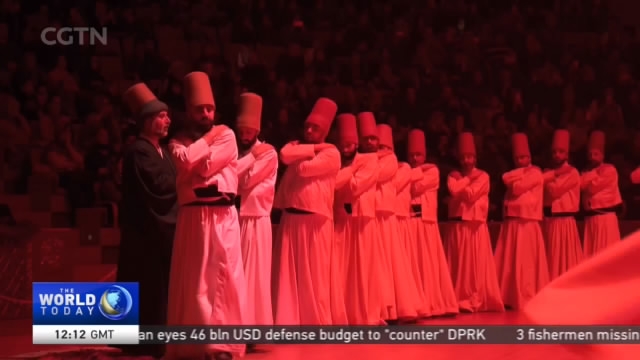
It's a magical time to visit the city of Konya in central Turkey. Between the 7th and 17th of December, the world-famous poet, scholar and philosopher Mevlana Rumi is being remembered through spiritual events. He is also the creator of the transcending ritual of the "Sema -- the whirling of the dervishes" -- which is practiced by his followers. CGTN's Michal Bardavid has more.
"Time for Brotherhood" – this is the theme of this year's ceremonies held in commemoration of Mevlana Jalaluddin al-Rumi on the 744th anniversary of his death. Rumi, a Sufi mystic and Islamic scholar has inspired millions around the world with his poems. His presence is felt in every tune, in every prayer around the city.
MICHAL BARDAVID KONYA CITY, TURKEY All the events that take place during the 10-day commemoration focus on Rumi and his philosophy of love and tolerance. Visitors can participate in daily music workshops, explore art exhibitions and listen to spiritual lectures.
FAHRI OZCAKIL TURKISH SUFI MUSIC ENSEMBLE DIRECTOR Until this day, many of his messages have spread, like being close to Allah (God) through love. He has taught people around him morality, integrity, ethics. He has spread messages of tolerance, love and brotherhood.
Rumi has also created the trance-like ritual of the "Sema". Whirling dervishes silently call out "Allah… Allah" with each spin they make a practice which takes months or even years to master. Whirling dervishes believe the Sema brings them closer to God, that it creates a pure connection. The "Mevlevi Sema ceremony" has been recognized as a cultural treasure by UNESCO.
OMER FARUK ERDEM WHIRLING DERVISH Sema is a part of life; in life everything can't always be great or wonderful, there will be ups and down, the Sema prepares you for that, to life's reality, to the moment, to death and beyond death. It's a preparation.
The commemoration events continue in Konya until the 17 th of December, the anniversary of Rumi's death – which Rumi referred to as his wedding day; the day of his "Reunion with the Beloved". Michal Bardavid, CGTN, Konya.