
By CGTN’s Yang Zhao
Trump's executive order to ban entry by nationals of seven Muslim-majority countries has created controversy around the US. How much power does an executive order have? And what are the checks and balances in the US system of government?
The legal battle between President Trump's executive order and the court action over his controversial immigration ban, illustrates the "checks and balances" in the US Constitution, the supreme law of the land.
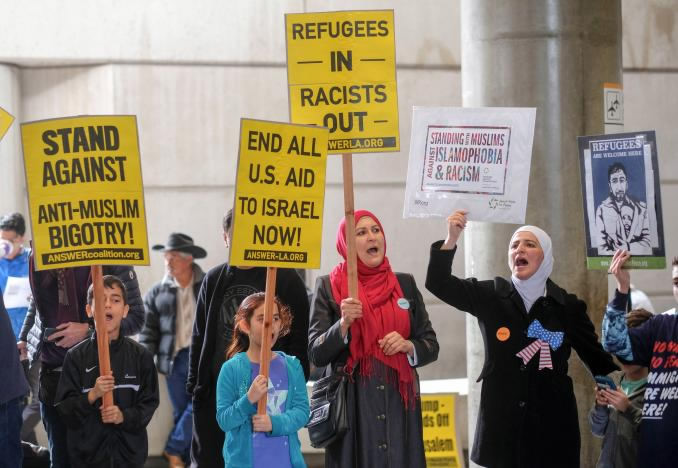
Demonstrators against the immigration rules implemented by US President Donald Trump's administration, rally at Los Angeles international airport in Los Angeles, California, US, February 4, 2017. / Reuters Photo
The three branches of government -- executive, legislative and judicial -- act to check each other to ensure that no branch gets too powerful. In this case, the judicial branch has declared the executive order to be unconstitutional. The judicial branch includes all federal courts, from the district courts, to the courts of appeal, and finally, to the Supreme Court.
On Friday, in Seattle, federal district judge James Robart ordered the temporary nationwide suspension of the president's order. The government has taken its case to the court of appeals.
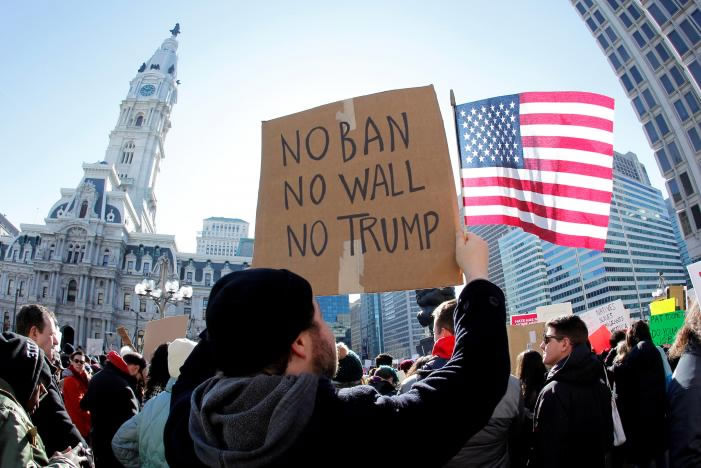
Protester Brandon McTear holds a sign and the American Flag as demonstrators gather to protest against US President Donald Trump's executive order banning refugees and immigrants from seven primarily Muslim countries from entering the United States during a rally in Philadelphia, Pennsylvania, US February 4, 2017. / Reuters Photo
Legal experts said the case would soon go to the Supreme Court.
The ultimate check on presidential power is the US Constitution, which is interpreted by the Supreme Court. The court has had a vacancy since the death of Antonin Scalia a year ago.
Trump has nominated Neil Gorsuch, who is awaiting confirmation. The president is counting on whoever he chooses to tip the majority in his favor.