
China’s top securities regulator has warned listed companies they may face punishment if they do not pay dividends.
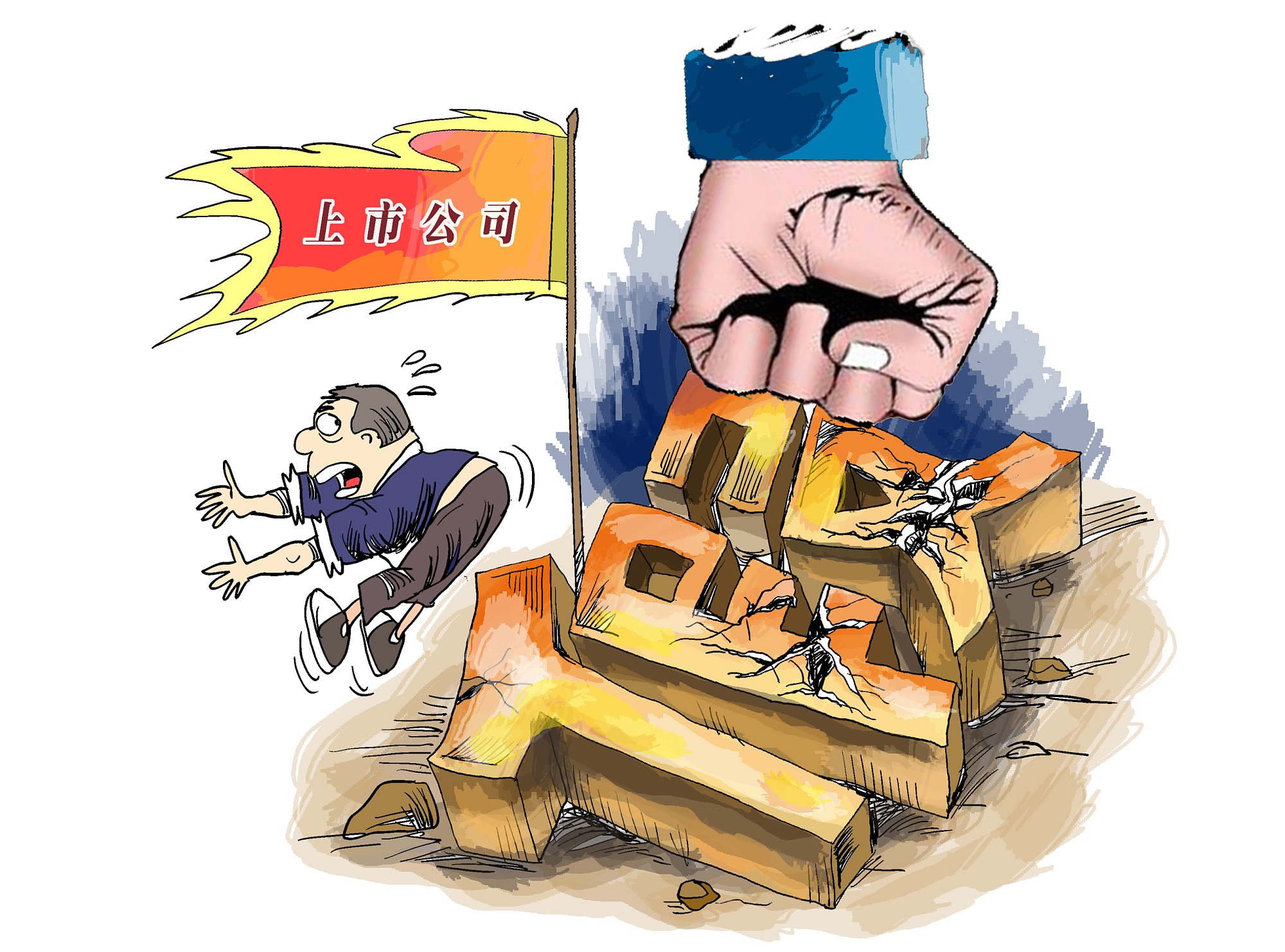
“There will be corresponding hard measures against those iron roosters who have not plucked a single feather for many years, even though they have the ability to pay dividends.” said Liu Shiyu, Chairman of the China Securities Regulatory Commission (CSRC), in Saturday’s speech to the China Association for Public Companies, which was posted on the CSRC website. The term "iron rooster", or "tie gong ji" in Chinese, stems from an old idiom referring to a rooster from which you cannot even pull a feather and normally means "being miserly".
Paying cash dividends is a basic way to reward investors and the ultimate source of a stock’s intrinsic value, Liu noted.
VCG Photo
"Steady and stable cash dividend payouts often signal the healthy financial and operational conditions of a listed company. On the contrary, if a company doesn't pay dividends with no proper reasons, it could be the signal of accounting fraud or mismanagement."
It is the latest signal by the outspoken CSRC chairman that cleaning up the domestic stock market, which tanked in 2015, remains a priority.
Liu, who was tasked with running the securities regulator in February last year, has stepped up a crackdown on market manipulation and tightened disclosed rules.
Of the 3166 listed companies in China, 30 firms that have been listed for over 10 years have never paid out any dividends, according to the Chinese financial data firm Wind.
Liu made reference to one company on Saturday although stopped short of naming it by saying “one company hasn't paid out any dividends since 1994”, although most observers think he was most likely talking about China Tianying Inc., since it is the only one of the above mentioned 30 that was listed in 1994.
China Tianying as an environmental protection and energy enterprise has raised about 5 billion yuan (724 million US dollars) from the capital market, Wind data showed.
In Saturday’s speech, Liu also warned against setting up complicated shareholding structures.
“The shareholding structure of listed firms shouldn’t be too complex, the chain not too long,” he said, as it may present opportunities for “insider trading”.