Germany’s form of protectionism hinder moderating massive surplus, warns IMF






By CGTN's Guy Henderson
Germany must act to reduce the massive trade surplus that has stoked friction with its European neighbors and the United States, the International Monetary Fund (IMF) warned on Monday.
The simmering conflict over Germany's trade surplus flared up during the G7 Finance Ministers' meeting in early May and will likely be discussed during the leaders' meeting.
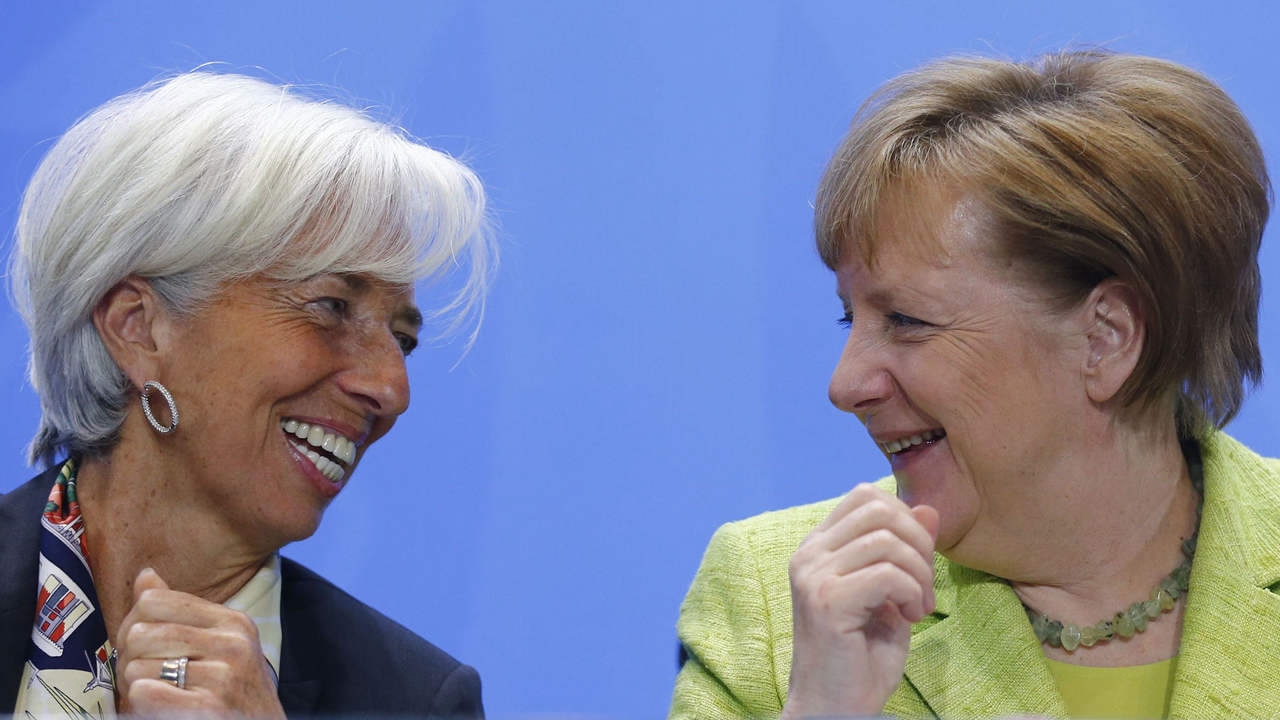
German Chancellor Angela Merkel (R) and Managing Director of the IMF Christine Lagarde attend a news conference following a meeting of the heads of international economy and finance organizations in Berlin, Germany, April 10, 2017. /VCG Photo
"In 2016 Germany's current account surplus was the world's largest in dollar terms," IMF economists noted in a report. "Policies that boost public and private investment and reduce the need for private saving would accelerate the necessary external rebalancing process."
US President Donald Trump and EU partners have criticized Germany's trade surplus, which stands at about eight billion euros (8.96 billion US dollars) and is currently the world's largest, saying that it is costing growth and jobs in their own economies.
Germany’s unwitting protectionism may be a reason for the fact that its massive surplus is moderating slowly. The German electrician market represents a form of protectionism, because it means the foreign competitors find it harder to import and employ services in Germany.
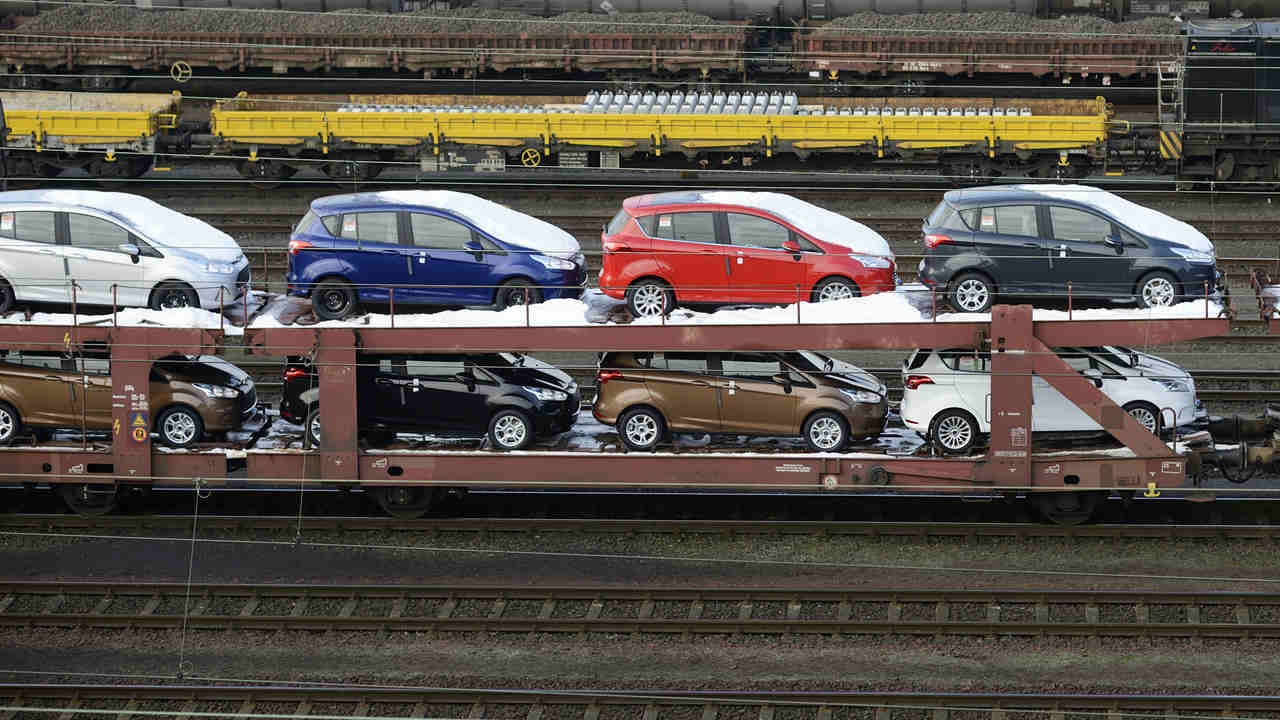
Car train in Neuss, Germany /VCG Photo
But Denis Orsech, a fully-qualified “master electrician”, considered it as essential, explaining that "international competitors who are not up-to-date and not highly skilled are not able to fulfill the legal requirements and guarantee people's safety. They don't know the norms and rules."
Needless to say, German electricians didn't get a mention at the IMF's spring meeting in New York. But the profession perhaps serves as a ground-level example of a broader gripe the body has with the German economy right now.
Namely, that it could be doing more to balance what is the world's largest trade surplus by stimulating domestic consumption through things like tax cuts and public spending and through opening up some its services sectors, all in order to boost imports.
VCG Photo
Cities like Germany's financial capital Frankfurt were built on free trade. But even those who've thrived off it in places like this see its limits being debated and tested, as in the few areas of the economy that still see some form of protection. Those in financial services, for example, back Germany's stricter data protection laws.
"They have the sense of security: you don't want certain types of business to be done in the same way as in the US or the UK and that's why these trade barriers occurred – they are not motivated by protecting your industry, but by protecting your clients,” said David Kohl from the Swiss private bank Julius Baer.
Germany might be a trading nation, but its electricians and financiers alike still back some protection.
- EXPLORE
- MORE