POLITICS


S. Korea candidates in final call to voters, as public pushes for reform in post-Park era
2017-05-08 20:00 GMT+8
953km to Beijing






Editor
Yan Qiong
South Korea's major presidential candidates made a final push for votes on Monday, ahead of a highly anticipated poll that will elect a new leader following months of political turbulence.
A former pro-democracy activist and human rights lawyer, Moon Jae-in of the Democratic Party led opinion polls with 38 percent support in the field of 13 candidates, according to a Gallup Korea poll published last week. Meanwhile, centrist Ahn Cheol-soo of the People's Party followed closely at 20 percent.
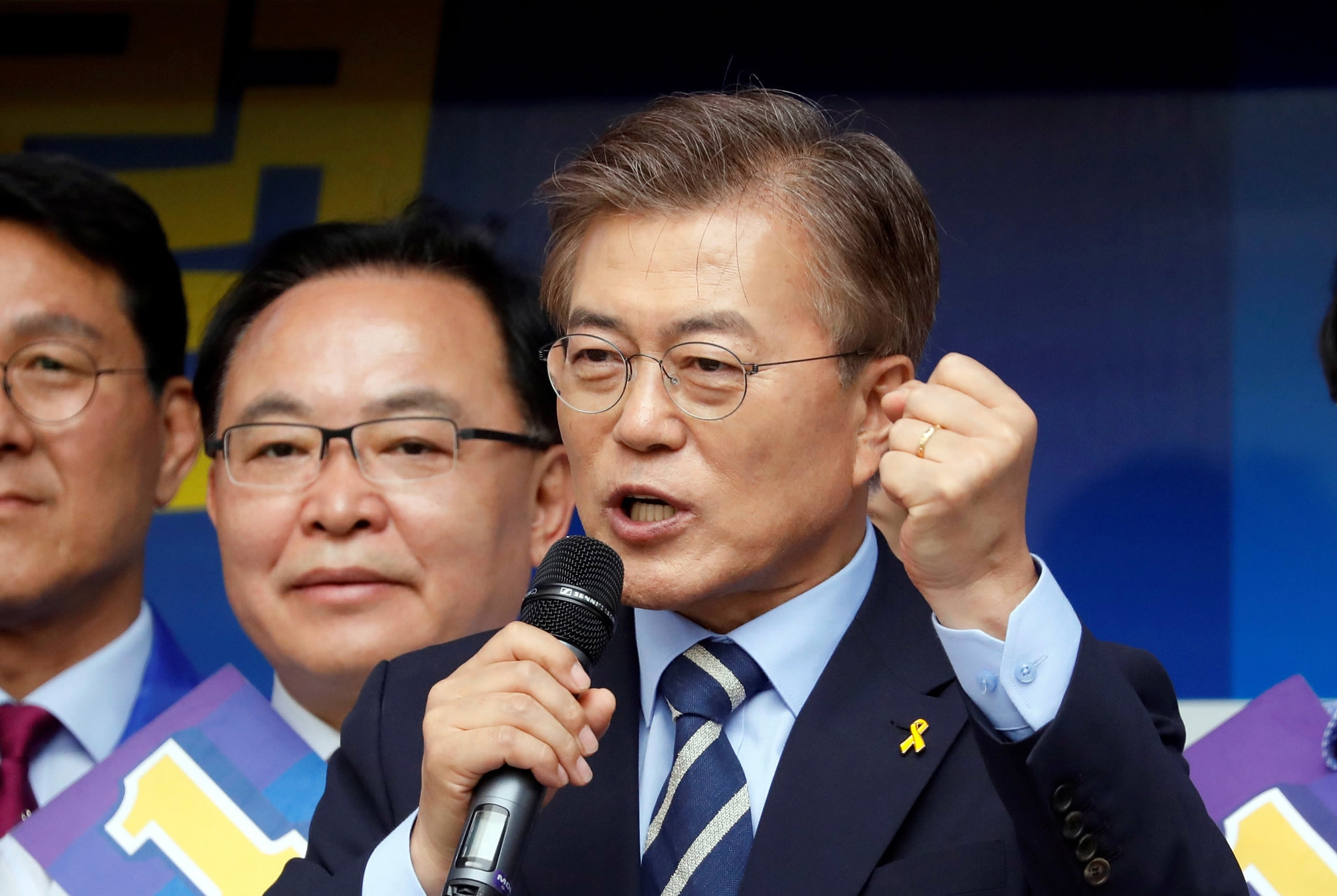
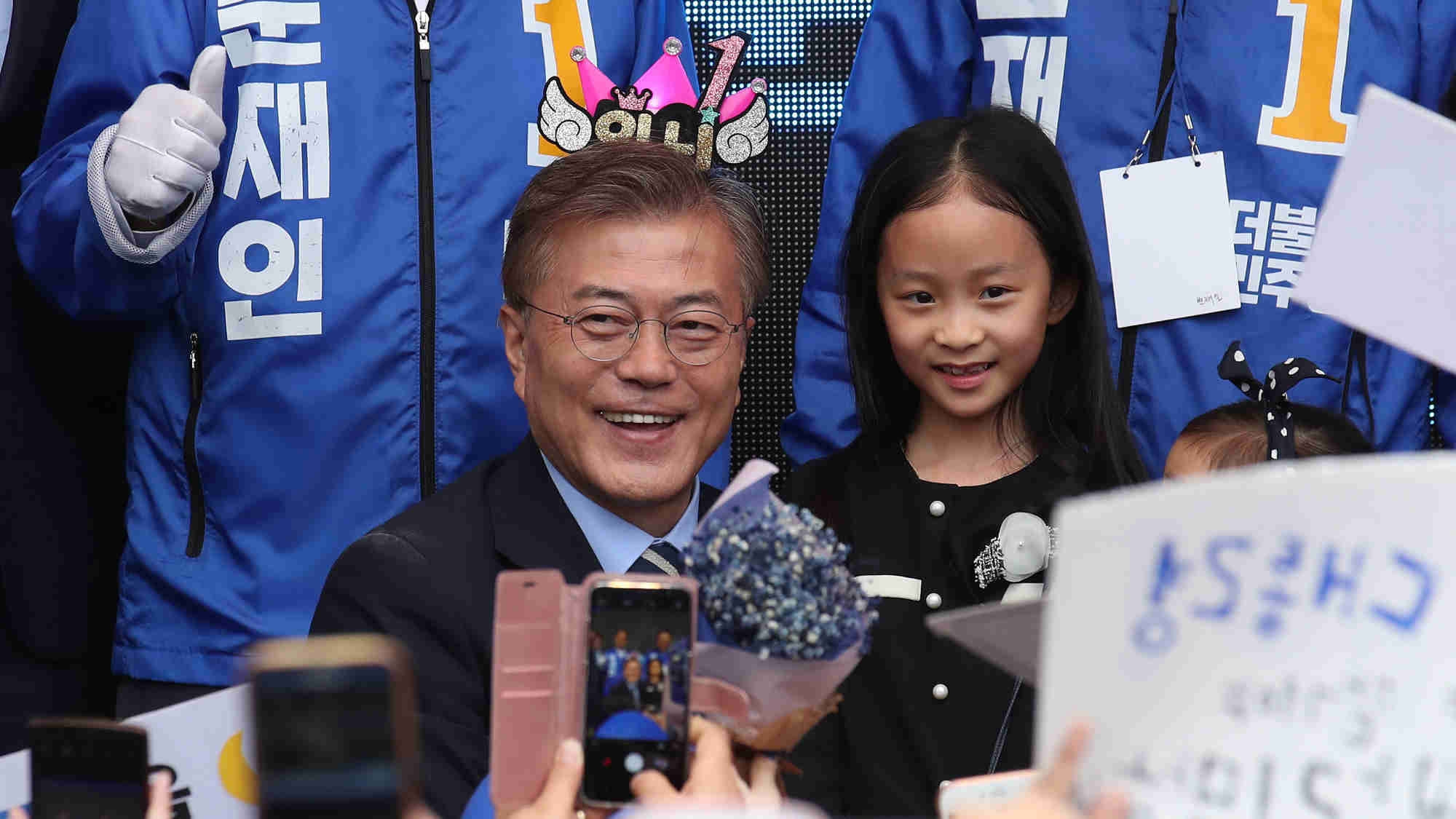
Moon Jae-in, the presidential candidate of the Democratic Party of Korea, speaks during his election campaign rally in Daegu, South Korea, May 8, 2017. /VCG Photo
A high turnout is expected, with over a quarter of South Koreans already having voted in early ballots last week. The last presidential election in 2012 saw a turnout of 75.8 percent.
The vote was called to choose a successor to Park Geun-hye, after her impeachment for corruption and abuse of power.
Number one election issue? Not the DPRK
According to local pollster RealMeter, 27.5 percent of respondents said the most important thing for them was a candidate's "intention to resolve deeply-rooted corruption and reform," while 24.5 percent said it was their "ability to recover people's livelihood and the economy."
"Protection of the national security and liberal democracy" ranked number three in the survey, with 18.5 percent of respondents choosing it as the most important issue.
Despite official expectations that the economy will rebound slightly in 2017, many South Koreans still feel they are struggling.
According to Yonhap News Agency, the economic suffering index -- which is calculated based on unemployment and inflation rates -- is at its highest in five years.
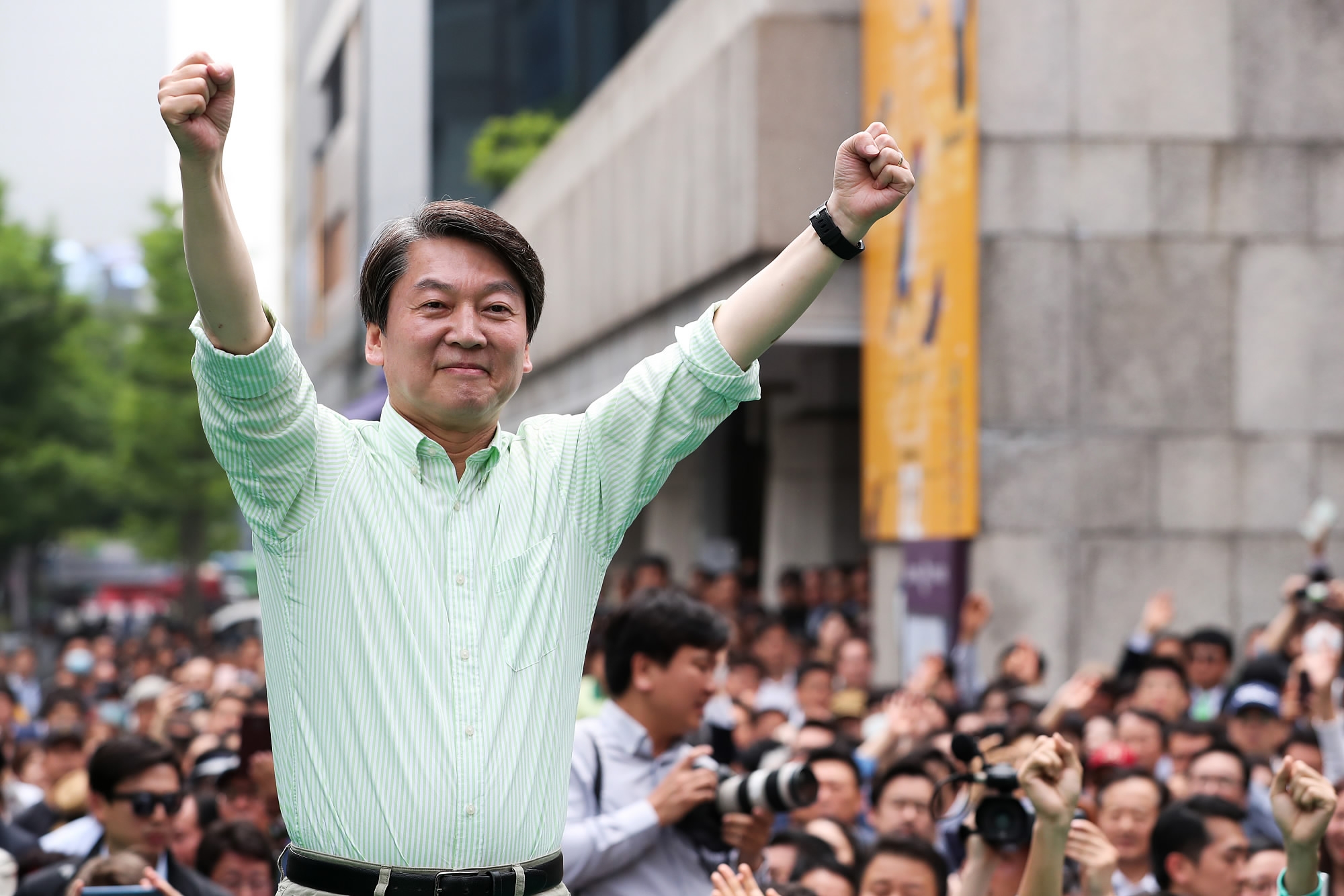
Ahn Cheol-soo, presidential candidate of the People's Party, during a campaign rally at Gwanghwamun Square in Seoul, South Korea, on Monday, May 8, 2017. /VCG Photo
In the first half of the campaign period, there were strong public calls for drastic reform of the country's chaebol conglomerates like Samsung, Hyundai and LG, and for the severing of long-standing collusive ties between chaebol families and politicians.
The election mood however changed in the second half of the campaign period, as security issues surrounding the rising tensions on the Korean Peninsula became major talking points.
Candidates in a final push
Leading candidates have been attending rallies and news conferences, urging supporters to vote for change before Tuesday's election. Official campaigning is due to stop at midnight (1500 GMT) Monday.
Ahead of a packed day of last-minute rallies across the country, Moon asked voters to deliver him a hefty mandate.
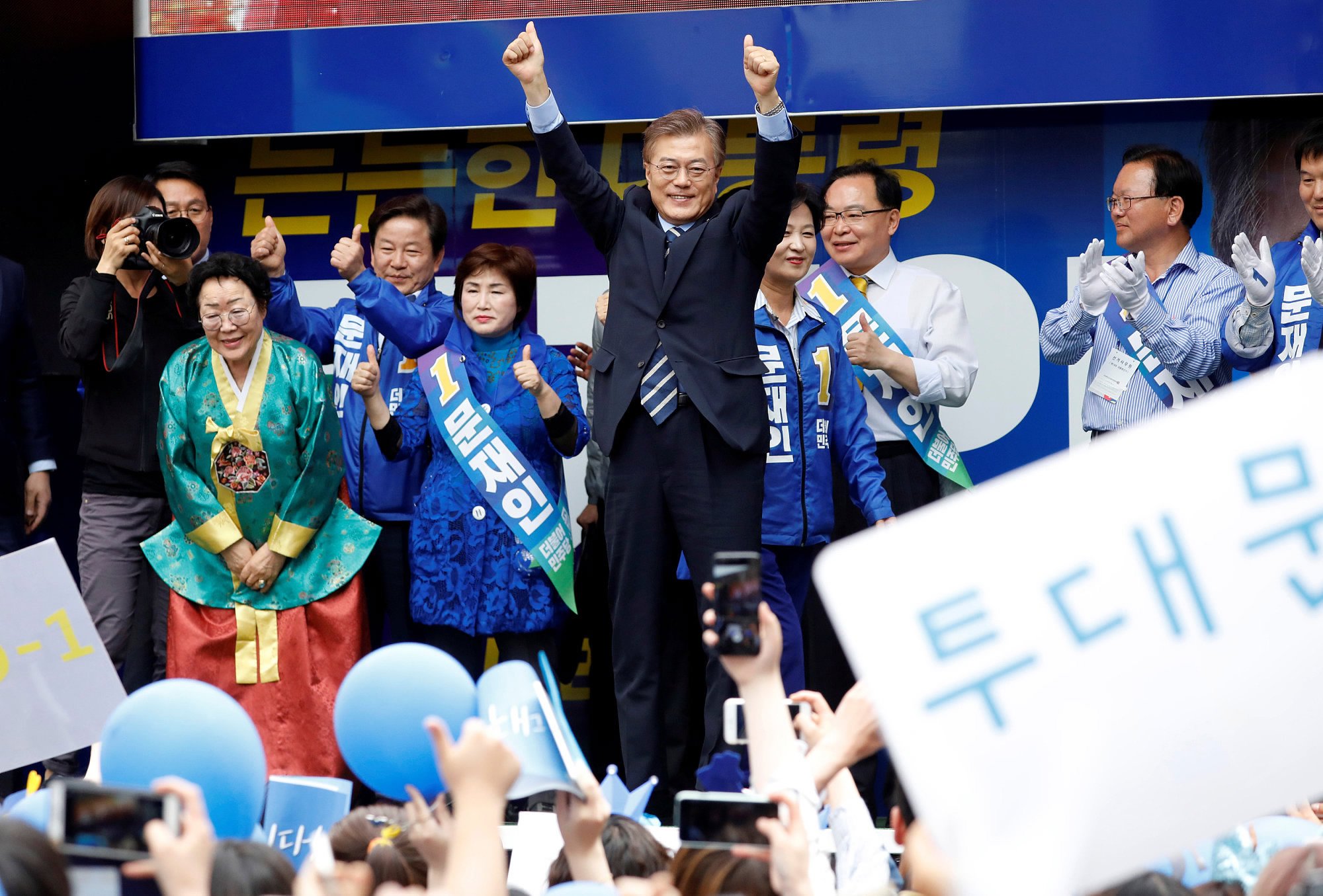
Moon Jae-in, the presidential candidate of the Democratic Party of Korea, gestures to his supporters during his election campaign rally in Daegu, South Korea, May 8, 2017. /VCG Photo
"With landslide support with tens of thousands of votes, a miraculous change like a natural cataclysm is possible," he said at his campaign headquarters in Seoul.
"I will work as the people's president from the day I am selected by the people."
Moon has promised to reinvigorate sluggish growth and create more jobs. He advocates dialogue and reconciliation with the DPRK to defuse the current situation, with the hope of eventually luring it into negotiations that have been at a standstill for years - an approach criticized by his conservative opponents.
Centrist Ahn similarly vowed to "head straight to work at the presidential office" if he wins, promising to address urgent issues regarding the country's economy, security and foreign affairs.
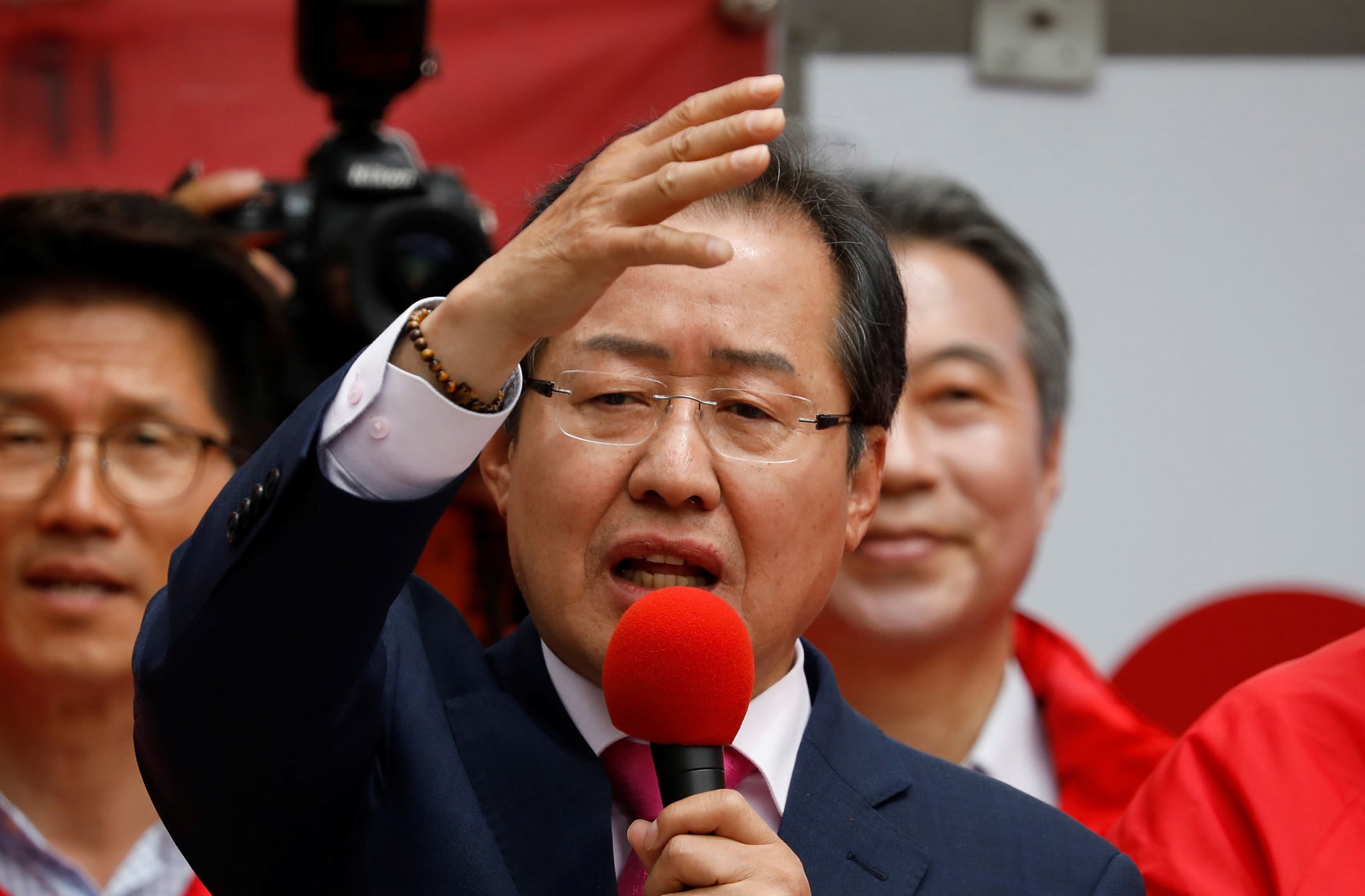
Hong Joon-pyo, the presidential candidate of the Liberty Korea Party, speaks during his election campaign rally in Daegu, South Korea, May 8, 2017. /VCG Photo
Hong Joon-pyo, from the ousted Park's Liberty Korea party, who placed level with Ahn in the Gallup Korea survey last week, said security would top the agenda if he won.
"Tomorrow is judgement day for the pro-North, leftist forces," Hong said.
"Please help me win by a landslide so it's impossible for them to pick a fight."
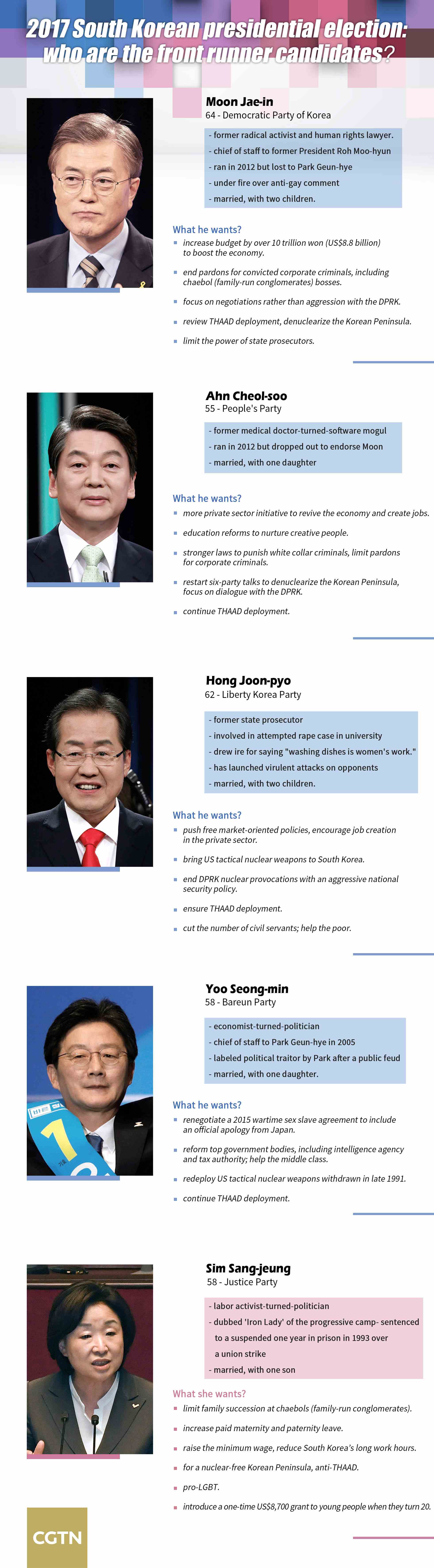
What the five major candidates want?
The election process
The election to pick the country's next leader was originally scheduled for December 20, 2017, but it will be held ahead of schedule after Park's impeachment.
The constitutional court upheld the bill to impeach Park on March 10, which was passed in parliament on December 9, 2016. Three weeks later, Park was taken into custody on bribery charges.
With a president being unseated, a presidential by-election is, as per the constitution, required to be held in 60 days.
From April 15 to April 16, presidential candidates officially registered with the national election commission.
A total of 15 candidates registered with the election commission, the highest-ever in history. Two have withdrawn their candidacies, leaving voters with a choice of 13.
On April 17, the three-week official campaign period kicked off.
From May 4 to May 5, an early voting period allowed voters incapable of casting ballots on May 9 to vote for their favorites in advance.
On May 9, voting will be conducted from 6:00 a.m. local time (2100 GMT Monday) to 8:00 p.m. local time (1100 GMT) on Tuesday. Counting will begin right after polls close.
The winner of the election is expected to be announced early Wednesday.
953km
Copyright © 2017
SHARE
- EXPLORE
- MORE
FOLLOW US