
Tech & Sci
18:00, 15-Feb-2017
Chinese scientists develop new filters to reduce air pollution
Updated
10:46, 28-Jun-2018
 []
[]
Share







Copied
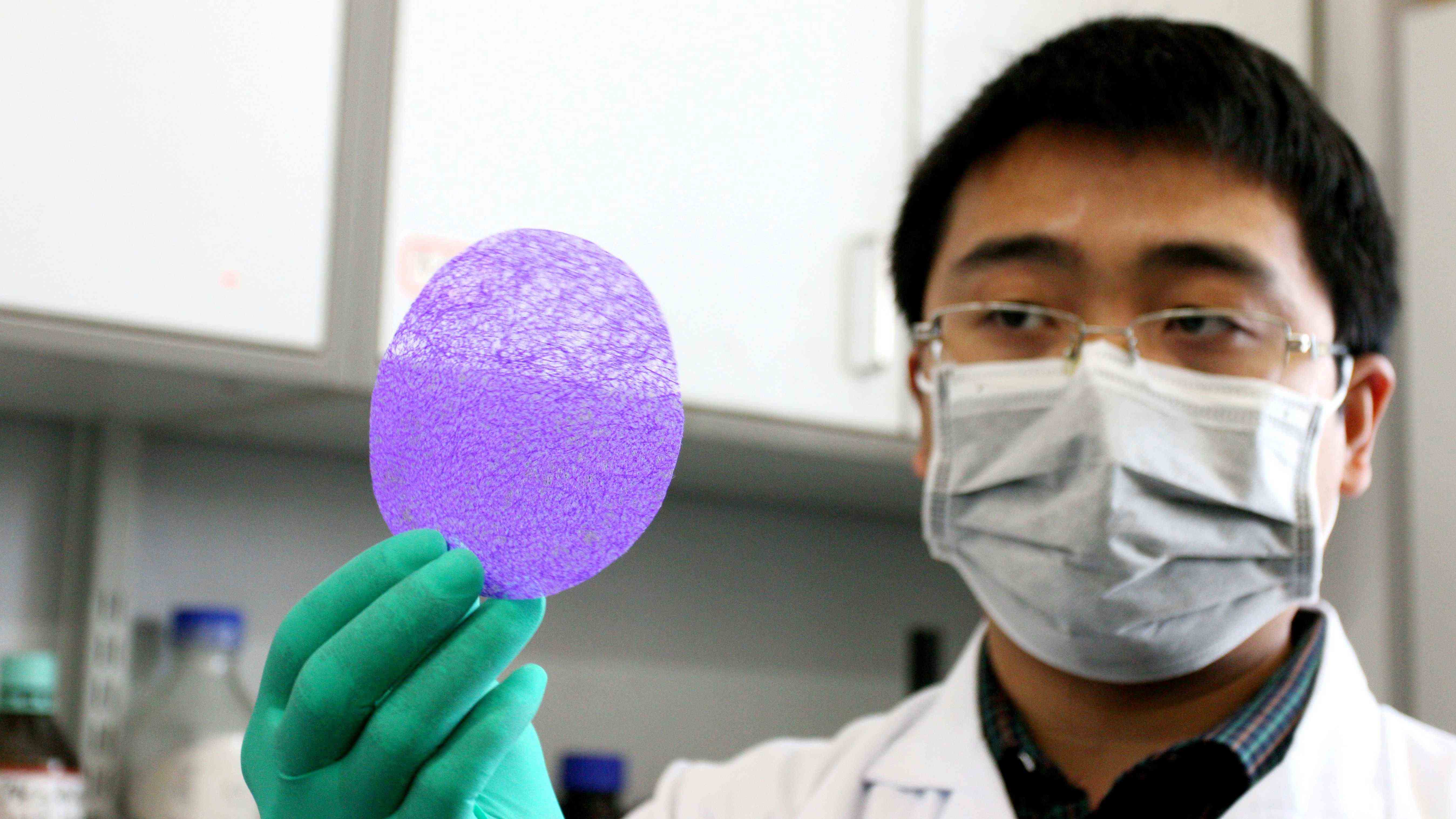
By CGTN's Feng Xin
Scientists from the Beijing Institute of Technology have developed new
air filters using materials called metal-organic frameworks (MOFs). The breakthrough was recently picked up by international scientific journal “Nature,” sparking a great deal of attention. This innovation could potentially revolutionize air purifiers that are already a fixture in many Chinese homes.
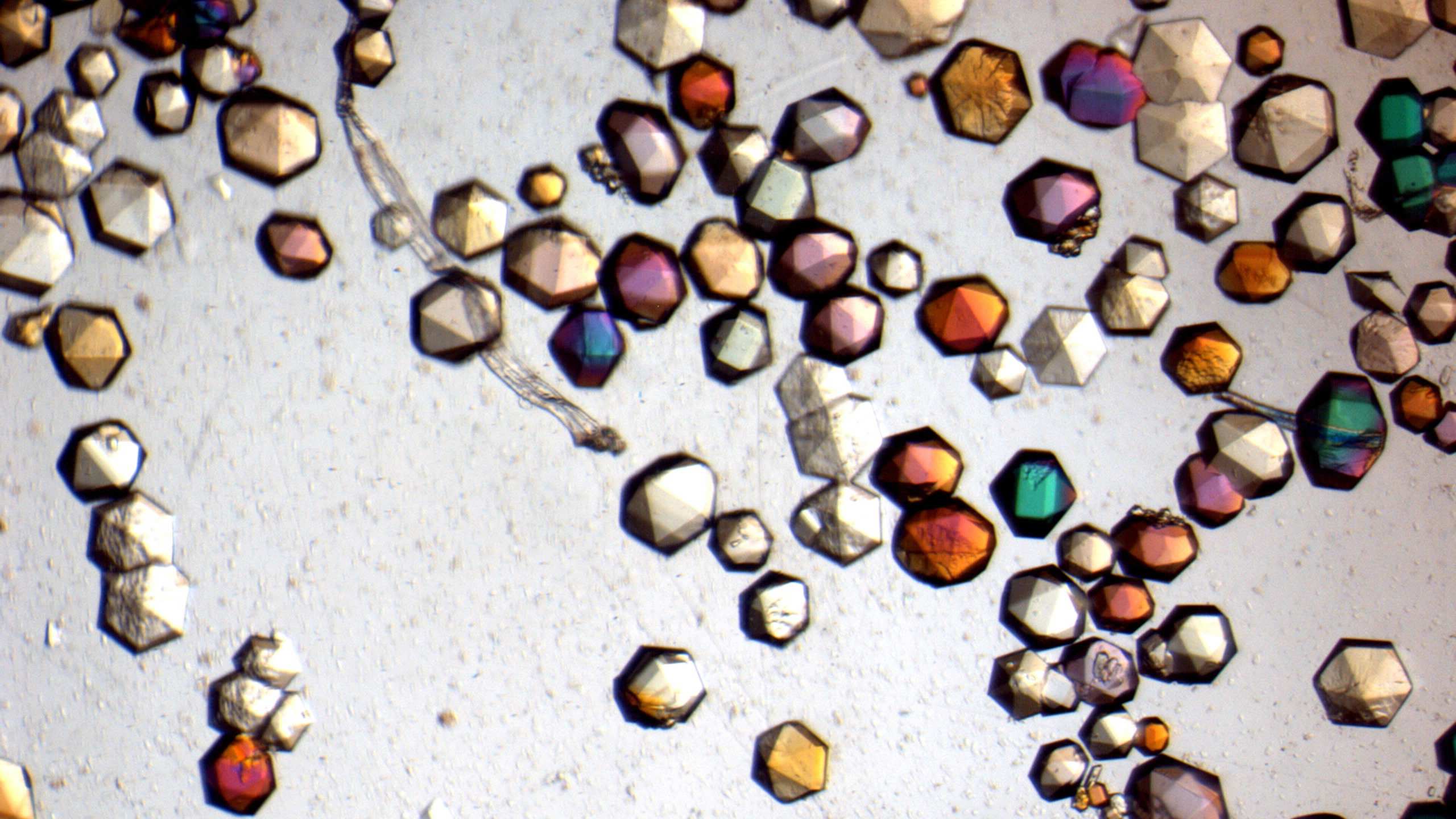
Microscopic image of metal-organic frameworks (MOFs). /Photo provided by Wang Bo
Microscopic image of metal-organic frameworks (MOFs). /Photo provided by Wang Bo
The secrets lie in the MOFs.
Developed by American scientists in 1992, MOFs contain hard substances usually found in metal, ceramics and glass. They also incorporate malleable substances often found in plastic and rubber.
This compound is able to form a three-dimensional framework that can capture large amounts of tiny substances.
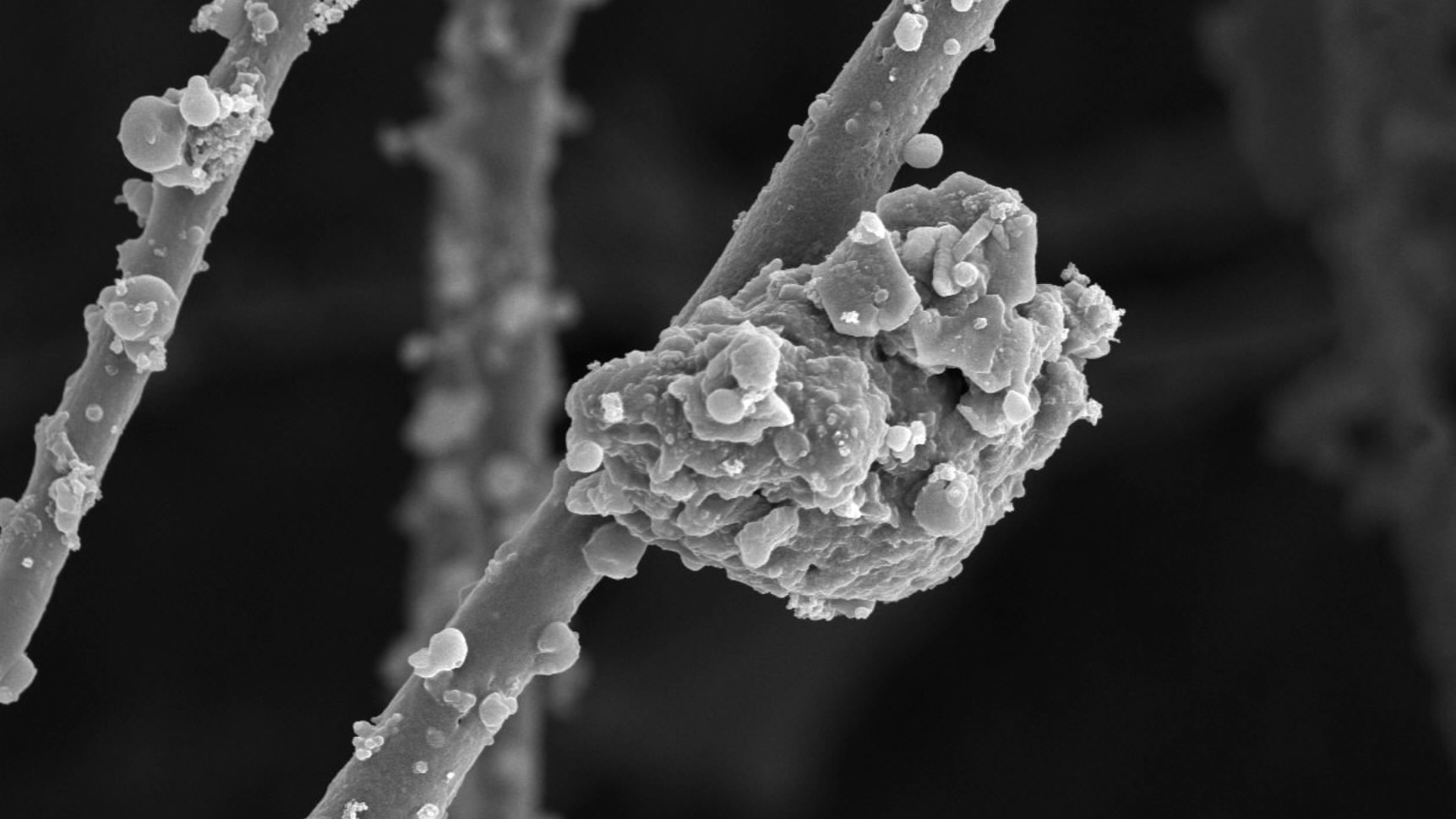
Microscopic image of fibers wrapped with MOFs capturing PM 2.5 particles. /Photo provided by Wang Bo
Microscopic image of fibers wrapped with MOFs capturing PM 2.5 particles. /Photo provided by Wang Bo
Microscopic images show that air pollutants like PM2.5 particles can easily be trapped by MOF crystals.
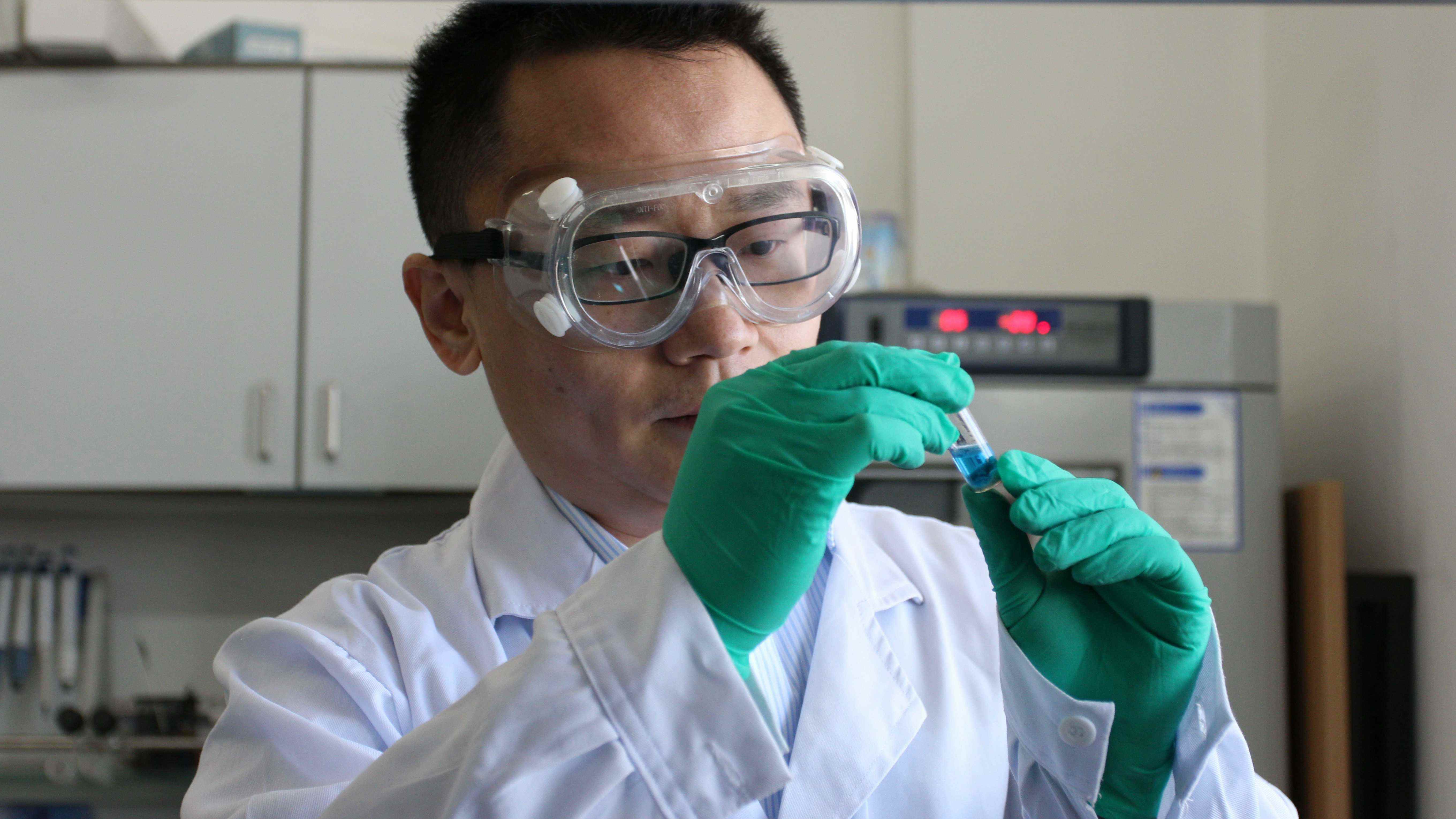
Chemistry professor Wang Bo from the Beijing Institute of Technology holds a small bottle of MOF crystals. /Photo provided by Feng Xin
Chemistry professor Wang Bo from the Beijing Institute of Technology holds a small bottle of MOF crystals. /Photo provided by Feng Xin
Chemistry professor Wang Bo and his colleagues at the Beijing Institute of Technology have applied MOFs onto different fabrics to make air filters. He said his team’s biggest breakthrough was to develop special MOFs that can selectively capture toxic air, liquids and solids and detoxify them.
“What's more, we have made MOFs into thin films that can stick to various types of surfaces. So, a very small amount of MOFs can play a big role in purifying the air,” Wang said.
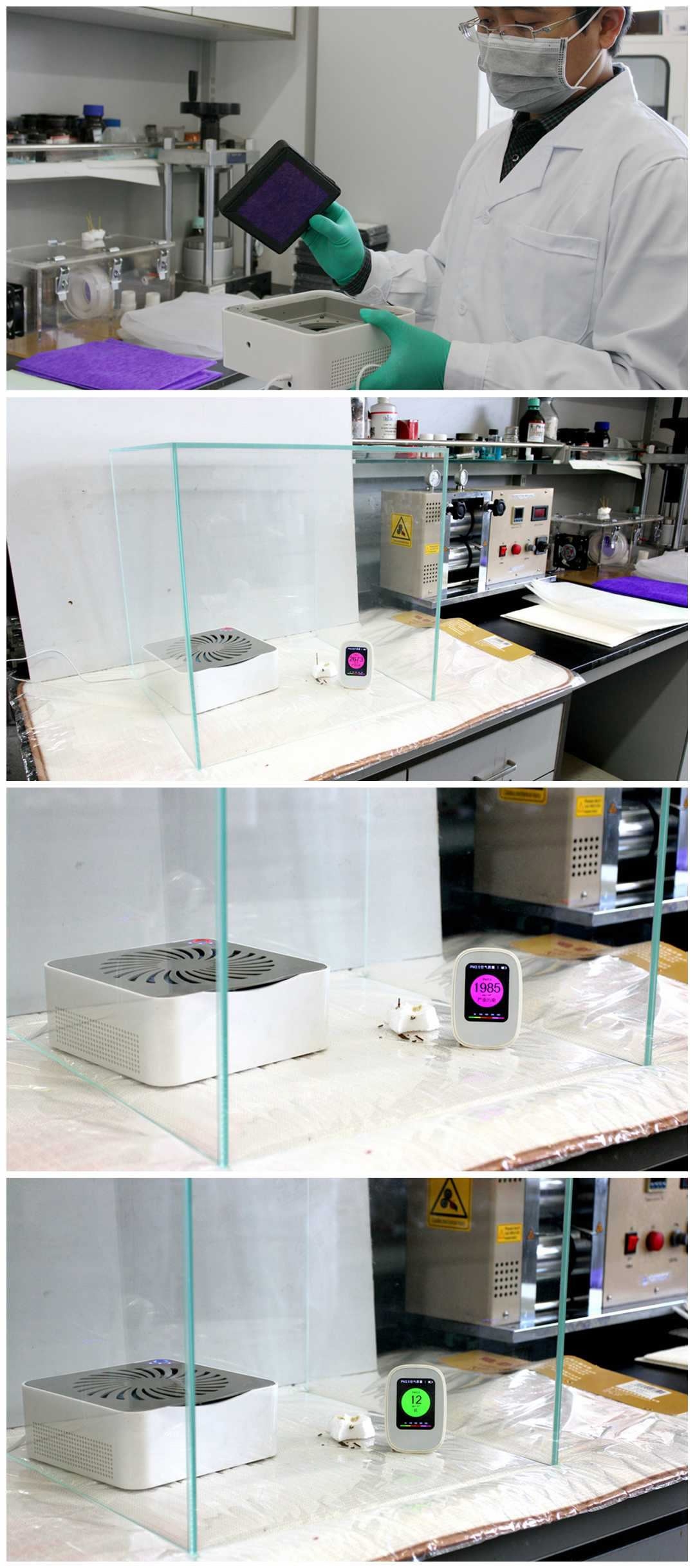
The experiment shows how a MOF filter purifies air in a closed space. /Photos provided by Feng Xin
The experiment shows how a MOF filter purifies air in a closed space. /Photos provided by Feng Xin
In an experiment that simulates a closed room, a researcher placed an MOF filter in a simple air pump. This small piece of equipment reduced the amount of hazardous air by almost 100 percent within just a few minutes.
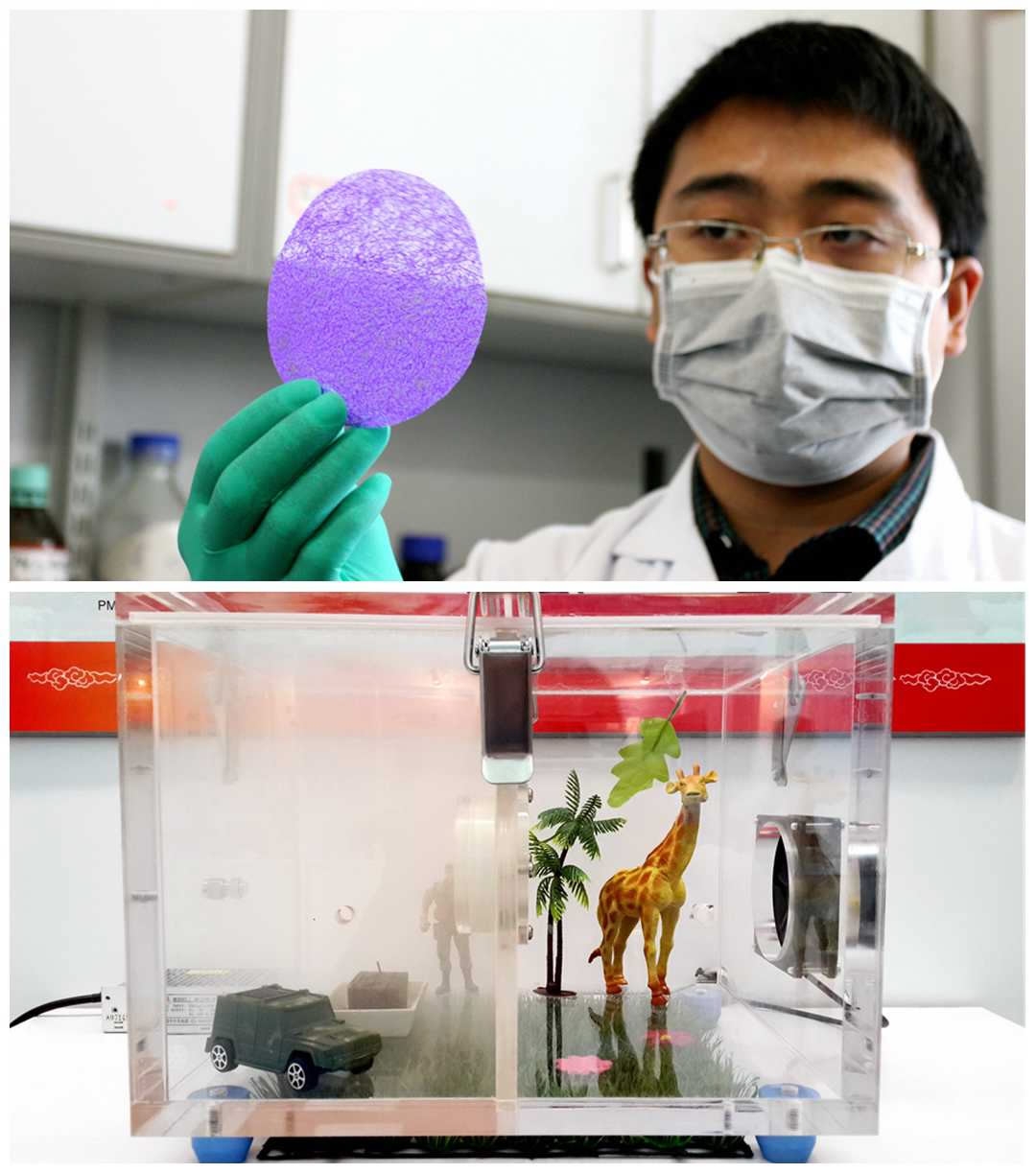
The experiment shows how a MOF filter simulates a fresh air unit to purify air. /Photos provided by Feng Xin
The experiment shows how a MOF filter simulates a fresh air unit to purify air. /Photos provided by Feng Xin
In another experiment, the researcher placed an MOF filter in a glass box to mimic a fresh air unit. When hazardous air comes in, the filter also cleaned the smog effectively.
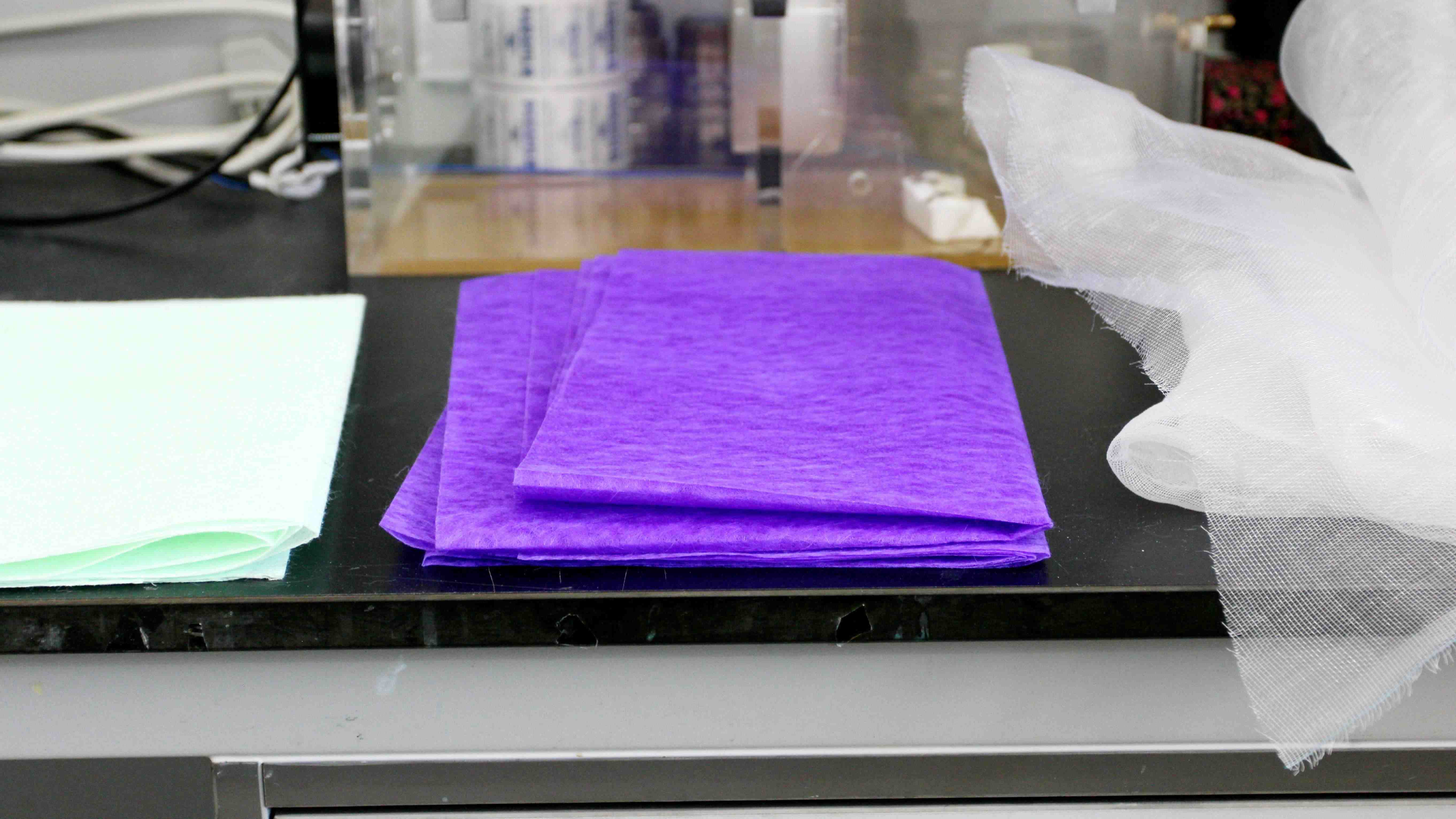
MOF filters can stick to different surfaces such as fabrics, foam and plastic. /Photo provided by Feng Xin
MOF filters can stick to different surfaces such as fabrics, foam and plastic. /Photo provided by Feng Xin
Wang says that most commercial air purifiers either have difficulties in letting enough air through while simultaneously catching toxicants, or their filters need to be frequently replaced. MOF filters, however, only need to be replaced once or twice a year.
“I think cost efficiency is always the fundamental question to be solved,” the 35-year-old professor said. “Regardless of whether it is for industrial or domestic use, a technology has to be affordable,” he said.
Wang says his lab has been working with various companies for more than two years, looking for ways to both protect individuals and reduce toxicants from factories and vehicles. But he declines to give more details, nor the cost of MOF crystals.
Consumers can expect to find purifiers using MOF filters on general sale in April.
7km