
A grim reminder of the fragility of earth’s eco-system
A ghost city abandoned by humans being reclaimed by nature
Where reporting what you don’t see and hear is just as important as what you do see
After traveling for almost three grueling hours from Kiev on a cold December day, entering even colder Chernobyl exclusion zone was an experience in its own right. Checkpoints with the guards carrying Kalashnikov rifles, thorough identity checks, the grim face of the official guide in camouflage fatigues who accompanied us all the time. All of that just added to the seriousness of the visit.
More than 30 years have passed since the day of the world’s biggest nuclear accident, but even today, the area around the Chernobyl nuclear power plant (NPP) looks like the scene from some Hollywood apocalyptic blockbuster. Our radiometer, that measures radiation levels, constantly sounded levels over the maximum which is deemed to be safe. In some places even 12 times higher.
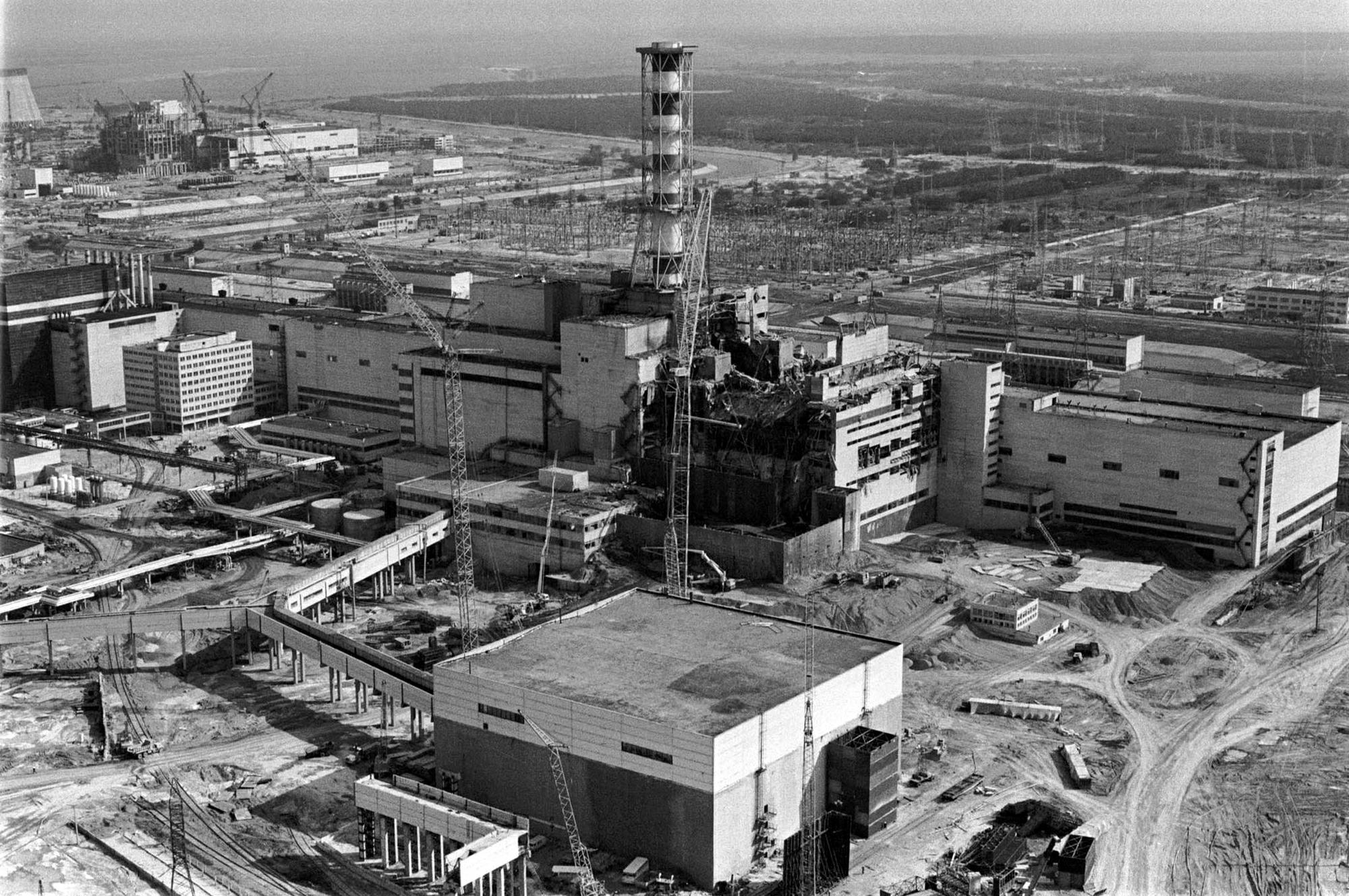
This file photo taken on April 30, 1986 shows a picture taken from a helicopter in April 1986 showing a general view of the destroyed fourth power block of Chernobyl's nuclear power plant a few days after the catastrophe. /CFP Photo
Chernobyl exclusion zone is the area 30 km around Chernobyl NPP, from where, more than 200.000 people were evacuated back in April 1986. Besides a number of smaller villages, two towns are in that Zone, Chernobyl and Pripyat. Chernobyl was the one further away from the NPP, and hence it has lesser radioactivity levels than Pripyat.
Today, Chernobyl hosts 2,000 - 3.000 workers currently engaged in NPP salvage operations. They work on a rotational basis. Working for 2 weeks in the zone, and then head back to their homes for two weeks. Only a handful, mostly older folks, who insisted on returning back home can be found living in Chernobyl. And despite the human presence that keeps the town semi-alive, with electricity, running water, three shops and even a “hotel” for the invited visitors, it looked to me as if a third of the city’s buildings are collapsing. Nobody is maintaining them and nature is simply reclaiming the area previously occupied by humans.
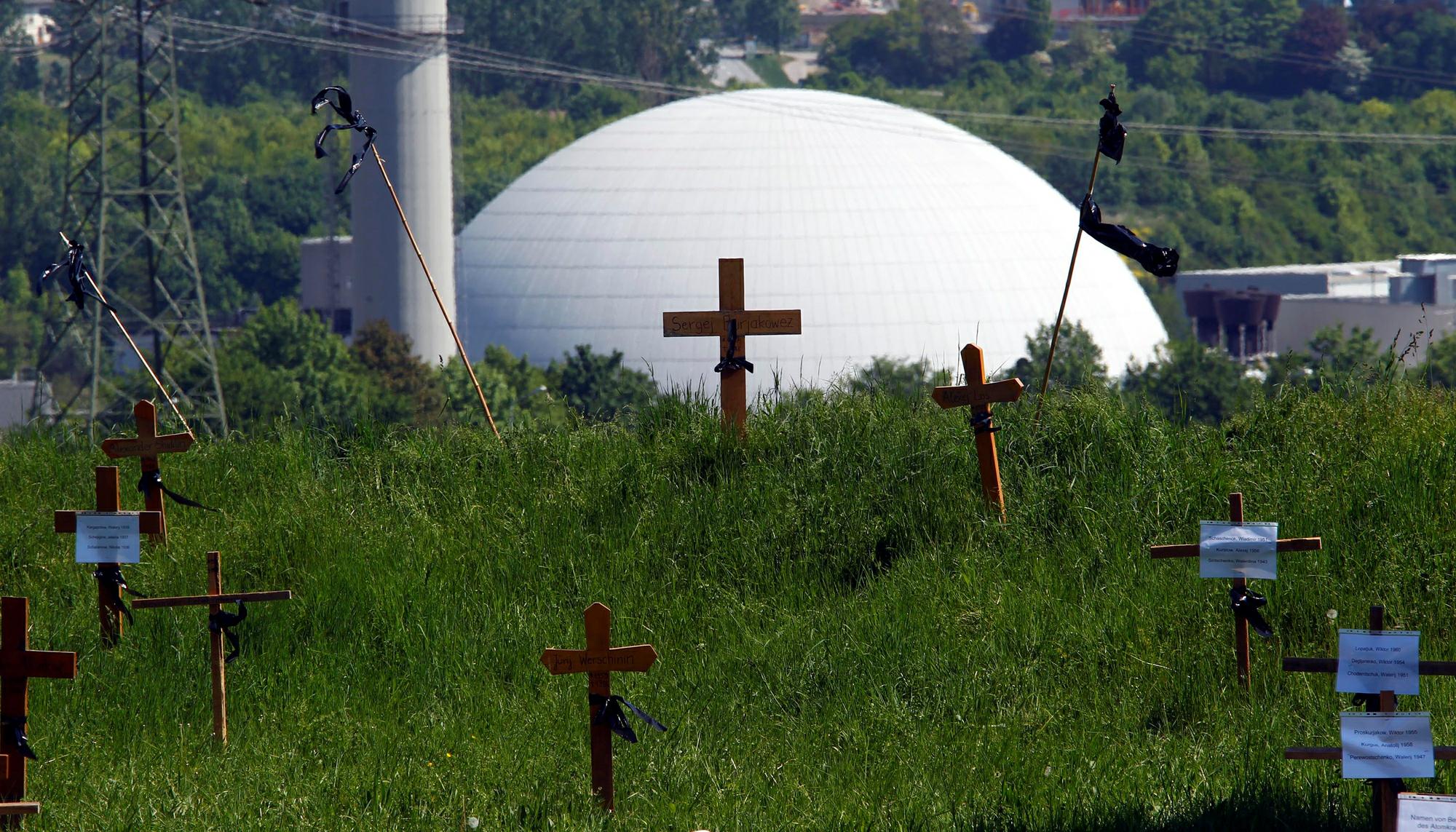
Wooden crosses to commemorate workers, killed during the Chernobyl nuclear disaster, are placed nearby the nuclear power plant in the southern German village of Neckarwestheim near Stuttgart April 25, 2011. /CFP Photo
The same picture is at the nearby river port of Chernobyl. Dozens of semi submerged radioactive ships left to rot. What strikes you is not what is there but what isn’t there. Only the eerie sounds of ravens resting on the surrounding trees and the cold breeze can be heard running through tree branches.
That eeriness of silence is even more present in Pripyat, 20 km North of Chernobyl, and just a stone’s throw away from the Chernobyl NPP. It is a complete ghost town today, once was home for 50,000 residents. With an average age of 28, Pripyat was one of the youngest settlements in the Soviet Union at the time, inhabited mostly by the NPP workers, and families of the personnel of nearby top secret Soviet military base. The town was built in 1970, and lasted only 16 years before being abandoned in only one day.
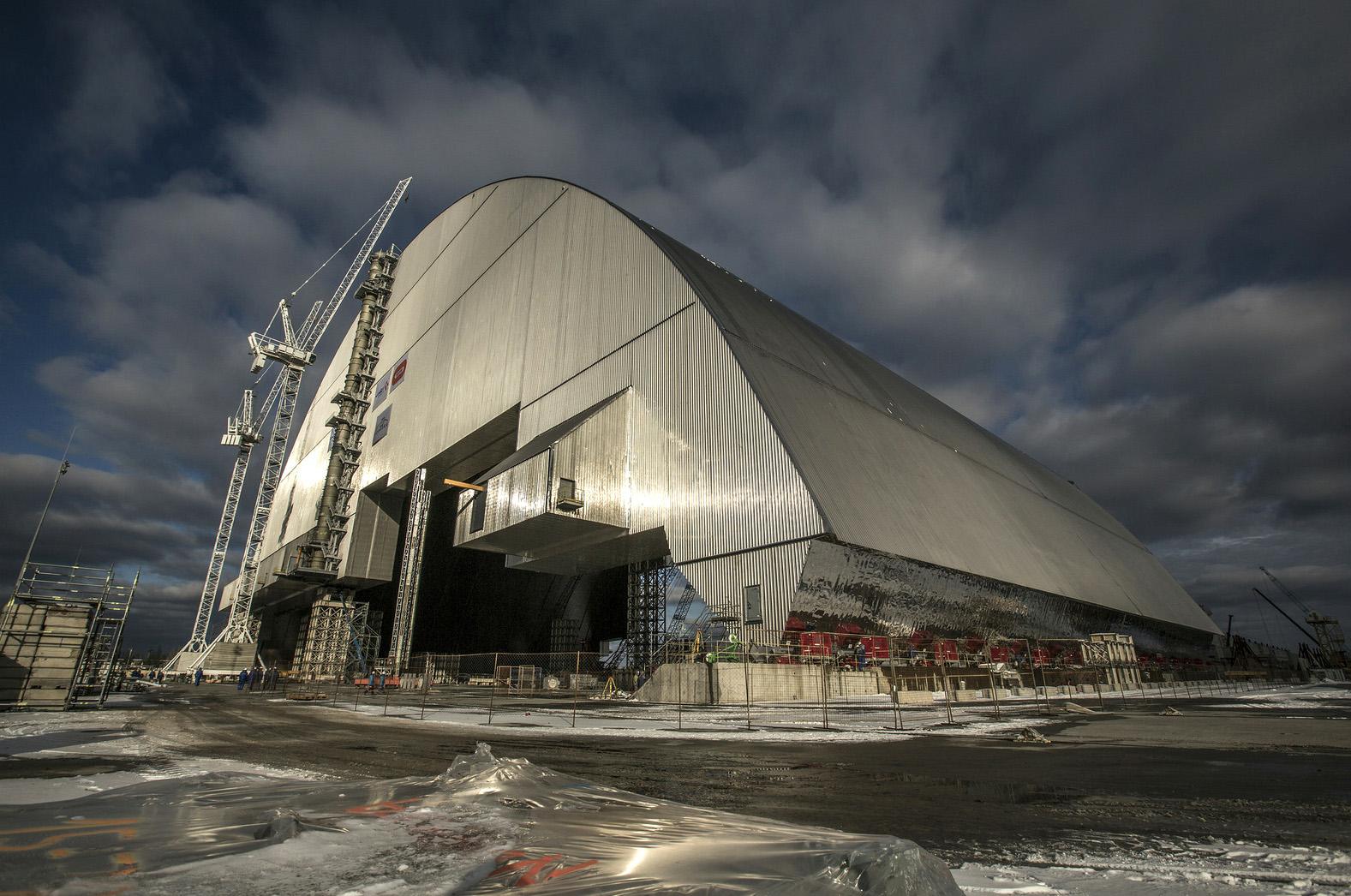
This handout picture taken and released by the European Bank for Reconstruction and Development Press-Service on November 14, 2016 shows Chernobyl's New Safe Confinement as a giant arch shielding radioactive waste from the 1986 Chernobyl nuclear disaster began sliding into place with a mission of keeping the site safe for generations to come. /CFP Photo
Unlike Chernobyl, today nobody lives here. Once wide boulevards are now devoured by the up to 30 year-old trees. Apartment blocks deserted, wild animals roaming the streets. Radiation during the cold snowy day in some parts goes up to 3,6 micro Sieverts. Dangerously high. During summer months when there is more radioactive dust in the air the levels are even higher.
Despite international efforts to reduce the radioactive threat and offers from China’s GCL-SI company to start a billion USD worth solar power plant project in the exclusion zone, for at least one thousand years this area will still be uninhabitable.
What a grim reminder of what the humans can do to the billions of years of evolution of its fragile eco-system.
(Written by CCTVNEWS correspondent Aljosa Milenkovic)