
19:58, 09-Feb-2018
Dying with Dignity: Proponents in the Netherlands worry euthanasia is getting out of hand
 []
[]
Share







Copied
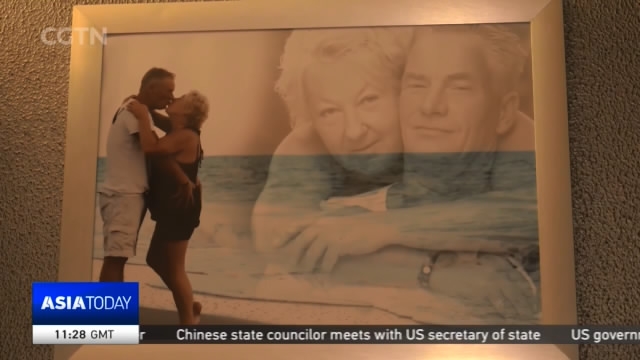
In the last episode of "Dying with Dignity", we look beyond Asia to the Netherlands. The low-lying Western European nation was the first country to legalize euthanasia – but now some of its most staunch proponents say the culture of assisted dying may be getting out of hand. CGTN's Guy Henderson reports The Hague.
When Dr. Jaap Schuurmans came here a year ago, it was to help Wilma Fisser end her life. Now, Dr. Schuurmans is back to check in on her widower. Wilma's case was clear-cut under Dutch law: the final stages of terminal cancer. In those last hours, recalls Martien Fisser, his wife's condition was irreversible, her pain unbearable.
It's 15 years since Holland made Wilma's death possible by becoming the first country to legalise euthanasia. More recently, though, its use has evolved. That is worrying even its proponents.
In 1991, Dr. Boudewijn Chabot helped 50-year-old Hilly Bosscher to die: on grounds of irreversible grief. In a landmark ruling, Chabot was found guilty without punishment. Still, he worries the mental ill are increasingly at risk.
DR. BOUDEWIJN CHABOT PSYCHIATRIST "The review committee has interpreted the law in such a way that over the past 4 years, the number of euthanasia in demented and psychiatric patients has risen 10 fold. And that is a worrying state of affairs because those are brain diseases and people are on the whole less competent."
Theo Boer resigned from that committee in 2014.
THEO BOER ETHICS PROFESSOR & FORMER REVIEW COMMITTEE MEMBER "In the years that I was on the committee – we have gradually loosened the application of the law because we discovered that there was no legal ground to forbid it."
In 2016, the number of medically assisted suicides leapt by 10%. Some Dutch politicians want those 75 years old who feel they've completed life to be able to choose euthanasia. The head of the "Completed Life" Commission says new legislation won't be necessary.
PAUL SCHNABEL HEAD, COMPLETED LIFE COMMISSION "It was just left open so that we could say it could develop over time, with the changing of ideas in society and in the medical profession."
Euthanasia was always designed to end the pain of people like Wilma Fisser. And that is – largely – what it still does. Today it also deals with other types of suffering – that not everyone's so comfortable with. GH, CGTN, THE HAGUE.