
13:23, 18-May-2019
National Treasure: Nestorian stone tablet traces early Christianity in China
Updated
13:20, 21-May-2019
 []
[]
Share







Copied
04:02
In today's National Treasure series, we take you to a sculpture museum in northwestern China's Shaanxi Province where a stone tablet from the Tang Dynasty documents over 100 years of Christianity in China.
CHEN LIFENG MUSEUM EDUCATOR "My name is Chen Lifeng. I am a museum educator in Xi'an Beilin Museum. We call it the Forest of Stone Tablets Museum. Here it has collected over four thousand pieces of stones. Among them, most famous stone tablet is the Nestorian Stone Tablet. It's the earliest record about Christianity in ancient China."
CHEN LIFENG MUSEUM EDUCATOR "Alopen came to the City of Chang'an in the year 635. Emperor ordered chancellor to welcome them and help them to translate the holy Bible into Chinese. We can read some sentences like 寺满百城. In the big cities, you could find different churches. And people became more and more believed in Christianity - the third religion after Buddhism, Taoism. Every Christmas Day, the Emperor would share the delicious food to people who believed in Christianity. That's also the earlier record about Christmas Day in ancient China."
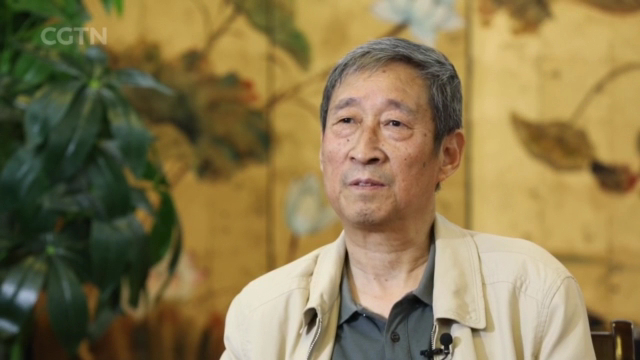
LU YUAN RESEARCH FELLOW "I have worked at Xi'an Beilin Museum for 30 years, ever since I was 29 years old. It's not an exaggeration to say that, among the thousands of stone tablets here and among the tens of thousands of stone tablets across China, this Nestorian Monument enjoys the most amount of international attention. It's also been one of the most thoroughly studied stone tablets by scholars both at home and abroad."
CHEN LIFENG MUSEUM EDUCATOR "On top of the stone tablet, you will find the cross. We all know that stands for Christianity. But below the cross, we can see the lotus and auspicious cloud. Lotus stands for Buddhism, and auspicious clouds stand for Taoism. From the two sides of the bottom, we can find a strange language, later identified as Syriac. It's a kind of old Syrian, mainly about the names of missionaries, and mountains and rivers in the ancient Roman Empire. Christianity brought cultures from Rome even from Persia to the ancient Tang Dynasty. And more than that, we can get ideas about new medical skills, even some food, and in every aspect."
LU YUAN RESEARCH FELLOW "When different cultures and traditions meet, they clash with each other then integrate. The Chinese philosopher Confucius advocates seeking harmony from diversity. I think this is true, as it reflects the trajectories of human history. It will remain this way in the future."