
17:03, 21-May-2019
Asian Civilization: Nanhai One Shipwreck: A time capsule of civilization
Updated
17:00, 24-May-2019
 []
[]
Share







Copied
03:13
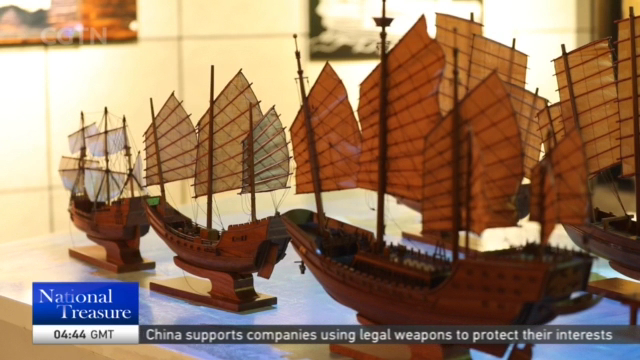
Trade connects different civilizations and societies around the world. In ancient times, merchants on camels, horses, and ships brought continents, oceans, and countries closer. Along the Maritime Silk Road, a merchant ship that sank 800 years ago now offers a glimpse of what life was like back then. CGTN Reporter Ge Yunfei takes us on board.
This used to be one of the busiest trading routes in the world. Along the southern coast of Yangjiang city, a four-hour drive from Hong Kong, thousands of merchant ships used to shuttle between the middle kingdom and other parts of Asia every year.
GE YUNFEI YANGJIANG CITY, GUANGDONG PROVINCE "Eight hundred years ago, in China's Song and Yuan dynasties, the country's foreign trade was more prosperous than ever before. Ships carrying porcelain, silk, and tea started their voyages along the Southern coast, eventually reaching Southeast Asia. Others sailed across the Strait of Malacca, arriving in India and as far away as the Arab world."
Now the old glory has faded, but there is one shipwreck that remains here at China's Guangdong Maritime Silk Road Museum. About 800 years ago, the ancient vessel "Nanhai One" sank just off the coast of Yangjiang. It was thought to have contained 60 to 80,000 precious pieces of cargo, especially ceramics. Since 1987, Cui Yong has participated in every step of excavations for the Nanhai One Shipwreck.
CUI YONG, DEPUTY DIRECTOR GUANGDONG PROVINCIAL INSTITUTE OF CULTURAL HERITAGE & ARCHAEOLOGY "The shipwreck has the biggest number of cultural relics in China's underwater archaeology. Now we have reached a consensus that this ship was destined for Southeast Asia, or even further down the South Asian Sub-continent."
Some of the evidence includes this pair of golden bracelets. Cui said the decorative designs on the bangles are clearly exotic, and from Southeast Asia. Arab and Asian merchants ordered golden ornaments and porcelain in China and sold them to other parts of Asia. The prosperous foreign trade even made China's Quanzhou port, the largest harbor in the world at that time.
CUI YONG, DEPUTY DIRECTOR GUANGDONG PROVINCIAL INSTITUTE OF CULTURAL HERITAGE & ARCHAEOLOGY "This wrecked ship is like a time capsule. All the goods and the crew's items that we discovered on the ship reflect all aspects of life during the Southern Song Dynasties."
The trade benefited not only the wealthy, but also ordinary people.
CUI YONG, DEPUTY DIRECTOR GUANGDONG PROVINCIAL INSTITUTE OF CULTURAL HERITAGE & ARCHAEOLOGY "Apart from the porcelain that we often see in ancient trade, Nanhai One also carried over one hundred tons of ironware including iron pots, pans, and iron nails."
Cui says Nanhai One Shipwreck is not only important in studies of Chinese history but also a mirror that tells the chronicles of all of Asia. Ge Yunfei, CGTN, Yangjiang in Guangdong Province.